This is an automated translation and may contain inaccuracies. For citation purposes, please refer to the original Russian version.
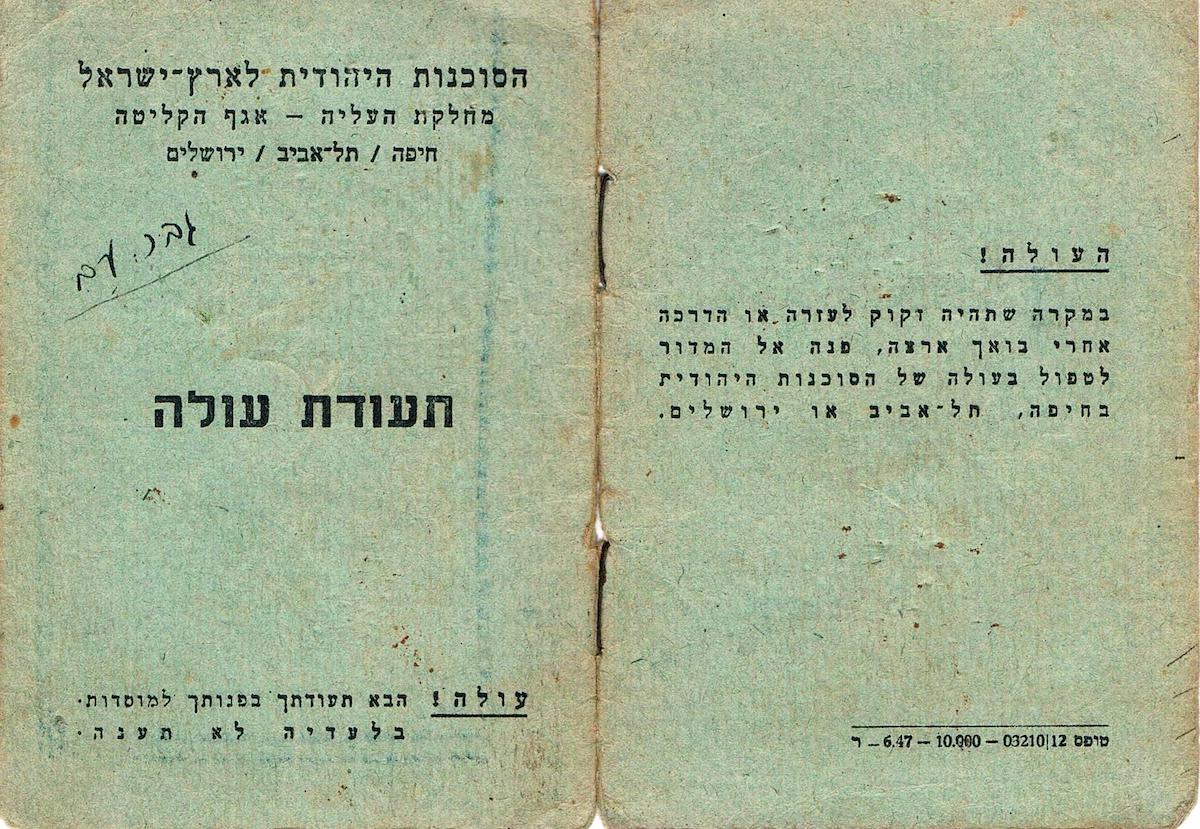
[1] Relations between Israel and the Jewish Diaspora develop in many different directions. One of the central elements in the mosaic of this relationship is the Law of Return (LoR), enacted exactly 70 years ago. It is symbolic that these days also mark another major anniversary—the 30th anniversary of the "Great Aliyah" from the former USSR, which triggered discussions on the substance, meaning, and relevance of the current version of the LoR to modern realities.
Public debate regarding the LoR was revived in the Hebrew year 5780 against the backdrop of three consecutive election campaigns to the Knesset (in April and September 2019, and March 2020). The focus of these campaigns was on civil issues, with immigrants from the former USSR frequently at the center of the discussion. This, of course, has its own history—Jewish organizations in the post-Soviet countries and the Russian-Jewish Diaspora outside the CIS first participated in discussions regarding proposed changes to the LoR as early as the late 1990s. On the other hand, programs initiated by Israel have influenced the situation in the post-Soviet Jewish Diaspora.
Historical Context of Changes to the LoR
The history of introducing amendments to the law under discussion is an interesting example of the interplay between the three branches of government in Israel. This interplay reflects the formation of the Jewish character of the state in its modern sense, illustrating the debate on "Who is a Jew?" or, in other words, what defines Jewish identity.
Following the declaration of the State of Israel in 1948 and the abolition of immigration restrictions imposed by the British authorities, a mere declaration of belonging to the Jewish people was sufficient for repatriation, without requiring any proof. The first step in formalizing the acquisition of Israeli citizenship was the unanimous adoption by the Knesset on July 5, 1950, of the Law of Return (LoR), which established the right of "every Jew to immigrate to Israel."[2] According to the Jewish calendar, this date coincided with the Memorial Day of the founder of political Zionism, Theodor Herzl, lending symbolic significance and historical perspective to the new law.
In practice, however, the new law faced a difficult challenge as early as the beginning of the 1950s, when Israel was experiencing a severe economic crisis that significantly complicated the reception and integration of new immigrants. Under these conditions, several leaders of the Jewish Agency ("Sochnut") and the ruling MAPAI party proposed the idea of "selective aliyah." The head of the Absorption Department of "Sochnut," Giora Yoseftal, the director of the Settlement Department and Treasurer of the JA, Levi Eshkol, and the chairman of the Histadrut labor federation, Pinchas Lavon, lobbied in November 1951 for a government resolution introducing quotas for repatriation to Israel from Morocco, Tunisia, Algeria, Turkey, Persia, India, as well as countries in Central and Western Europe.
Under the new criteria, 80% of immigrants from these countries were to be selected from among Youth Aliyah activists prepared for settlement life, as well as candidates with a profession, with preference given to individuals under 35 and families where the primary breadwinner was under 35. (The quota for immigrants over 35 was no more than 20%, unless these individuals were family members of a young breadwinner or had received an invitation from relatives in Israel who undertook to support them). Selected candidates—excluding those with a profession and independent means for resettlement—gave a written commitment to work in agriculture for at least two years, and the repatriation permit itself was issued only after a thorough medical examination under the supervision of an Israeli physician.
These restrictions, however, were soon repealed, and the State of Israel returned to the open-door policy for all Jews of the world, with the government adhering to an extremely broad interpretation of the term "Jew" as "a person who sincerely declares their Jewish identity." This was formalized in March 1958 in the instructions for employees of the Population Registry, signed by the Minister of Interior Israel Bar-Yehuda of the Ahdut HaAvoda ("Labor Unity") party and Attorney General Haim Cohn.
Such an extremely vague formulation left wide room for interpretation and the inevitable resulting conflicts between various groups of secular and religious Israelis, as well as the political parties representing their interests. Thus, the national-religious party MAFDAL strongly protested against the Bar-Yehuda–Cohn instructions, forcing the government in July 1958 to add to the document the criterion of "absence of affiliation to any other religious denomination (other than Judaism) for the person declaring themselves a Jew." This approach was further developed after the elections to the 4th Knesset (1959–1961) and the formation of a government in which the representative of MAFDAL—Rabbi Moshe Haim Shapira—assumed the post of Minister of Interior.
The new "Regulations on the Registration of Jews," issued on January 1, 1960, as an emergency order by the minister without consideration by the government or the Knesset, stated that "when recording religion and nationality in the population registry, a person may be registered as a Jew if born to a Jewish mother and not belonging to another denomination, or if they have converted to Judaism in accordance with Halakha."[3] The questionable formal status of this instruction, the public debate surrounding the registration of citizens' religious-national status, and the inability of politicians to resolve the issue forced the judicial system to intervene.[4]
The "Father Daniel Case"
A landmark event was the case of Oswald Rufeisen, better known as Brother Daniel, who was born into a Jewish family and converted to Christianity. Applying for Israeli citizenship under the Law of Return, Rufeisen was officially rejected on the basis of the January 1, 1960, instruction, and appealed to the Supreme Court[5]. In his appeal, Brother Daniel argued that he was a member of the Jewish people, practiced Christianity, and noted that according to Halakha, he was still considered a Jew. The petition requested that the Ministry of Interior's instructions be declared inconsistent with the Law of Return and therefore unlawful. In its ruling on this case, the Supreme Court emphasized that under Halakha, those who converted from Judaism to Christianity are indeed considered Jews, and declared Minister Shapira's instructions non-compliant with Israeli law. Thus, the Supreme Court effectively recognized that Israeli law itself does not serve as the criterion for defining the concept of a "Jew."
At the same time, however, the Supreme Court ruled that in the absence of a relevant legislative framework, one must rely on the subjective opinion of the majority of the nation ("as the word is understood in our days by the common people"—formulation of Justice Berenson), and "the way we, the Jews, understand it" (formulation of Justice Silberg, p. 22 in court records), namely: a Jew is someone whom other Jews consider to be a Jew. Based on this logic and on the premise that modern Jews do not recognize a Christian priest as "one of their own," Brother Daniel's petition was dismissed. Justice Haim Cohn dissented from the majority, insisting that it is impossible to establish the primacy of one criterion ("the opinion of the majority of the nation") over another ("the petitioner's declaration of intent"). Regardless, this Supreme Court decision became final.
It was as a result of these court hearings and the subsequent decision that political elites and the public recognized the model established in the State of Israel—belonging to the Jewish people based on traditional (halakhic) criteria is not a sufficient condition for granting citizenship.
The "Shalit Case"
Subsequently, the "Jew vs. non-Jew" issue was brought before the Supreme Court once again in the "Shalit Case." In 1968, this trial provoked a new public debate. Major Benjamin Shalit of the Israeli Navy, married to a Scottish woman who did not practice religious traditions, and with whom he had two children, requested the Ministry of Interior to register his children as Jewish (under "nationality") and secular (under "religion"). He was refused based on the instructions of January 1, 1960. The major appealed to the Supreme Court[6].
Citing the Brother Daniel case as a precedent, Shalit argued that his children did not belong to any religious denomination, but were "connected to Jewishness and Israel and raised in that spirit," and therefore other Jews recognized them as Jews. Five of the nine judges ruled in favor of Shalit. Justices Moshe Landau and Shimon Agranat, in their separate opinion, concluded that there was no single consensus on this issue, and the court should not formulate its verdict as the opinion of the majority of the nation. They proposed to refrain from a judicial ruling and leave the matter to the discretion of the executive branch (Ministry of Interior) in accordance with the "regulations."
Justices Silberg and Kister ruled that the norms of Halakha should be followed. Justice Silberg's opinion was formulated in emotional and striking terms:
Anyone who detaches Jewish national consciousness from its religious elements strikes a mortal blow to our political claims to Eretz Israel. Such a separation is akin to an act of betrayal (...) Searching for a new criterion of national identity is virtually equivalent to a complete denial of the continued existence of the Jewish people. The meaning of this search is: there is no more Zionism, no heritage, no history. There is only a desire to build a new state, devoid of its past and traditions.
Consequently, in 1970, the Knesset adopted amendments to the Law of Return (Amendment No. 2) and the Population Registry Law. As a result of a compromise reached between the Avoda and MAFDAL parties, a Jew was defined as "someone born to a Jewish mother or who has converted to Judaism, and is not a member of another faith." A person meeting this definition is entitled to repatriation. The ultra-Orthodox party Agudat Yisrael demanded clarification: "converted to Judaism in accordance with Halakha." This proposal was rejected by 59 votes to three. The Law of Return was extended to the children and grandchildren of Jews, thereby guaranteeing repatriation to Israel for descendants of Jews up to the third generation, as well as their family members.
The debate took an interesting and highly indicative turn when a third child was born into the Shalit family. Under the new formulation of the law, the child was refused registration as a Jew. The father appealed to the Supreme Court, pointing out the paradoxical nature of the situation where, in the same family and with the same parents who had changed nothing in their religious beliefs or lifestyle, two children were considered Jewish, while the third was not recognized as such. Shalit's appeal was rejected by the Supreme Court on the grounds that the law is not retroactive, and therefore the first two children remained registered as Jews.
The Contemporary Situation
Jews from the former USSR became both the subject and the object of this polemic for the first time only in the 1990s, with the onset of mass repatriation from the former Soviet Union.
"The Ethnic Factor"
A new factor in the debate on the LoR was the growing share of immigrants who are not Jewish under the religious-legal norms established in the law.[7] Accordingly, the Israeli Ministry of Interior registered them as non-Jews or as persons "without ethno-confessional affiliation," although the CBS continued to count them under the category "Jews and others" (thereby including them in the country's "extended Jewish population").
Since the late 1990s, both religious and secular circles in Israel have expressed concern over the rising number of new citizens who are weakly connected to Jewish culture and civilization. Consequently, tensions around the Law of Return mounted, and discussions surrounding demands to narrow the scope of those eligible for repatriation intensified. Thus, Prof. Ruth Gavison, in expressing her view on this matter, deemed it necessary to clarify that it should be regarded as the position of a public figure rather than a professor of law. She stated that "those who doubt the special Jewish character of the state are interested in repealing the Law."[8] There are Israelis who believe that the Law of Return, while relevant during the initial phase of the State of Israel's existence, is inappropriate today. The most radical proponents of this view consider several provisions of the LoR to be discriminatory.
To address the issue, a special public committee was established under the leadership of Prof. Yaakov Neeman (former Minister of Justice and Minister of Finance). The committee's recommendations were formulated in a series of departmental instructions in 1999, which, however, did not resolve the problem nor defuse the tension it caused.
Responding to the challenge, the Jewish Agency established an educational and information program for potential immigrants called "Jewish Identity," under which textbooks and teaching aids were published, special courses for teachers from various Jewish communities were organized, and dozens of seminars were held across most regions of the post-Soviet space. Training courses for teachers of the "Jewish Identity" program were conducted in 2000 in Moscow[9] and Kyiv, and their graduates became lecturers at special seminars and in JA "Sochnut" ulpans.
In January 2000—during the period of active discussion regarding whether or not to change the LoR—Israeli Minister of Interior Natan Sharansky visited Moscow. During the visit, the necessity of a serious and open dialogue between Israeli public and political structures on one side, and the Jewish communities of the Diaspora on the other, was stated for the first time.[10] In a working meeting between leaders of Russian Jewish organizations and the Israeli Minister of Interior, a Protocol of Intentions was signed, the main idea of which was a declaration of readiness by both sides to cooperate in addressing the issues surrounding the LoR.[11]
The issue of changing the law was received ambiguously by Jewish leaders in the post-Soviet space. Thus, according to the President of the Vaad of Russia, Mikhail Chlenov, "the proposal to change the LoR is the first attempt to alter the relationship between Israel and the Russian-speaking Diaspora."[12] Obviously, Prof. Chlenov was referring to the situation in the Jewish community of the Russian Federation, where potential immigrants and participants in community programs include members of Jewish families who are not halakhically Jewish. From the professor's perspective, changing the LoR would impose an exclusively halakhic criterion of belonging to the Jewish people upon the community. At the same time, representatives of Orthodox Jewish organizations support limiting the right of non-halakhic Jews to repatriate to Israel.
Issues of reforming the LoR were raised at various levels during visits of Israeli ministers to the countries of the former USSR. In turn, a seminar entitled "Israel in the Year 2000—Should the LoR Be Changed?"[13] was held in the Knesset, organized by the parliamentary Committee on Aliyah and Absorption with the participation of representatives of immigrant organizations, the Jewish Agency, "Joint," the "Nativ" bureau, leaders of post-Soviet Jewish communities, and rabbis. The seminar was also attended by members of the Knesset from various political parties (Yisrael Beiteinu, Yisrael BaAliyah, Shinui ("Change"), Shas, One Israel, Likud).[14] The head of the parliamentary committee, Naomi Blumenthal, expressed concern over "mass non-Jewish immigration," holding the view that the categories of those entitled to repatriation under the LoR should be reduced. At the same time, her party colleague Ariel Sharon spoke out sharply against such attempts, demonstrating that there was no consensus on this issue within Likud. In turn, Knesset Speaker Avraham Burg, who had previously headed the JA "Sochnut," stated that relations between Israel and the Jewish Diaspora would inevitably deteriorate if the proposed changes were adopted.
In December 2001, at a meeting of the same committee, the then Minister of Interior and leader of the Shas party, Eli Yishai, raised the issue of limiting the repatriation of grandchildren of Jews who had lost any real connection to Jewishness. Deputy Knesset Speaker Sofa Landver noted during the discussion that the root cause of the disagreements over the LoR lay in the understanding of what the Jewish state should be.[15]
Conversion (Giyur) and the LoR
Many see the resolution to the problem, without changing the letter and spirit of the Law of Return, in conversion—converting to Judaism, which means joining the Jewish people not only in a religious-legal but also in an ethnic sense. In fact, the demand to amend the LoR to clarify conversion had been discussed since the 1970s against the background of the repatriation of individuals who had converted in Orthodox and non-Orthodox communities outside Israel. Orthodox Jewish parties demanded that the law specify that only "conversion in accordance with Halakha" is recognized in the country, opposing its Conservative and Reform versions. In doing so, they sought to legitimize only Orthodox conversion in Israel, legally securing the priority of the Orthodox stream of Judaism. At that time, the uncompromising stance of North American Jewry played a decisive role, and these demands were not met.
Among the proposals of the aforementioned Neeman Committee was the idea of establishing a Joint Institute for Jewish Studies. Within the framework of this educational institution, founded in 2000, the three streams of Judaism (Orthodox, Conservative, and Reform) united under one roof for the first time in the history of the State of Israel. At the Institute, candidates prepare for conversion, with instructors representing various denominations of Judaism. In accordance with the Committee's recommendations, a candidate who completes the course is examined by an Orthodox rabbinical court, which makes the final decision. However, resolving the issue through conversion proved unsuccessful due to active resistance from the Chief Rabbinate of Israel, which has been controlled by the ultra-Orthodox since the mid-1990s.
To understand how much the Chief Rabbinate's attitude toward the conversion of "non-halakhic Jews" has changed over a quarter of a century, a brief historical overview is necessary. Israel's Chief Ashkenazi Rabbi Shlomo Goren (who held this post in 1972–1983) established the state system of preparation for conversion and—in order to simplify the procedure—authorized municipal and local council rabbis to perform conversions. Rabbi Mordechai Eliyahu (Chief Sephardic Rabbi of Israel in 1983–1993) continued to develop this system. It was during his tenure that the mass aliyah from the USSR began.
However, starting from 1993, the Chief Rabbinate came under the control of the ultra-Orthodox for the first time in history. This transformation was driven by purely political, rather than religious, reasons: in 1992, a left-wing government came to power led by Prime Minister Yitzhak Rabin, who set a course for negotiations with the PLO and signed agreements in September 1993 providing for far-reaching territorial concessions. Religious Zionists, closely linked to the settlement movement, became resolute opponents of this policy. Rabbi Mordechai Eliyahu and Avraham Shapira, who held the post of Chief Ashkenazi Rabbi of Israel at the time, even participated in anti-government demonstrations. They were the last religious Zionists to hold the posts of Chief Rabbis of the country: left-wing parties made efforts to ensure these positions went to the ultra-Orthodox, whose priorities did not include foreign policy and security, but rather the civil and socio-economic interests of the ultra-religious parties' electorate.
Consequently, from the end of 1993, the policy of the Chief Rabbinate underwent significant changes, particularly regarding conversion. Eliyahu Bakshi-Doron, the Chief Sephardic Rabbi from 1993 to 2003, revoked the authority of municipal rabbis and special rabbinical courts to perform conversions immediately after his appointment. From that point on, structures under the auspices of the Chief Rabbinate pursued a policy of tightening religious requirements for potential converts, which made the entire process extremely difficult. At the same time, "Jewishness checks" by rabbis upon marriage were also tightened. Harassment began of Zionist rabbis who continued to perform conversions according to the previous rules. Furthermore, conversions were revoked retroactively, despite this practice directly contradicting the rulings of the Talmudic sages, who established that even if a convert turns away from Judaism and "worships idols," they do not cease to be Jewish, but are "regarded as an apostate Jew."[16]
In 2014, at the initiative of Knesset Member Elazar Stern (at the time, the Yesh Atid party, of which he is a member, was part of the ruling coalition), the government restored the authority in the field of conversion to municipal rabbis; however, under pressure from ultra-Orthodox parties, this decision was overturned after the formation of a new government in 2015. The policy of tightening conversion conditions, consistently pursued by the Chief Rabbinate for a quarter of a century, culminated in June 2019, when the examination department for new rabbis of the Chief Rabbinate excluded questions regarding conversion from the requirements for municipal rabbis altogether. [17]
Contemporary Post-Soviet Jewry and the Issue of Changing the Law of Return
Israel is traditionally an important factor in the Jewish self-consciousness of both halakhic Jews and individuals of mixed and non-Jewish descent who constitute the "extended Jewish population" in the countries of the former USSR. It is the Israeli LoR that today, in effect, defines both the boundaries of this population and the criteria for participation in the activities of Jewish communal organizations and access to their services. Not to mention that the very possibility of moving to the Jewish state is, at least in the eyes of others, an indicator of belonging to the Jewish community.
A large-scale representative sociological study of members of the "extended Jewish population" of five post-Soviet countries, conducted under the leadership of Ze'ev Khanin and initiated by the EAJC in 2019 and early 2020, showed that the mentioned criterion is perceived as an established reality by all respondents, regardless of their ethnic origin.[18] Thus, the opinion that the Law of Return should not be changed was the most popular viewpoint across all ethnic, socio-demographic, and cultural-identification categories of respondents. In almost every category, the idea of maintaining the LoR in its current form received support from 40% to over 50% of those surveyed, with no significant differences observed between these categories.
Even in the subgroup of respondents with a strong Jewish identity, only 4% to 9% supported revoking the right of repatriation for certain categories of mixed families. They see the solution to the problem in intensifying efforts that encourage these individuals to undergo conversion. In turn, among individuals with a mixed Jewish-non-Jewish identity, a significant share of respondents advocated for a radically different option: to allow entry into Israel to anyone who feels Jewish and identifies with the idea of a Jewish state. This refers, in our view, not only to Israel but to the Jewish collective as a whole. Nevertheless, half of the respondents in this, as in other groups, would prefer to maintain the status quo on this issue.
The only category that stood out from the general trend was those eligible for repatriation who hold a non-Jewish ethnic identity, where only 35% of respondents supported keeping the LoR unchanged, although even in this subgroup, supporters of this view constituted a relative majority. Indicatively, the idea of "opening Israel's borders" to everyone needed by the country, regardless of Jewish origin, was supported by less than a tenth of respondents in this category. Roughly the same proportion believed that non-halakhic Jews should undergo conversion, and they turned out to be 2.5 times fewer than those who spoke in favor of a "state of all its citizens." Characteristically, among respondents in "non-Jewish" cultural-identification categories ("ethnic non-Jews" and "citizens of the world"), there were respectively twice and 1.5 times more individuals than the sample average who found it difficult to define their attitude toward the LoR.
Conclusions
It is clear that granting citizenship of the State of Israel under the LoR does not depend solely on belonging to the Jewish people and Judaism as a religion. The history of debates on various aspects of the LoR in legislative and judicial instances indicates differing attitudes within Israeli society toward a wide spectrum of issues—observance of traditions from the perspective of Halakha, mixed marriages, and the interaction of different streams of Judaism.
Despite the intense discussion that has been ongoing from the 1970s to the present, the law has not been amended. However, from our perspective, this debate itself is extremely productive, allowing different sectors of Israeli society to better understand opponents holding other views on the problems of self-identification and the future of Israel as a Jewish democratic state.
Russian Jewry and its leaders have taken a highly active part in the discussion of plans to amend the Israeli LoR. Although, at first glance, this law regulates only the right to repatriation and obtaining Israeli citizenship, the LoR has a significant impact on the functioning of Jewish communities in the Diaspora, particularly in the countries of the former USSR.
Programs initiated by various Israeli structures made it possible to train a cohort of teachers and organize courses for thousands of Jews and their family members. Those program participants who remained in the Diaspora—that is, families who have the right to repatriate but decided not to leave—became acquainted with the traditions of Judaism and became involved in the activities of various Jewish organizations.
[1] The author is grateful to Dr. Velvl Chernin and Prof. Ze'ev Khanin for the materials used in this article, as well as for their valuable recommendations and clarifications made upon reading a draft version of this text. The author, however, bears sole responsibility for the facts and opinions presented herein.
[2] The original text of the Law and its amendments are published on the Knesset website: http://www.knesset.gov.il/laws/special/heb/chok_hashvut.htm. For the Russian translation of the Law of Return with commentary by lawyer Eduard Felberg, see http://www.nurited.info/pages.php?pgid=27
[3] The norms of traditional Jewish law (Halakha) define a Jew as a person born to a Jewish mother or who has converted to Judaism. On the political controversy and circumstances related to the described events, see: Moshe Samet (with Myla Sherman), Who is a Jew (1958–1988), Jerusalem: HEMDAT, 1988; Naama Carmi, The Law of Return—the Right to Immigration and its Limits. Tel Aviv: Tel Aviv University Press, 2003 (in Hebrew)
[4] See more on the national and religious aspects of Jewishness in the rulings of the Supreme Court of Israel: Who is a Jew? National and Religious Definition of Jewishness in the Precedents of Rulings of the Supreme Court of Israel. — Jerusalem and Moscow: "Mosty Kultury", 2007
[5] Case 72/62, Oswald Rufeisen v. Minister of Interior, http://www.nevo.co.il/Psika_word/elyon/E18-62000072A.pdf
[6] Case 58/68, Shalit v. Minister of Interior. The court's ruling was announced on 23.1.70 http://www.courts.co.il/SR/elyon/KC-6800058.htm
[7] Data on the number and percentage of "non-halakhic Jews" entering the State of Israel under the LoR have not been officially published; however, based on data obtained from relevant government sources, the share of such persons was 12%–20% in 1989–1992 and around 55%–60% among those who arrived in Israel over the last decade. Overall, the number of persons registered as non-Jews admitted during the years of the "Great Aliyah" from the former USSR amounted to slightly over 300,000 people—just over 30% of all immigrants of this period. For details, see Khanin Z., Entering the Jewish Collective: The Identity of Russian-Speaking Olim of the Post-Communist Era. — Jerusalem: Beit Morasha and the Harry S. Truman Research Institute, 2013, pp. 11-16 (in Hebrew).
[8] Ruth Gavison, Matarat Al le-Yisrael u-Negzaroteha (Israel's Supreme Goal and Its Implications, in Hebrew), Haifa: Samuel Neaman Institute, 2006, pp. 134-136 "Be-ein Chazon Yipara Am" ("Where there is no vision, the people cast off restraint", in Hebrew) https://www.neaman.org.il/Necessity-Strategic-Thinking-Constitutive-Vision-Israel-and-Implications-HEB
[9] Teacher training courses in Moscow were organized at Touro College and the Institute for Training Community Workers. The author of this article personally participated in the creation, management, and instruction of these courses.
[10] "Russian Jewry Enters into Dialogue", Vesti, 27.01.2000
[11] Journalist of the newspaper "Inostranets" N. Zubkova followed the development of the discussion most closely and objectively. See "Inostranets", 2.02.2000, p. 26
[12] Cited from: "Inostranets", 12.01.2000, p. 25
[13] For a detailed journalistic review of the seminar materials, see the article by S. Ron, "Should the LoR Be Changed", Vesti, 9.03.2000.
[14] Personal observations of the author of this article, as a participant in the said seminar.
[15] Landver S., "The Iron Curtain of Eli Yishai", Vesti (Tel Aviv), 13.12.2001, p. 9
[16] Tractate Yevamot 47b.
[17] For more details on the political aspects of the conversion problem in Israel, see: Chernin V., "Jews Having No Religion" in Israel: History of the Problem and Options for Its Solution": https://sem40.co.il/print:page,1,321816-evrei-ne-imejuschie-religii-v-izraile-istorija-problemy-i-varianty-ee-reshenija.html; Haim Ben Yakov (with the participation of Ze'ev Khanin), The Jewish Question in the Jewish State. — Moscow: "Mosty Kultury", 2016, pp. 98-140; Khanin Z., Entering the Jewish Collective; and Yedidia Stern and Netanel Fisher, eds. Israeli Conversion: Vision, Achievements, and Failures. — Jerusalem: Israel Democracy Institute (IDI), 2018, pp. 36-59
[18] See Khanin Z. and Chernin V., Jewish Identity in the Former USSR: Parameters, Models, and Challenges. Tel Aviv: Chaim Rosenberg School of Jewish Studies, Tel Aviv University, and the EAJC Institute for Euro-Asian Jewish Studies, March 2020
The views expressed by the experts do not necessarily reflect the official position of the Institute for Euro-Asian Jewish Studies or the Euro-Asian Jewish Congress.
