
This is an automated translation and may contain inaccuracies. For citation purposes, please refer to the original Russian version.
The Jewish community of Kazakhstan has never been large. A socially significant Jewish presence emerged only during the Soviet era. The influence of Jews on the development of the republic strengthened substantially during the war years, when the elite of the Soviet intelligentsia was concentrated in Kazakhstan. Many of the evacuated scientists, writers, artists, engineers, and production organizers of Jewish origin remained to live here after the war.
Subsequently, the Jewish population of Kazakhstan experienced the same processes characteristic of Soviet Jewry as a whole. Primarily due to assimilation, the number of Jews declined, and their influence on various spheres of life diminished. Concurrently, elements of Jewish self-identification and self-organization weakened. In the post-Soviet period, the republic's Jews were caught up in complex and contradictory social conflicts. On one hand, they were affected by the rise of national and religious consciousness characteristic of the entire post-Soviet space. On the other hand, migration processes intensified sharply, represented mainly by mass repatriation to Israel.
What are the results of the development of the Jewish community over nearly 30 years of Kazakhstan's independence? A certain understanding of the social profile and self-awareness of local Jews is provided by a study conducted in early 2020 by the BISAM Central Asia Center for Social and Market Research, utilizing tools developed by the Institute for Euro-Asian Jewish Studies at the Euro-Asian Jewish Congress (EAJC).
The research method was a questionnaire survey (face-to-face structured interviews using CAPI technology). Ethnic Jews and their second- and third-generation descendants aged 16 and older were interviewed. The sample consisted of 250 respondents, which is statistically significant for a population whose exact size is not established by official statistics, but is realistically estimated to be in the range of 7,000–15,000 people. The sample was random, but one of its structural principles was quota sampling based on categories of affiliated (i.e., involved in the activities of the Jewish community) and unaffiliated respondents. The respective quotas were 40% and 60% of the total sample size.
Quota sampling slightly affected the representativeness of the sample in terms of demographic characteristics. Thus, among affiliated respondents, the share of women was 72%, while among the unaffiliated it was 61%. The share of respondents under 30 among the affiliated was 12%, and among the unaffiliated, 25%. The share of respondents over 55 reached 52% among the affiliated, compared to 39% among the unaffiliated. Overall, however, the sample reflected the demographic and social markers of the Jews of Kazakhstan. The survey was conducted in the four cities with the highest concentration of the Jewish population: Almaty, Karaganda, Pavlodar, and Shymkent.
Demographic and Social Foundations of the Ethnocultural Identity of Kazakhstani Jews
The modern profile of the Jewish community in Kazakhstan is the result of intensive assimilation processes. Only 24% of the survey participants are "purebred" Jews; the rest are of mixed origin. 58% of the respondents are married to non-Jewish spouses. Only 4% of those surveyed stated that their close friends are mostly Jewish. For 43%, their friends are mostly non-Jewish; 28% of the respondents stated that Jews and non-Jews are about equally represented among their friends, while 24% have never been interested in the ethnicity of their social circle.
Admittedly, involvement in the activities of the Jewish community and Jewish organizations, as well as the age factor which overlaps with this variable, plays a significant role in the choice of friends[1]. For instance, 34% of affiliated respondents have mostly non-Jewish friends, compared to 49% of unaffiliated ones. Approximately half of the respondents under 55 are friends predominantly with non-Jews, whereas among those over 55, this figure is only 35%.
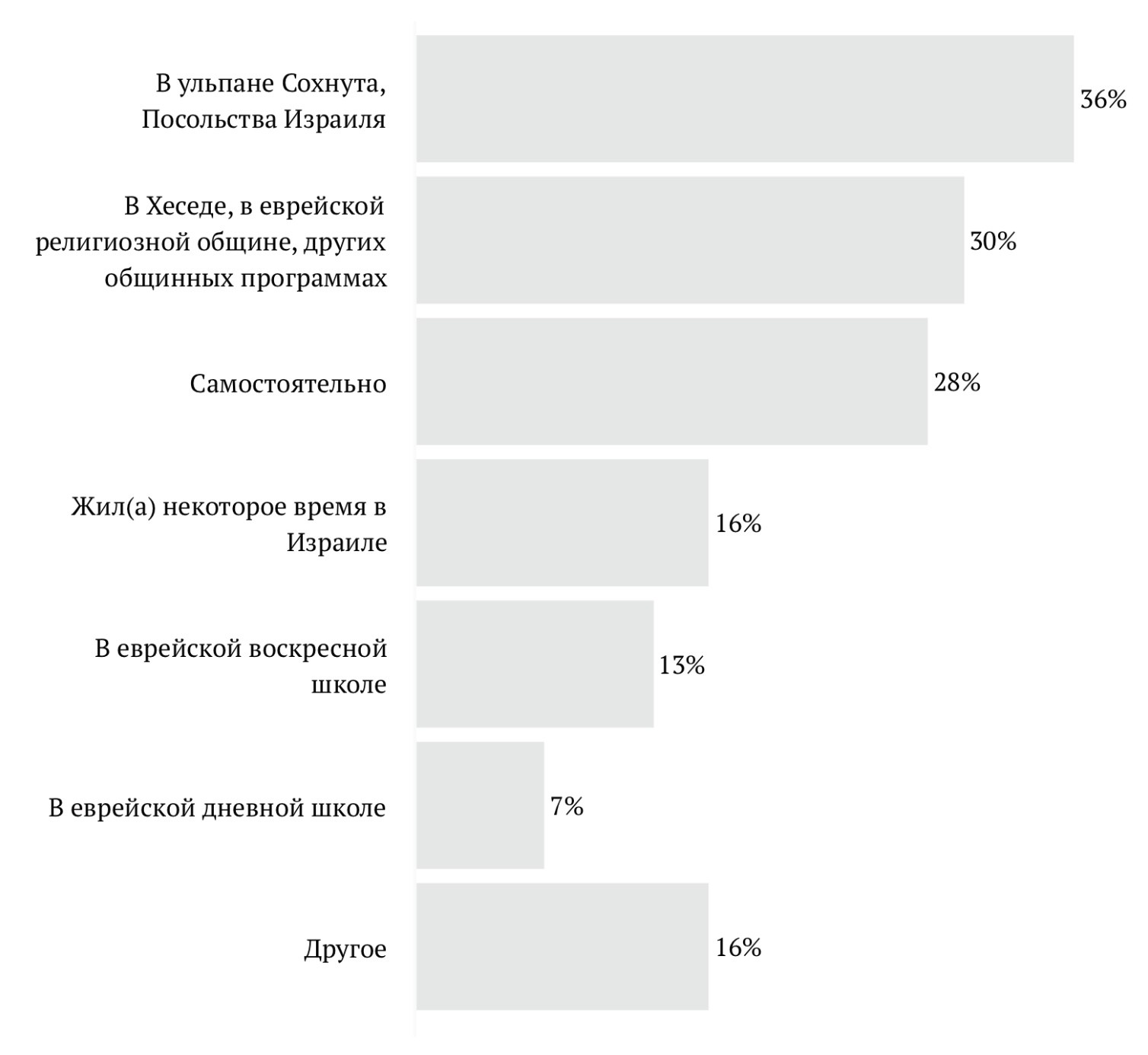
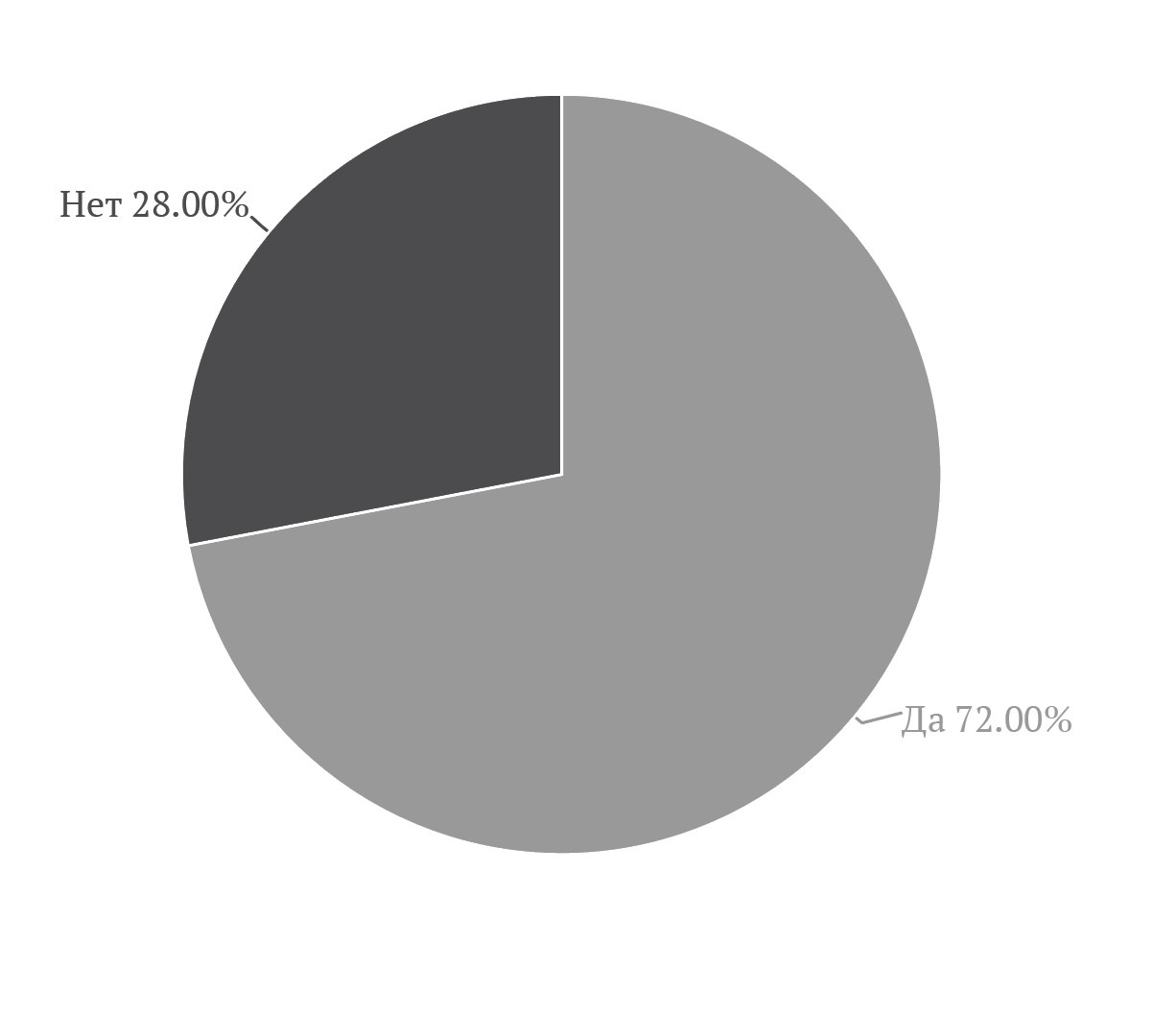
81% of the survey participants do not speak Yiddish at all, while 15% know individual words and phrases. 72% have never tried to study Hebrew. Of the 28% who did study it, 36% attended classes at the Ulpan of the Jewish Agency "Sokhnut" or at the Embassy of Israel, 30% did so through community programs, 20% studied at a Jewish day or Sunday school, and 28% studied the language independently (Fig. 1).
Fig. 1 Hebrew Language Study by Respondents
Where did you study Hebrew? | Have you studied Hebrew? |
 |  |
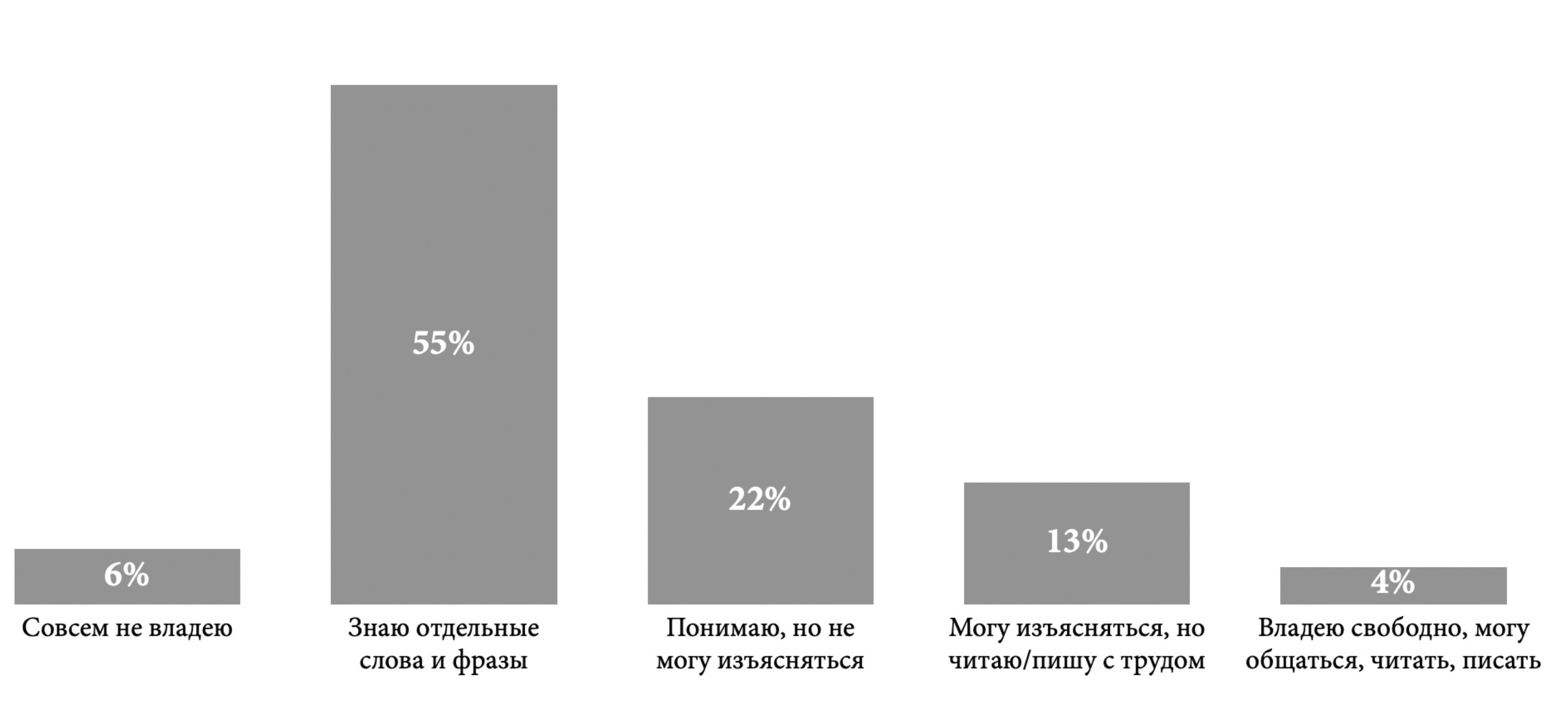
Among those who studied Hebrew in one format or another, 6% did not master it at all, 55% know individual words and phrases, 22% understand Hebrew but cannot express themselves, and 13% speak but read and write with difficulty. Only 4% (just 3 people) could boast of fluent Hebrew proficiency (Fig. 2).
Fig. 2 How would you rate your level of Hebrew proficiency (among respondents who studied Hebrew)?
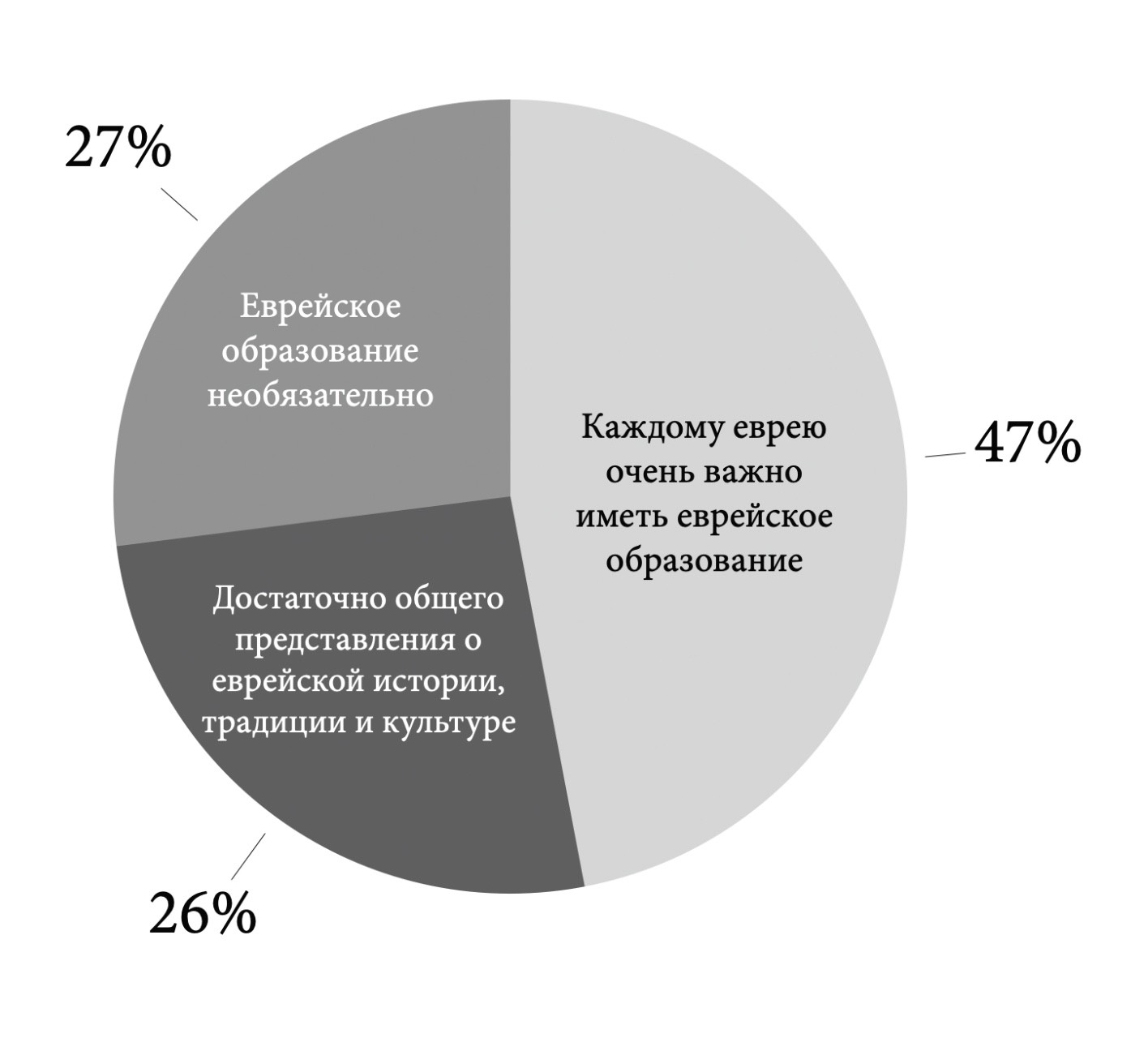
Overall, a significant portion of respondents view Jewish education positively. Thus, more than a quarter of those surveyed are convinced that it is crucial for a Jew to receive a good Jewish education, while 47% believe it is sufficient to have a general understanding of Jewish history, traditions, and culture. Only 27% believe that Jewish education is not necessary (Fig. 3). At the same time, 86% of the survey participants stated that they do not have a Jewish education.
Fig. 3 What is your attitude toward Jewish education?
About half of the respondents have never attended Jewish plays or concerts, and 26% have attended them rarely. 45% of those surveyed are completely unfamiliar with the works of Jewish writers. Only 13% of respondents regularly read books by Jewish authors, 23% do so from time to time, and 19% rarely. 60% of the respondents have never read the Jewish press, while only 7% reported reading it regularly (Table 1).
Table 1 Please state how often you…?
Regularly (%) | Sometimes (%) | Rarely (%) | Never (%) | |
Attend Jewish theatrical performances and concerts | 10% | 17% | 26% | 47% |
Read books by Jewish writers | 13% | 23% | 19% | 45% |
Read the Jewish press | 7% | 14% | 19% | 60% |
59% of those surveyed identified themselves as religious. It should be noted, however, that the religiosity of Jews turned out to be noticeably lower than the declared level of religiosity of the population of Kazakhstan as a whole. According to BISAM studies, more than 80% of survey participants in representative samples in Kazakhstan declare themselves to be believers. The distribution of Jewish respondents by declared denominational affiliation was unexpected, even shocking. Only a third claimed Judaism as their religion. 42% chose Christianity, 2% lean toward Islam, and 9% revealed a "dual" religious consciousness, considering both Judaism and another religion as their faith.
Admittedly, there are major differences in religious positioning among groups of respondents. For instance, 46% of affiliated respondents consider Judaism to be their religion, compared to only 25% of unaffiliated ones. Conversely, 53% of unaffiliated survey participants declared adherence to Christianity, while only 25% of affiliated ones did so. Interestingly, women lean toward Christianity significantly more than men (47% and 31%, respectively).
Table 2 Which religion do you consider your own?
| Among affiliated respondents (%) | Among unaffiliated respondents (%) | Average across the sample (%) |
Judaism | 46% | 25% | 33% |
Christianity | 25% | 53% | 42% |
Islam | 1% | 3% | 2% |
Both Judaism and another religion equally | 12% | 7% | 9% |
Other religious movements | 1% | 1% | 1% |
None | 15% | 11% | 13% |
The most critical factor influencing denominational commitment is the sense of Jewish identity. Thus, among those who unconditionally feel Jewish, 57% consider Judaism to be their religion. However, even in this subgroup, 18% practice Christianity. The common assertion regarding the inseparability of Jewishness and Judaism has once again been challenged. Among those who feel Jewish only under certain circumstances, 56% lean toward Christianity, while among those who do not feel Jewish at all, this figure is 74%.
Naturally, the category of those who chose Judaism as their religion includes significantly more individuals who observe Jewish holidays and rituals. However, even among them, the level of involvement in religious practices is not very high (Table 3).
Table 3 Observance of religious rituals by adherents of Judaism compared to the overall sample figures
Holidays and rituals | Among adherents of Judaism (%) | Total of those surveyed (%) |
Observe Jewish holidays | Yes, fully, always (51%) Partially or occasionally (46%) Do not observe (3%) | Yes, fully, always (25%) Partially or occasionally (40%) Do not observe (35%) |
Fast on Yom Kippur | Yes, fully, always (32%) Partially or occasionally (29%) Do not observe (39%) | Yes, fully, always (13%) Partially or occasionally (11%) Do not observe (76%) |
Buy matzah for Passover | Yes, fully, always (59%) Partially or occasionally (19%) Do not observe (22%) | Yes, fully, always (36%) Partially or occasionally (17%) Do not observe (47%) |
Light Shabbat candles | Yes, fully, always (41%) Partially or occasionally (37%) Do not observe (22%) | Yes, fully, always (20%) Partially or occasionally (21%) Do not observe (59%) |
Observe Shabbat | Yes, fully, always (41%) Partially or occasionally (34%) Do not observe (25%) | Yes, fully, always (19%) Partially or occasionally (19%) Do not observe (62%) |
Keep kosher | Yes, fully, always (22%) Partially or occasionally (36%) Do not observe (42%) | Yes, fully, always (7%) Partially or occasionally (16%) Do not observe (77%) |
Build/visit a sukkah during Sukkot | Yes, fully, always (36%) Partially or occasionally (28%) Do not observe (36%) | Yes, fully, always (15%) Partially or occasionally (16%) Do not observe (69%) |
Light Hanukkah candles | Yes, fully, always (53%) Partially or occasionally (29%) Do not observe (18%) | Yes, fully, always (26%) Partially or occasionally (19%) Do not observe (55%) |
Participate in a Passover Seder | Yes, fully, always (46%) Partially or occasionally (35%) Do not observe (19%) | Yes, fully, always (22%) Partially or occasionally (19%) Do not observe (59%) |
It is easy to see that respondents in the overall sample, and partially within the group of Judaism adherents, practice a "secular manner" of faith characteristic of Kazakhstan. As BISAM studies show, Kazakhstanis tend to congratulate each other on major religious holidays without linking this to their own ethnic or denominational affiliation, or that of their friends and acquaintances. Two-thirds of the Kazakhstani Jews we surveyed stated that they always or sometimes celebrate Jewish holidays, and more than half buy matzah for Passover. However, observations show that they perceive matzah more as a national dish. Respondents are much more inclined toward festive meals than toward observing restrictive rituals.
An important characteristic of Kazakhstani Jews is their extensive external connections. 82% of those surveyed have close Jewish friends and relatives in other countries. At the same time, only 9% of respondents who reported having relatives and friends abroad do not maintain contact with them. 67% meet infrequently but communicate constantly via the Internet or telephone. 14% maintain occasional contact, and 9% meet regularly.
Fig. 4 Presence of connections outside of Kazakhstan
Do you maintain contact with them? | Do you have friends or relatives living outside of Kazakhstan? |
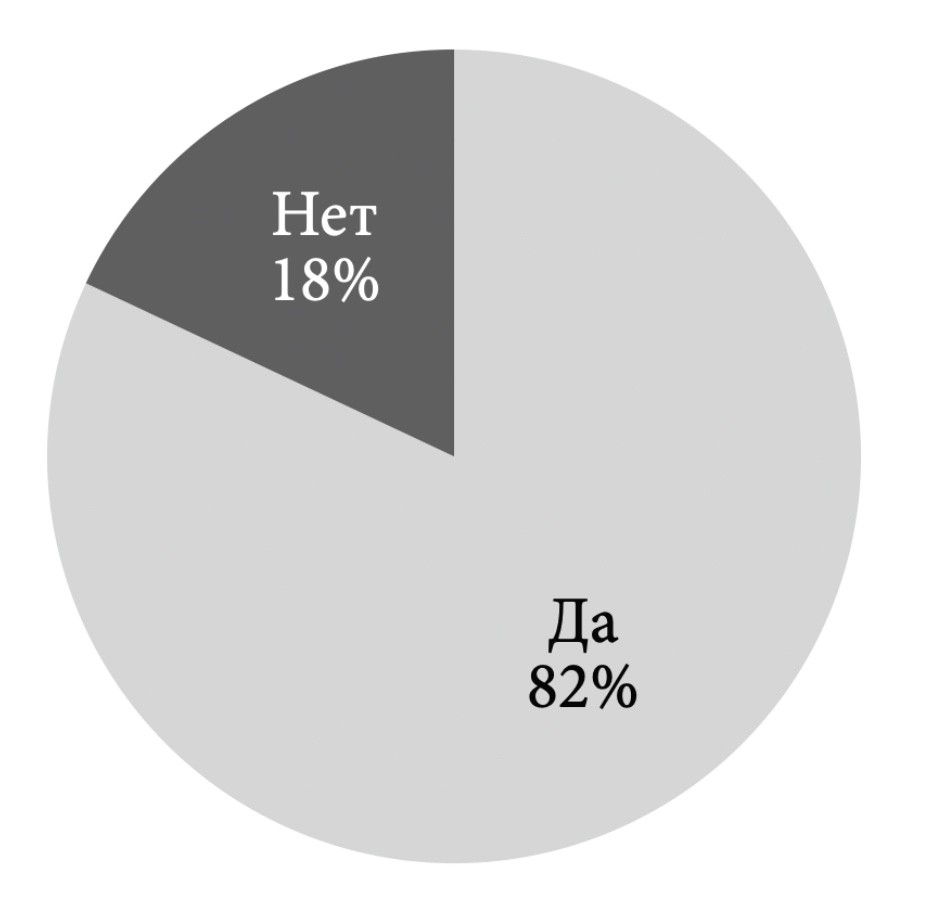 | 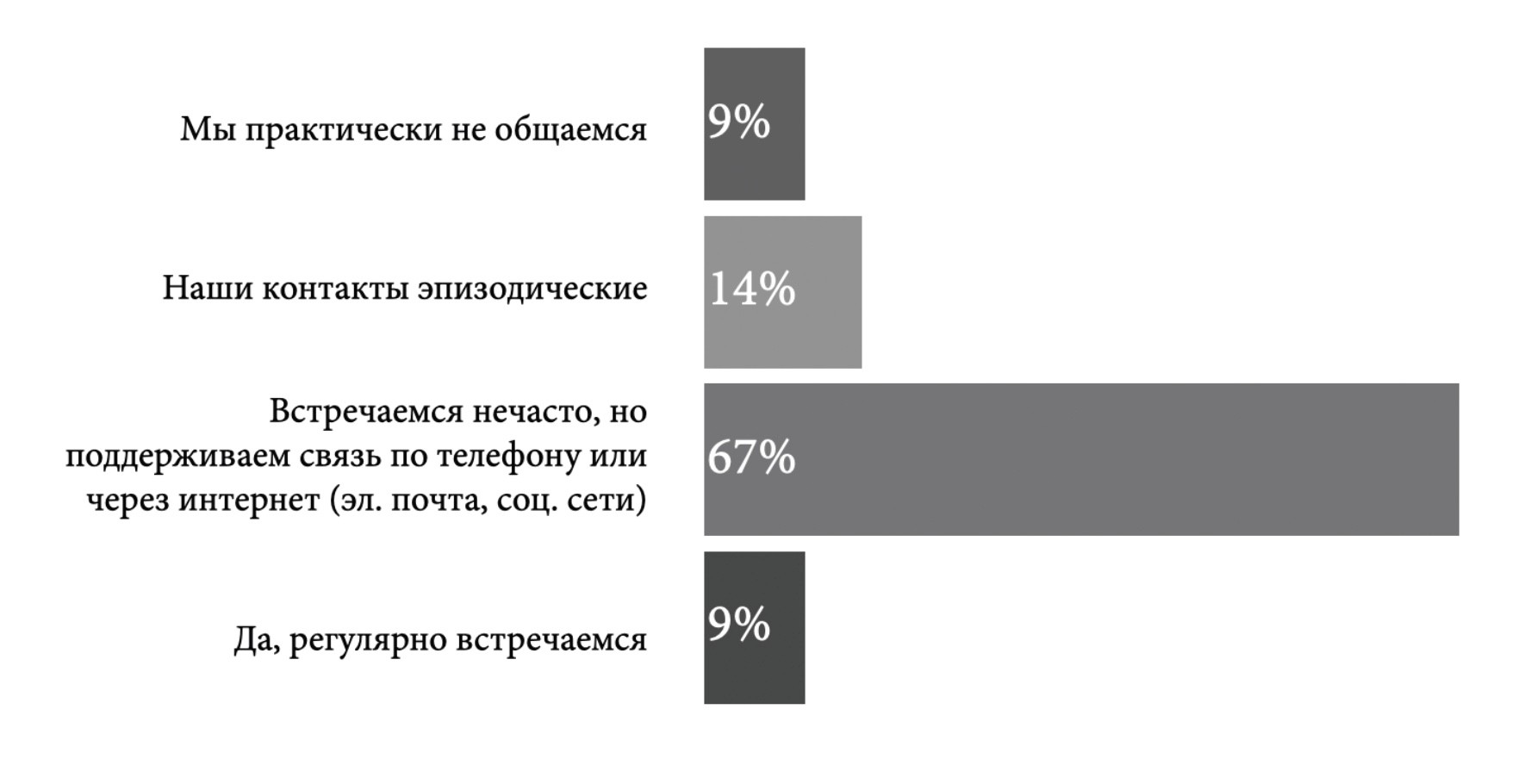 |
What then does Jewish identity in Kazakhstan look like, shaped by such contradictory demographic and socio-behavioral characteristics?
Ethnocultural Self-Identification of Jews in Kazakhstan: Main Features and Characteristics
The key question for determining the level of Jewish identity was: "Who exactly do you feel you are first and foremost?". The largest share of respondents did not show an ethnic priority in this self-perception: 36% stated that they feel like "just a person, regardless of nationality." Only 16% of respondents feel solely Jewish, 18% feel like a Russian Jew, and 13% feel like a Kazakhstani Jew. 8% exhibited a dual perception of ethnicity: they feel simultaneously Jewish and members of another nationality (Russian or Kazakh). In this key question of self-identification, significant differences were found between affiliated and unaffiliated respondents. 30% of affiliated respondents and 40% of unaffiliated ones consider themselves just a person, regardless of nationality (Table 4).
Table 4 Who exactly do you feel you are first and foremost?
| Among affiliated respondents (%) | Among unaffiliated respondents (%) | Average across the sample (%) |
Solely Jewish | 18% | 14% | 16% |
Russian Jew | 18% | 18% | 18% |
Kazakhstani Jew | 17% | 11% | 13% |
Russian (or Kazakh) and Jewish simultaneously | 10% | 7% | 8% |
Member of another, non-Jewish nationality | 3% | 8% | 6% |
Just a person, regardless of nationality | 30% | 40% | 36% |
Jewish and a member of another nationality | 4% | 2% | 3% |
Women turned out to be more cosmopolitan than men—for 39% of the surveyed ladies, nationality is not important, whereas among the stronger sex, only 30% hold this view. At the same time, 26% of men feel solely Jewish, compared to only 10% of women. Contrary to expectations, there is no pronounced age dynamic in the basic perception of identity. No clear dependence of Jewish identity on the mono- or polyethnic nature of the respondents' families was identified either. Among individuals who have Jewish (fully or partially) spouses, 25% consider themselves solely Jewish, and among respondents living in ethnically mixed marriages, this figure is 17%. However, further on, the dependencies "flip" and deviate from the expected logic. Thus, the unimportance of nationality was declared by 39% of respondents with Jewish spouses, and only by 29% of those living in mixed marriages.
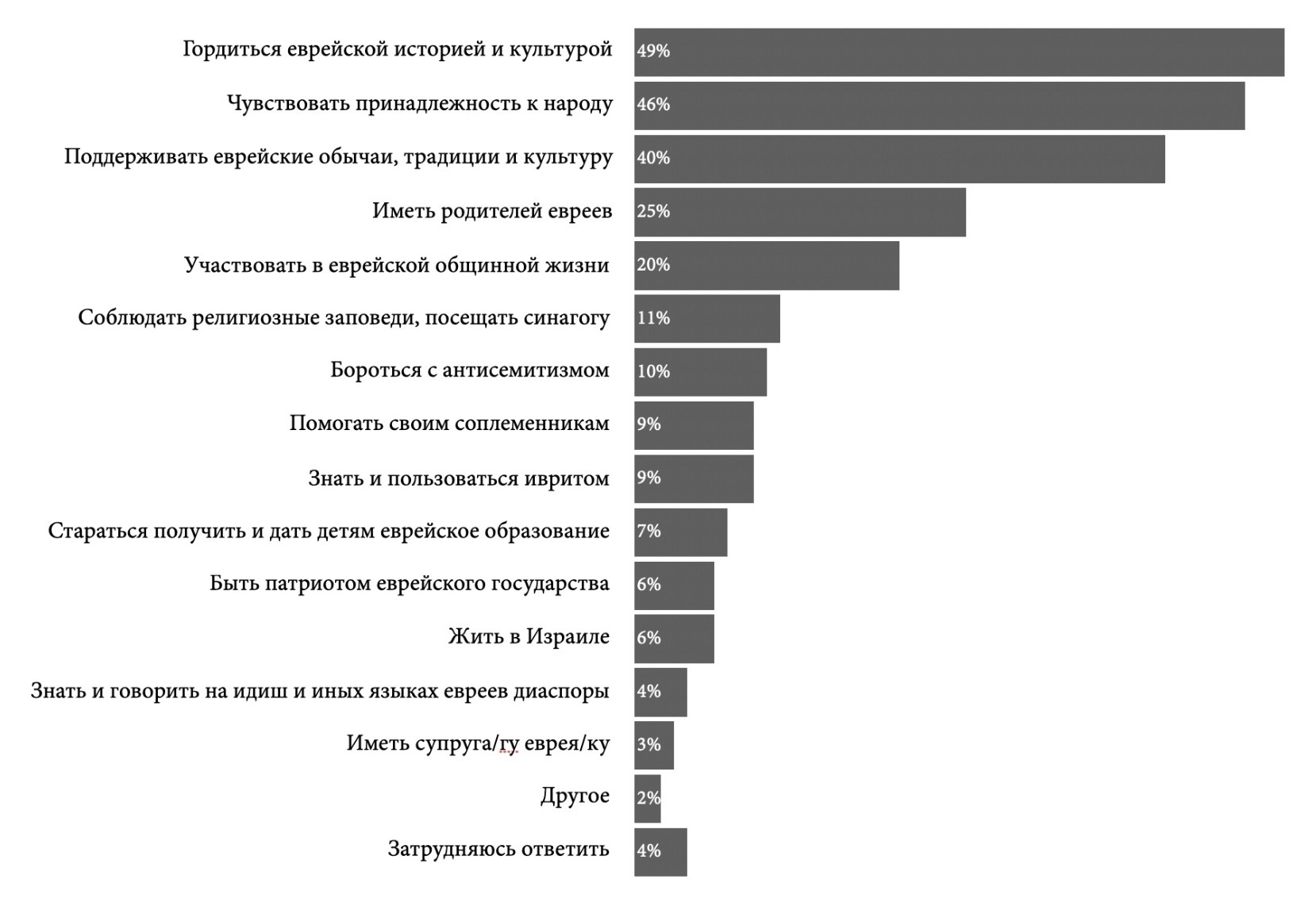
For most respondents, belonging to the Jewish community is based on ideological and cultural factors. 49% of those surveyed believe that being Jewish means being proud of the history and culture of one's people. 46% believe that it is, above all, a sense of belonging to the Jewish people. Only 25% feel Jewish by virtue of being born to Jewish parents (Fig. 5).
Fig. 5 What, in your opinion, does it mean to be Jewish?
For the majority of survey participants, Jewish identity is combined with patriotic feelings toward the country of residence. 54% of respondents are convinced that Jews should, first and foremost, be patriots of the country in which they live. 35% believe that it is desirable to remain patriots of both their country and Israel. Only 5% stated that Jews should be patriots of Israel, regardless of their place of residence.
Answering the question "Which country do you consider, first and foremost, your own?", 85% of respondents named Kazakhstan, and only 7% Israel. 8% chose other states, mainly the Soviet Union and Russia.
It is indicative that the direction of patriotic feeling differs little between affiliated and unaffiliated respondents. However, it is noticeably influenced by the age of the survey participants. The thesis that Jews should, first and foremost, be patriots of their country of residence is shared by 46% of those surveyed under the age of 30, 52% of those aged 30–54, and 60% of those over 55. Soviet patriotism has clearly transformed into the patriotism of the post-Soviet state (Table 5).
Table 5 In your opinion, of which country should Jews be patriots?
| 16-29 years (%) | 30-54 years (%) | 55+ years (%) | Average across the sample (%) |
Jews should be patriots of the country in which they were born and live | 46% | 52% | 60% | 54% |
Jews should be patriots of both their country and Israel | 42% | 35% | 32% | 35% |
Jews should be patriots of Israel, regardless of the country of residence | 4% | 6% | 5% | 5% |
Hard to say | 8% | 7% | 3% | 6% |
The orientation of patriotic feelings is highly dependent on the level of Jewish identity. Among respondents who unconditionally feel Jewish, "dual patriotism" (toward both the country of residence and Israel) is characteristic of 45%; in the group of those who feel Jewish only under certain circumstances, 29% hold this position, and among those who do not feel Jewish at all, the figure is 14%. However, the share of exclusively Israeli patriots does not exceed 6% in any category.
The nature of respondents' patriotism was influenced by their understanding of the very category of "Jews." 45% of those surveyed believe that the Jews of Kazakhstan have much more in common with Kazakhs or local Russians than with Jews of other countries. A noticeably smaller share of survey participants (40%) is convinced that Jews worldwide are a single people. 15% have not decided on their opinion on this issue.
The local orientation of the patriotism of the majority of respondents affects their key behavioral attitudes in the ethno-social sphere. Only for a quarter of those surveyed is it important that their children and grandchildren be Jewish. For 64%, this is insignificant. About 12% found it difficult to answer this question.
Here, however, there is a major difference between affiliated and unaffiliated respondents and between survey participants with different levels of Jewish identity. For 37% of affiliated respondents, it is important that their children and grandchildren be Jewish[2]. Such a desire was expressed by only 17% of the unaffiliated. Among those who unconditionally consider themselves Jewish, the Jewishness of descendants is important for 45%, whereas among those who feel Jewish only under certain circumstances or do not feel Jewish at all, this is significant for only 7–8%.
At the same time, despite a significant share of respondents wishing to preserve the Jewish character of their offspring, there is practically no rejection of mixed marriages. Only 4% of those surveyed do not accept such marriages between Jews and non-Jews. 49% view such unions positively, and for 38%, the nationality of the spouses does not matter. 10% stated that for them it is desirable, but not critical, for Jewish men and women to marry representatives of their own nationality.
Fig. 6 What is your attitude toward mixed marriages between Jews and non-Jews?
The survey did not reveal any acute perception of the problem of antisemitism among respondents. 58% of those surveyed stated that there has never been and is no antisemitism in Kazakhstan. 16% felt that there are neither positive nor negative trends in this area, 11% believe that antisemitism in Kazakhstan has decreased noticeably, and only 4% are convinced that it has grown.
No significant differences in assessments were identified among groups of respondents, including by the most anticipated variable in this context—the degree of feeling a sense of belonging to Jews.
Thus, the ethnocultural self-awareness of the Jews of Kazakhstan contains significant features of Jewish identity but is heavily integrated into the Kazakhstani civic community. Cultural assimilation, based on demographic processes developing in the same direction, is likely to remain the main trend for the Jews of Kazakhstan.
Attitude of Kazakhstani Jews toward Israel
The sample included only 3 individuals with Israeli citizenship and 3 respondents who previously held this citizenship. However, 48% of those surveyed have close relatives in Israel. 16% of respondents have visited Israel repeatedly, 4% lived there for some time, and 13% visited Israel once. At the same time, more than two-thirds of those surveyed have never been to Israel (Fig. 7).
Fig. 7 Attitude toward Israel?
Do you have Israeli citizenship? | Do you have close relatives in Israel? |
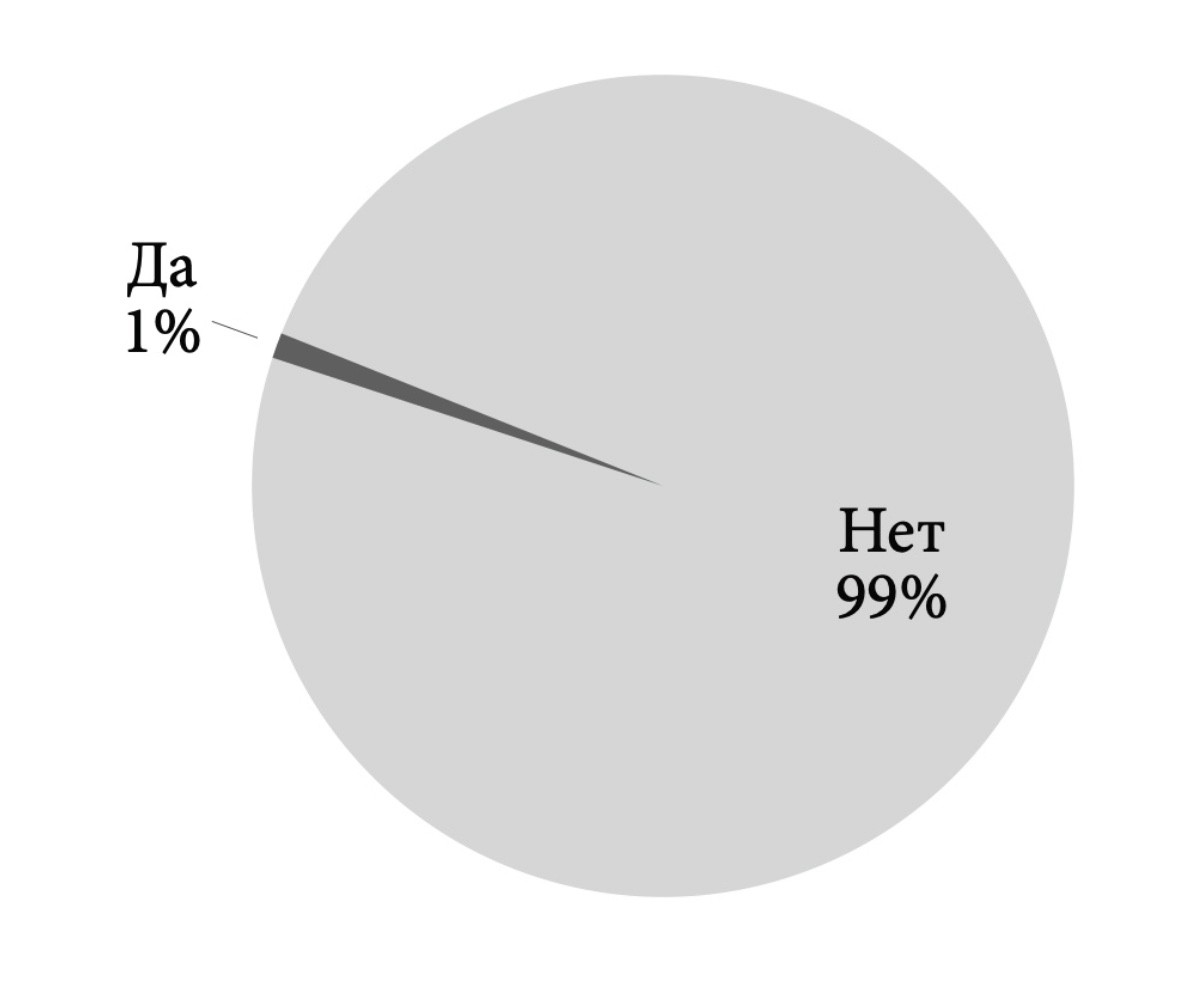 | |
Have you ever been to Israel? | |
Nevertheless, the feeling of solidarity with Israel significantly exceeds the level of direct connections with it. 72% of the survey participants declared solidarity with Israel. Only 15% do not experience such a feeling, and another 13% found it difficult to answer.
At the same time, sympathy toward Israel is not of an ideological nature for the majority of respondents. Two-thirds of those surveyed are attracted to Israel by its high level of economic development. Only for 30% is it most important that Israel is a Jewish state.
Regarding the Jewish character of Israel, respondents' opinions are mixed. Although the largest share of survey participants (33%) is strongly opposed to abandoning the Jewish character of the state, a significant portion of those surveyed holds other views. Thus, 17% favor Israel remaining a Jewish state but are understanding of those who demand changes to its Jewish character. Almost a quarter of respondents (24%) believe that Israel should become a state of all its citizens, regardless of nationality.
No dominant trend was identified regarding emigration to Israel either. 35% of survey participants categorically do not intend to repatriate in the near future. Only 6% have firmly decided to move. 27% will act according to circumstances, and 32% will remain in Kazakhstan "unless something unforeseen happens." Thus, the majority of those surveyed view the issue of emigration to Israel situationally, primarily as a consequence of forced circumstances.
At the same time, significant differences emerged on this issue between groups of respondents. While 40% of unaffiliated participants are categorically not ready for repatriation, only 28% of affiliated ones are. Among respondents under 30, only 18% categorically reject the prospect of moving to Israel; among those aged 30–54, this figure is already 32%, and in the 55+ category, it is 46% (Table 6). Consequently, potential emigration will appear relatively young. The factor of Jewish identity significantly influences plans for emigration (repatriation). Among "unconditional Jews," only 20% of those surveyed categorically do not consider leaving for Israel, while among those who feel Jewish only under certain circumstances, 48% hold this position, and among those who do not feel Jewish at all, the figure is 63%.
Table 6 Do you plan to move to Israel in the near future?
| 16-29 years (%) | 30-54 years (%) | 55+ years (%) | Average across the sample (%) |
Yes, undoubtedly | 8% | 7% | 4% | 6% |
I will act according to circumstances | 38% | 36% | 14% | 27% |
No, unless something unforeseen happens | 36% | 25% | 36% | 32% |
Categorically no | 18% | 32% | 46% | 35% |
Regarding ways to resolve the Arab-Israeli conflict, more than 50% of respondents did not support any of the proposed options. The largest, but not very significant, portion of those surveyed (14%) supports the annexation of all or most of Judea, Samaria, and Gaza to the State of Israel, which should be accompanied by granting official status to Arabs who recognize its Jewish character, combined with a "tough hand" policy toward the rest. Only 4% of those surveyed agreed with the idea of creating an Arab state in all or most of the territories occupied by Israel in 1967. A radical position—to deport all Arabs from Israel and the controlled territories to Arab countries—is held by 11% of respondents. Among those surveyed, 7% also believe that Israel should abandon its Jewish character and open its borders to all who wish to enter, including individuals calling themselves Arab refugees from Palestine.
Thus, the survey confirmed the widespread sense of belonging to Israel and solidarity with the Jewish state among the Jews of Kazakhstan. However, the main priorities for Kazakhstani Jews remain membership in the Kazakhstani civic community and Kazakhstani patriotism. Israel is perceived not so much as the homeland of Jews worldwide, but as an economically developed country with a high standard of living. Repatriation to Israel currently does not have significant potential and may intensify only under negative circumstances.
Prof. Leonid Gurevich, President of the BISAM Central Asia Center for Social and Market Research (Almaty)
Kirill Kartashov, Project Manager at BISAM Central Asia (Almaty)
[1] It was noted above that affiliated respondents are noticeably older than unaffiliated ones.
[2] However, even among affiliated respondents, 52% consider this unimportant.
The views expressed by the experts do not necessarily reflect the official position of the Institute for Euro-Asian Jewish Studies or the Euro-Asian Jewish Congress.

