This is an automated translation and may contain inaccuracies. For citation purposes, please refer to the original Russian version.
It is evident that in the majority of Muslim nations in the Middle East, Jewish life is drawing to a close. The process of repatriation of Jews to their historical homeland, which intensified following the establishment of the State of Israel, has led to a veritable exodus from Islamic countries. Against this background, the enduring Jewish presence in the Islamic Republic of Iran represents a highly atypical phenomenon. Today, Iran is home to the largest Jewish community in the Middle East region outside of Israel. While some view Iranian Jews as pawns in the political maneuvers of the IRI, it is essential to objectively acknowledge the sheer phenomenon of the community's survival under such extreme conditions. It persists despite Iran's deepening isolation, stemming in part from its promotion of aggression and terrorism against Israel and Jews worldwide.
It is evident that in the majority of Muslim nations in the Middle East, Jewish life is drawing to a close. This reality is profoundly regrettable, as these communities historically symbolized centuries of coexistence between Jews and Muslims. Islamic countries were once home to outstanding figures of culture and science who lived and created there. The process of repatriation of Jews to their historical homeland, which intensified following the establishment of the State of Israel, led to a veritable exodus from Islamic countries. For instance, in Syria—which for centuries boasted large and prosperous Jewish communities and served in the Middle Ages as a center of Jewish learning, with the works of Syrian rabbis well-known in Europe and published globally—not a single Jew can be found today.
Jewish life has virtually ceased to exist in Egypt, with which the entire formative history of the Jewish people is inextricably linked. It was here that the pivotal events of Jewish history—deliverance from slavery and the Exodus—unfolded. In the Middle Ages, Jewish life flourished once more, and Jewish education reached the highest standards. It was in Egypt that such a genius of Jewish scholarship as Saadia Gaon thrived. On the eve of the founding of the State of Israel, 65,000 Jews resided in Egypt, and the community was regarded as the most urbanized and emancipated in Asia and Africa. Today, its numbers are estimated in the mere dozens. A similarly negligible number of Jews remain in Yemen, where the community's history dates back to the era of King Solomon and the Queen of Sheba. The disappearance of Jewish life can likewise be observed in Iraq, Lebanon, Saudi Arabia, and Jordan.
Jews in Iran
Against this background, the enduring Jewish presence in the Islamic Republic of Iran represents a highly atypical phenomenon. Today, Iran is home to the largest Jewish community in the Middle East region outside of Israel. Estimates of its size vary: in 2015, Siamak Moreh-Sedegh, the representative of the Jewish community in the Iranian parliament, estimated the number of Jews living in Iran at 25,000. Other assessments suggest their numbers do not reach even 10,000.
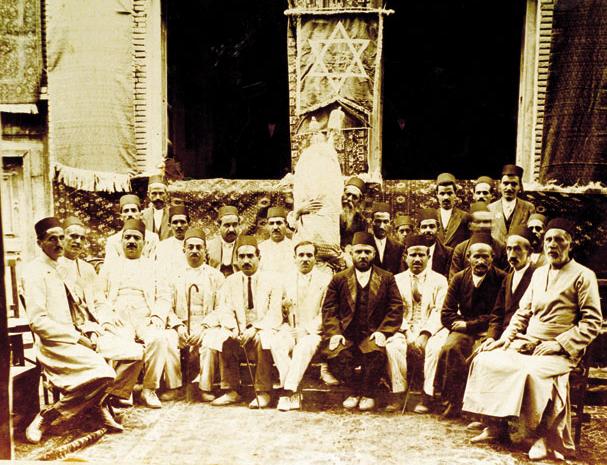
The Jewish community of Iran, with a tradition of over two and a half millennia of residency in the country, possesses a rich cultural and historical heritage demonstrating its deep roots in Iranian soil. Over centuries of cohabitation, the Jews long ago transitioned from Hebrew to local Judeo-Persian dialects, which are currently on the verge of extinction. Due to their status as a religious minority, Jews resided in designated quarters until the early 20th century and generally had limited contact with the surrounding population. Nevertheless, the majority of Iranian Jews were at least bilingual. In addition to local Judeo-Persian dialects, they naturally spoke standard Farsi. Speakers of Judeo-Persian refer to their language as "Farsi." Non-Jews often refer to this language as Jidi or Judi, terms that carry a derogatory or pejorative connotation. In recent decades, the ethnonym Kalimi has become the most widely used. There are also local Jewish dialects that vary across different regions of the country. For example, in the Isfahan region, a unique dialect emerged—a medieval urban argot of the residents of Isfahan, which the Jewish community, residing for centuries within the ghetto, preserved intact. It is still utilized by various generations of local Jews, as well as by emigrants from this city residing in Israel and the United States, primarily in Los Angeles and New York.
In the 20th century, when Jews were granted equal civil rights alongside all other citizens, a process of integration out of the Jewish quarters began, accompanied by a gradual transition to standard Farsi instead of local Jewish dialects. However, linguistically, the Farsi spoken by Jewish citizens of Iran differed for decades from the language of the non-Jewish population in its vocabulary, specific terminology, phraseology, and a distinctive intonation and pronunciation that revealed the community's unique identity. Naturally, this pertained primarily to the first generation, while subsequent generations transitioned fully to standard Farsi.
Representatives of the third and subsequent generations of Iranian Jews, having left the urban Jewish ghettos, no longer comprehend or utilize local Jewish dialects. Jews who received a modern education in Farsi command the language better than their coreligionists who received only traditional Jewish education within the confines of the Jewish quarters.
A vast number of cultural and historical heritage sites are associated with the centuries-long Jewish presence in Iran. Some of these are listed in the state registry as protected monuments. However, in recent years, multiple incidents have occurred around these sites, driven by the demands of radical Islamists to convert Jewish shrines into exclusively Islamic cultural heritage sites.
Historical Retrospective
The Jewish community of Iran has known more prosperous times. The history of the community dates back to the 8th century BCE, when, as a result of the Assyrian captivity, a portion of the Jewish population was resettled in Media—the first major state on the territory of modern Iran. Two centuries later, in 550 BCE, King Cyrus (Kourosh) founded the Achaemenid Empire, within whose boundaries all Jews of that era resided. In 538 BCE, he issued his historic decree allowing the Jews to return to Jerusalem and rebuild their destroyed Temple. However, a significant portion of the Jewish population, largely assimilated and having attained social and economic prosperity, preferred to remain in diaspora. Thus, the nucleus of the Jewish diaspora east of the Euphrates was established.
By the beginning of the Common Era, a sizable and well-organized Jewish population resided in Iran, enjoying a highly developed system of local communal self-governance. Jews held influential positions within power structures, reaching the highest echelons. A sophisticated spiritual culture flourished, which "at times even challenged the primacy of the Palestinian sages." It was from Iran that Jewish communities spread further eastward, initially to Central Asia and subsequently to regions beyond.
With the advent of Islam in the 7th century, the status of non-Muslim minorities became governed by Islamic legal principles. Jews, alongside Christians, were recognized as "People of the Book," granting them protection of life and property and the right to practice their religion. At the same time, they were denied political rights and faced significant restrictions on their civil liberties. A marked deterioration in the position of Iranian Jews occurred with the declaration of Shiism—characterized by intense intolerance toward "infidels"—as the state religion of Iran during the Safavid dynasty (1502–1736).
Improvement in the lives of Iranian Jews arrived only with the accession of Shah Muzaffar al-Din (1896–1907), during whose reign the Constitutionalist movement unfolded, leading to tangible reforms in many spheres of life. The size of the Jewish community was estimated at that time to be 83,000. The majority resided in Central and Southern Iran, with others in Iranian Azerbaijan and Kurdistan, and a small number along the Persian Gulf coast. They were engaged primarily in petty trade, crafts, and among the wealthier, in moneylending, jewelry, tavern keeping, and the carpet and antique trade. The liberalization of political and socio-economic life allowed Jews to leave the ghettos and enabled the expansion of secular and religious educational networks. In 1915, the first weekly newspaper in Judeo-Persian, "Shalom," was established. Zionist organizations also emerged.
However, the de facto emancipation of Iranian Jewry is associated with the establishment of the Pahlavi dynasty in 1925. Numerous reforms in socio-political and cultural life, the transition to a secular educational system, and the curtailment of the Shiite clergy's control over the country's internal affairs had a highly beneficial impact on the Jewish community. Jews were permitted to study in state educational institutions and enter civil service. Economic reforms enabled Iranian Jews to fully utilize their entrepreneurial talents and initiative, which had been restricted for centuries within the ghettos. The state policy of Iranian nationalism and the glorification of the country's pre-Islamic history and identity was welcomed by the majority of Jews, who felt a renewed connection to the nation's cultural heritage and ancient history.
By the end of World War II, Iranian Jews had established robust connections with various Jewish communities in Europe and the Americas. This also led to a revitalization of local religious and cultural life. A Zionist youth movement emerged, focusing primarily on preparing young Jewish men and women for emigration to their historical homeland.
The postwar decades marked a period of genuine prosperity for the Iranian Jewish community. The peak of this era coincided with the implementation of the "White Revolution." This fifteen-year period (1963–1978) brought significant achievements to Iran in terms of industrial growth, agrarian reform, and notable cultural transformations. Iran joined the ranks of the top ten developing nations in the world, increasing its gross national product eightfold during these years. This had a highly positive impact on the Jewish community in Iran, despite its reduction in size due to continuous emigration to Israel. The community began to enjoy virtually complete cultural and religious autonomy. The educational and cultural level of Iranian Jews rose significantly, with many entering professions such as medicine, engineering, pharmacology, and academia. Religious educational institutions (yeshivas) were established in several cities, notably Tehran and Shiraz, and the number of schools teaching Jewish tradition, Torah, Hebrew, and Jewish history increased. The publication of books on Jewish themes in both Farsi and Hebrew grew substantially.
The leadership of the Jewish community maintained close relations with the last Shah of Iran, Mohammad Reza Pahlavi. The rising prestige and role of Iranian Jews in the country's life were significantly bolstered by the growing international stature of Israel, particularly after its victory in the Six-Day War of June 1967, and the achievements of the Jewish state in high technology, economics, culture, and science. Bilateral relations between Iran and Israel, which peaked during this period, were mutually beneficial and fully aligned with the expectations of the Iranian leadership.
Consequently, on the eve of the Islamic Revolution, Iran was home to the largest Jewish community in the Middle East outside of Israel, constituting less than 0.25% of the country's population. However, the economic weight, professional standing, and cultural potential of the community were disproportionately higher. For instance, among the 4,000 professors and senior faculty members in Iranian universities, 80 were Jewish, representing 2% of the total. Jews made up 6% of physicians and 4% of university students. Notably, the Jewish Students' Association at Tehran University was the only student organization officially permitted by the authorities at the time.
Under Islamist Rule
With the sharp escalation of the anti-Shah movement in 1977, the temporary advantages previously enjoyed by Iranian Jews turned to their detriment. Their economic prosperity, proximity to the Shah, support for his political course, and solidarity with Israel and "American imperialism" placed the community in a precarious position as central authority weakened and the anti-Shah opposition consolidated. Under these circumstances, the leadership of the Jewish community deemed it prudent to distance itself from the Shah, expressing solidarity with anti-government demonstrators in November 1978 and thereby signaling unconditional support for the impending Islamic Revolution.
The Islamic Revolution, which culminated on February 1, 1979, radically altered both Iran's relations with Israel and the life of the entire Jewish community. In effect, it marked the beginning of a massive exodus of Jews from Iran. On the eve of the revolution, 85,000 Jews lived in Iran, making the community one of the largest religious minorities in the country. By 1999, within twenty years of the establishment of the Islamic regime, over 50,000 Jews had left Iran.
Despite assurances from various Iranian religious figures that their struggle was directed against Zionism, Israel, and Jewish global influence rather than Judaism and the Jewish people, the ideological doctrine of Ayatollah Khomeini synthesized traditional Islamic anti-Jewish concepts with entrenched European anti-Semitism. Jews are cast as "sworn enemies" of Islam, and Israel and Zionism as adversaries of the Islamic world. Ostensibly, the policy of the Islamic regime toward the Jewish religious minority is based on the premise of a clear distinction between Jews and Zionism. In practice, however, Iranian leaders routinely conflate Iranian Jews with Israel and Zionism.
This climate led to anti-Jewish persecution under the new regime reaching alarming proportions. Dozens of Jews, including prominent community leaders, fell victim to these campaigns. Immediately following the consolidation of the Islamic regime, large-scale confiscations of Jewish-owned property, including enterprises, hotels, and cultural institutions, were carried out. Over time, a legal framework was established that significantly impeded Jews from obtaining licenses for small and medium-sized businesses.
At the official level, the religious life of Jews is not prohibited in Iran. Dozens of synagogues remain active, and their significance in communal life has increased, as they offer a space where Jews feel relatively secure. In Tehran, two Jewish schools operate—"Abrishami" for boys and "Ettefagh" for girls—both headed by Muslim principals appointed by the Ministry of Education. While Jewish students constitute the majority, Muslim students also attend. Jewish students study the Tanakh in Persian. However, classes are held on Saturdays, and the textbooks utilized contain pervasive anti-Semitic and anti-Israel narratives. While Jews are permitted to practice Jewish traditions, including the consumption of wine, in their homes and places of worship, this remains strictly prohibited for Muslims.
Tehran hosts a specialized computer training center for Jewish youth, as well as a trilingual (including Hebrew) communal internet portal. The intellectual life of the community is reflected in the monthly journal "Ofogh-e Bina." Approximately 55% of Iranian Jews are currently concentrated in Tehran, where communal services—such as kosher food, ritual slaughter, youth clubs, and matchmaking services—are most accessible. The capital also houses 20 of the 40 active synagogues in Iran. The majority of Iranian Jews adhere to the tenets of their faith, particularly within the sizable middle class. Overall, the Iranian Jewish community is currently more religious than in the pre-revolutionary period, and local synagogues are more well-attended than before.
Despite the deep-seated history of the Jewish community's integration into Iranian society, specific regulations exist that segregate Iranian Jews from the Muslim population. This is manifested in periodic restrictions on international travel, difficulties in obtaining exit visas, and special passport stamps indicating affiliation with the Jewish minority. For many years, owners of commercial establishments, particularly food businesses, were required to display signs indicating their status as a religious minority. Other forms of explicit discrimination persist under the category of human rights violations. These include obstacles in employment, higher education, and the judiciary, where systemic preferences for Muslims and limitations on religious minorities, particularly Jews, remain in force. This discrimination restricts career advancement in the civil service, public education, and academia.
Another distinct phenomenon is the utilization of anti-Semitism and the "Jewish factor" in internal political struggles within Islamic Iran. In recent decades, radicals have frequently attempted to attribute Jewish ancestry to certain figures within the Islamic regime to discredit them. To this end, the term "crypto-Jews" has gained currency. For instance, in October 2009, reports emerged in both international and Iranian media alleging Jewish roots of the then-President Mahmoud Ahmadinejad, suggesting that he attacked global Jewry aggressively precisely to obscure his heritage.
A more recent example involves the financial and property scandal surrounding the prominent Larijani family. The five Larijani brothers are the sons of the respected Shiite theologian Ayatollah Amoli. In late 2016, claims circulated in local media alleging that the Larijani clan possessed Jewish origins and had converted to Islam "to undermine the foundations of the Islamic regime from within." Naturally, the dissemination of such narratives in state-aligned media serves to inflame anti-Semitic sentiments within Iranian society.
Current Situation
There is sufficient evidence to assert that no official mechanisms exist within the country to neutralize anti-Semitic sentiment. The anti-Israel and anti-Semitic campaigns in state media, initiated under Ayatollah Khomeini, remain unabated. Despite this, the past two decades have witnessed a relatively stable approach toward the domestic Jewish community. Following the upheavals of the revolution, the community has largely restored its spiritual, educational, and cultural institutions. Its representation in the Islamic Consultative Assembly (parliament) continues without interruption. Iranian electoral law guarantees this small community, representing roughly 0.04% of the population, a dedicated seat in parliament.
It is understood that Jewish members of parliament must adopt conformist positions. They frequently deliver statements condemning Israel as the primary adversary of Iran and the Islamic world, and participate in state-sanctioned anti-Israel demonstrations. Nonetheless, they occasionally attempt to defend the practical rights of the community. In October 1999, the Jewish representative Manuchehr Eliasi spoke in parliament in defense of a group of arrested Jews accused of espionage. Another representative, Maurice Motamed, who actively defended the rights of his coreligionists, was prematurely recalled from the legislature.
Throughout the existence of the Islamic regime, surges of domestic anti-Semitism have periodically occurred, manifested in the dismissal of Jewish employees or pressure to convert to Islam to retain social standing. These tendencies typically intensify during economic crises, when the regime seeks an external adversary to foster national cohesion. This routinely leads to heightened anti-American rhetoric, condemnation of its ally Israel, and, consequently, pressure on the domestic Jewish community, which many in the IRI continue to associate with Israel. The evidence indicates that anti-Semitic propaganda is a calculated campaign targeted at specific segments of Iranian society.
Naturally, the position of the Jewish community is subject to shifts in the country's political landscape. The community exists in a state of fragile equilibrium that could be disrupted at any moment. Its stability depends heavily on the escalating confrontation between the Islamic Republic of Iran and the State of Israel, as well as the dynamics of internal Iranian politics.
Periods of relative liberalization, such as those following the Iran-Iraq War or during the presidencies of reformists Mohammad Khatami (1997–2005) and Hassan Rouhani (2013–2021), have had a positive impact on the community. During these years, several long-standing issues were resolved. Under Khatami, travel restrictions for Iranian Jews were eased, enabling them to reconnect with relatives abroad, including in Israel. Another notable gesture occurred in December 2014, when a monument dedicated to Jewish soldiers fallen in the Iran-Iraq War (1980–1988) was unveiled at the Jewish cemetery in Tehran, attended by the Deputy Speaker of Parliament, Mohammad-Hasan Abutorabi-Fard. The event was intended to project an image of Islamic Iran as a multi-religious state that respects freedom of worship.
Throughout the post-revolutionary era, the Jewish community and the state leadership have navigated a delicate path, balancing the presentation of the community as a protected religious minority against the state's official ideology of anti-Zionism, anti-Semitism, and anti-Israel rhetoric. While the regime has officially disavowed systematic persecution of its Jewish citizens, anti-Semitic rhetoric is regularly disseminated by high-ranking religious figures and conservative media. Despite these challenges, the Iranian Jewish community remains the largest in the Middle East region outside of Israel. Under a regime that subjects it to severe constraints, the community continues to maintain its religious and communal life. Facing significant demographic decline, economic difficulties, and social discrimination, it strives to preserve its cultural and material heritage. While some view Iranian Jews as pawns in geopolitical maneuvers, the resilience of the community under such circumstances remains a significant phenomenon. It persists despite Iran's deepening international isolation, driven in part by its backing of aggression and terrorism against Israel and Jewish targets globally.
The views expressed by the experts do not necessarily reflect the official position of the Institute for Euro-Asian Jewish Studies or the Euro-Asian Jewish Congress.
