This is an automated translation and may contain inaccuracies. For citation purposes, please refer to the original Russian version.
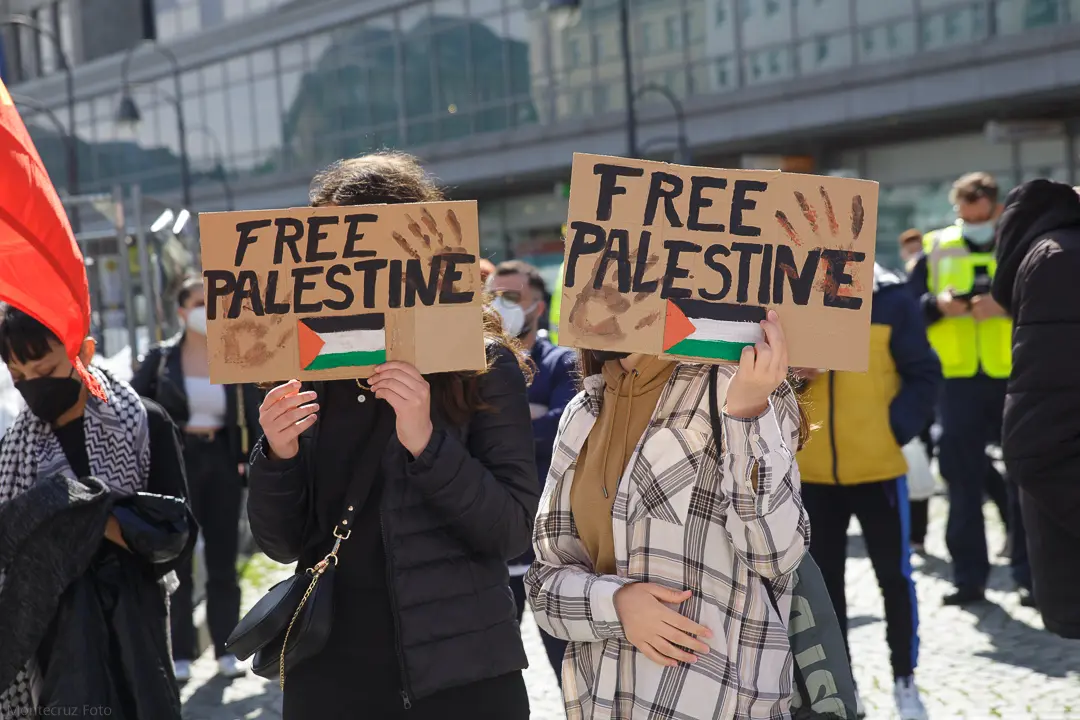
Photo: Montecruz Foto
The current Middle East war has already had, and will certainly continue to have, diverse consequences. For instance, the informational atmosphere surrounding the IDF (Israel Defense Forces) Operation "Iron Swords" to eliminate the radical Islamist enclave in the Gaza Strip—launched in response to the October 7, 2023, massacre perpetrated by militants of the Hamas terrorist group controlling the sector in border Israeli communities—seems to have the potential to put an end to a long-standing debate. Specifically, whether anti-Zionism and biased assessments of the actions and policies of the Jewish state constitute "legitimate criticism of Israel" or are simply a thinly veiled form of modern anti-Semitism.
The Legitimation of Anti-Israel Anti-Semitism After October 7, 2023
In fact, the answer to this question was already obvious to many at the beginning of the decade, when an unprecedented number of high-profile anti-Semitic incidents under anti-Israel slogans were recorded even in regions where they were previously considered impossible. This includes the United States, home to the world's largest Jewish community, as well as the European Union. For instance, monitoring of anti-Semitic manifestations in five EU states—Germany, France, the United Kingdom, Spain, and Ireland—conducted from late 2019 to late 2020 by the Institute for National Security Studies at Tel Aviv University (INSS) in cooperation with the Jewish Agency "Jewish Agency for Israel," showed a gradual strengthening of anti-Semitic radical factions (both right- and left-wing) within the local political class, at the expense of eroding its "moderate core." As a result, anti-Semitic views—once the domain of political outcasts—are becoming almost mainstream.
Against this backdrop, previously accepted views on Holocaust remembrance and the impermissibility of anti-Semitic xenophobia are giving way to the distortion and rewriting of history by right-wing radicals and the anti-Israel discourse of left-wing extremists. Social networks, which distribute xenophobic and anti-Semitic content extensively and almost without restriction, only catalyze this process. The events of October 7, 2023, and the subsequent 4.5 months have merely resulted in the near-total disappearance, among open or latent anti-Semites in local ultra-left and Islamic circles, of any perceived need to maintain even a nominal distinction between negativity toward Jews (still somewhat unacceptable in Western countries) and hatred and rejection of the Jewish state.
It is clear that propaganda of this kind attempts to sway the main body of rationally and objectively thinking people. This does not refer to "professional (and well-paid) anti-Zionists" such as Francesca Albanese, the UN Special Rapporteur on the situation of human rights in the Palestinian territories, according to whom "the victims of October 7 were not killed because they were Jewish, but in response to Israeli oppression." Nor does it refer to UN Relief Chief Martin Griffiths, who continues to assert, despite everything, that "Hamas is not a terrorist group... it is a political movement." Nor does it refer to the leaders and official propagandists of the "Global South" regimes (and sympathetic progressive and immigrant circles in Europe and America), for whom Israel—both in its own right and as a symbol of "world Jewry"—serves as a convenient target for an "anti-colonial narrative" that provides ideological backing for their geopolitical interests in opposition to the "Global West."
Large-scale studies published in recent weeks on the nature of the current wave of anti-Semitism worldwide should dispel any remaining doubts on this matter. For example, the joint annual report on the state of anti-Semitism worldwide in 2023, presented to the Israeli government by the Ministry of Diaspora Affairs (MDA), the World Zionist Organization (WZO), and the Jewish Agency (JAFI) on the eve of International Holocaust Remembrance Day, stated that the events of October 7 "pushed the level of anti-Semitism in the world to unprecedented heights" ("to all-time highs"). According to these data, the number of anti-Semitic incidents worldwide from October to December 2023 was six times higher than during the previous nine months, and overall, the number of such incidents in 2023 increased by more than 2.3 times (235%) compared to the previous year—which had already recorded a 43% increase in acts of anti-Semitic violence and vandalism compared to 2021.
In terms of regional distribution, according to the study by the Ministry of Diaspora and national institutions, nearly half (46%) of these incidents in 2023 occurred in the United States. Indeed, the American Jewish Committee (AJC) report "The State of Antisemitism in America 2023," published in mid-February and containing a representative survey of the Jewish and non-Jewish population of the US, showed that the proportion of American Jews who rated the situation in the US in 2023 as not very safe or not safe at all for Jews (63%) grew by 1.5 times (41%) and twofold (31%) compared to 2022 and 2021, respectively. Furthermore, the proportion of those who directly linked their perception of decreased personal safety as a Jew in the US to the Hamas terrorist attack on Israel reached 78%.
It is telling that such a sharp increase in the perception of threat to Jewish existence in the US is not only a concern for the country's Jewish community but is also perceived as a challenge by American society as a whole—which, as is well known, maintains a high level of support for Israel as an ally of America and an important symbol of shared values. According to the same survey, the percentage of Jews and non-Jews who agree that the statement "Israel has no right to exist" is anti-Semitic was virtually identical (85% and 84%).
The United Kingdom ranked second in the world in the number of anti-Semitic incidents triggered by Hamas's aggression and Israel's response. According to the Community Security Trust (the security organization for the UK's Jewish communities), 2023 saw a peak in the number of such incidents over nearly the past 40 years. The total number of anti-Semitic hate incidents that year (4,103) exceeded the 2021 figure (2,261) by 81% and the 2022 figure (1,662) by 147%. Moreover, two-thirds (specifically, 66%) of these cases in 2023 occurred between October 7 and the end of December—a 589% increase compared to the same period of the previous year. Additionally, 2,185 potentially or actually hostile actions against Jews and Jewish facilities and/or anti-Israel demonstrations were recorded which, following investigation, were not classified as anti-Semitic, despite the fact that few doubted such an underlying motive at the time.
Following in the ranking of violent anti-Semitic incidents worldwide, according to the MDA-WZO-JAFI report, was Germany with 9%; France and Canada accounted for 6% each, and Australia accounted for 2.5%.
Anti-Semitism in the Former USSR: From Latent to Overt
In turn, the situation in the former USSR long appeared more favorable compared to several European and Middle Eastern countries. It has been widely believed that with the collapse of the USSR, the cessation of anti-Jewish state policies and discriminatory practices, and the loss of their status in the public consciousness as the "primary internal enemy," the post-Soviet space had become a "continent of safety" regarding manifestations of "active" anti-Semitism.
For instance, the Jewish Agency and WZO review "The State of Anti-Semitism in 2021" showed that 9 of the 20 most high-profile anti-Semitic incidents at the time occurred in the US, 3 in the UK, 2 in France, and 1 each in Argentina, Italy, Belgium, Sweden, Germany, and Austria. Post-Soviet countries did not feature on this list. By late 2023, judging by the aforementioned report from these organizations and the Ministry of Diaspora Affairs, the situation had changed fundamentally. This time, among the 10 most serious anti-Semitic incidents in the world, two occurred in the former USSR—in Dagestan, Russia (5th place) and in Yerevan, the capital of Armenia (9th place). Overall, the authors of the report concluded that Russia, Belarus, Armenia, and post-Soviet Central Asia saw "the highest increase in anti-Semitism over the past year in general, and related to the war in the Middle East in particular."[1] In other words, anti-Israel and anti-Semitic sentiments, which seemed to have remained in the Soviet past, returned in full force with the start of the IDF operation against the terrorist enclave of Palestinian Islamists.
While Israel's war against pro-Iranian and other terrorist groups in the Gaza Strip, on the border with Lebanon, in Syria, and in Judea and Samaria indeed became the common denominator of the causes or pretexts for the current anti-Semitic wave—unprecedented for the last 30 years in these post-Soviet regions—the underlying motivations in each case were distinct.
For example, observers suggest that the explanation for high-profile incidents of this kind in the Muslim republics of Central Asia, where anti-Semitic manifestations were previously almost non-existent, should be sought in instigation by local and external Islamist circles. In addition to an unprecedented wave of anti-Semitic publications in the media, and especially on social networks, 2023 was marked by scandalous demands to close the country's only Jewish school in Bishkek, the capital of Kyrgyzstan, as well as threats of violence against Jewish communities in Kazakhstan and Uzbekistan (including an attack on Chabad emissaries in Tashkent and vandalism against two local synagogues—Ashkenazi and Bukharian).
The massive anti-Israel and anti-Semitic propaganda from these entities fell to some extent on soil prepared by "Islamic solidarity" among the populations of Uzbekistan and Kyrgyzstan, which are also experiencing a period of economic and political instability characteristic of other Central Asian states. However, there was no evidence of widespread public demand or interest from the authorities (who, it should be noted, suppressed this wave quite rapidly). This factor played an even smaller role in Kazakhstan, where both the authorities and the majority of society are preoccupied with domestic affairs and prefer not to support either side in the Middle East conflict.
In Belarus, the situation is different: the primary messaging originates from the top. While official Minsk commented relatively cautiously on the events of October 7 and their subsequent development, the actual stance of the ruling circles, which almost fully mirrors Russian narratives, was reflected by state media and leading pro-government social media commentators. There appeared a considerable number of statements targeting Israel, supporting Hamas, and declaring that "the victory of Palestine (de facto referring to Hamas) is a victory for Moscow and Minsk."
Against this background, previously recorded and relatively moderate anti-Semitic motifs assumed a much more prominent tone in 2023. Among these is a new expression of the old Soviet tradition of trivializing the uniqueness of the Holocaust of European Jewry and attempting to conceal it behind the facade of a "common tragedy" of the then-Soviet, now-Belarusian people. There is also a new version of the narrative concerning "liberal traitors of the motherland," actively developed since the failed anti-authoritarian protests of 2020, with a clear emphasis on the (alleged) dominance of Jews among them.
Conversely, the Armenian model of reaction to the current outbreak of the Middle East conflict represented a variation of classic everyday anti-Semitism—formally discouraged, yet not met with serious opposition from the authorities. The MDA, WZO, and JAFI report cites Dr. Nati Kantorovich, head of the research department of the "Nativ" liaison bureau for East European Jews at the Israeli Prime Minister's Office and an expert at the Institute for Euro-Asian Jewish Studies. According to his analysis, echoing anti-Semitic terminology that has gained traction in the country over the last three years, Armenian social networks showed an enthusiastic reaction to the Hamas attack, actively distributing the visual propaganda of Palestinian terrorists, expressing joy over Israel supposedly "receiving its deserved punishment," calling for support for Hamas, and making provocative comparisons of Israel and Azerbaijan to Nazi Germany.
Prominent public figures also contributed to this public and political discourse, widely utilizing platforms readily provided to them by the media in Armenia and the Armenian diaspora. For instance, Vladimir Poghosyan, a former high-ranking Armenian intelligence officer known for his anti-Semitic views, became notorious for his aggressive rhetoric against Israel and incitement against Jews. It was largely due to the activities of such figures that the tiny Jewish community of Armenia repeatedly became the target of anti-Semitic harassment, culminating in two attempted arson attacks on the country's only synagogue on October 2 and November 15, 2023.
Generally, experts agree that the cause of this public reaction is the trauma of Armenians from their defeats in 2020 and 2022 in the armed conflict with Azerbaijan over Karabakh/Artsakh—an Armenian autonomy within the Azerbaijan SSR, unofficially annexed by Armenia following the first Karabakh war immediately after the collapse of the Soviet Union. This frustration is directed at Israel, a close ally of Baku and a major supplier of weapons to the Azerbaijani army. An additional factor is Armenia's strategic reliance on Iran, an existential enemy of Israel, which prompts a certain segment of Armenian society to sympathize with the opponents of the Jewish state. Adding fuel to the fire in this context are other Armenian-Israeli disputes, which under different circumstances might seem minor, such as a land dispute in Jerusalem involving members of the local Armenian diaspora.
Naturally, all of this rebounds upon the Jewish community of Armenia, which, it should be noted, makes every effort to remain outside the context of these geopolitical clashes and even actively participates in public diplomacy in the interests of Yerevan. It seems, however, that neither the patriotic sentiments of local Jews nor the fact that Israel is not the sole supplier of weapons to Azerbaijan (others include Turkey and Russia, with which Armenia, despite its declared turn toward the West, continues to maintain quite close partner relations) makes a significant impression on that part of Armenian society where, as the authors of the Ministry of Diaspora and national institutions report observe, "anti-Semitic sentiments are deeply rooted."
Of course, one should not automatically dismiss the view that the real level of xenophobia and tolerance in a given society should be judged not by attitudes during armed conflicts, but in calmer times. However, those who believe that behavioral models during crises, including those provoked by wars, are indicators of the actual state of affairs are also correct in their own way. A compelling example in this sense is Ukraine, which has been in a full-scale war with Russia since February 2022, where in 2023, as in the previous year, a significant decline in anti-Semitic manifestations was observed.
Despite considerable diplomatic differences between Kyiv and Jerusalem over the past two years, Ukraine's leaders expressed unequivocal support for Israel and sharply condemned Hamas and its patrons in Tehran. A powerful wave of solidarity with Israel and sympathy for Israelis swept through local society, as their experience is fully understood by Ukrainians who have been in a similar position for two years.
Russia: Anti-Semitism in the Context of Geopolitical Interests. Russia's stance on the new war in the Middle East is significantly different: Moscow has quite clearly, though still primarily at a declarative level, sided with the adversaries of the Jewish state. The contradiction between Israel's stated objective for Operation "Iron Swords"—the destruction of the radical Islamist terrorist regime in the Gaza Strip—and Russia's current military and geopolitical interests became apparent relatively quickly, as did the impact of this new trend on the population of the Russian Federation.
A major role in this regard was played by the pronounced pro-Palestinian—and thus anti-Israel—stance adopted by Russian state media, whose coverage frequently featured anti-Israel statements and interpretations bordering on anti-Semitism, including the equation of Zionism with Nazism, reminiscent of Soviet-era communist propaganda. Logically, polls and discussions on social networks almost immediately indicated a notable decline in public sympathy for Israel. Concerns began to be voiced in the media and professional communities regarding a potential revival of Soviet-era anti-Zionist narratives, which, besides expressing the USSR's strategic positions and interests internationally, also served as a cover for state-sanctioned and tolerated everyday anti-Semitism by the authorities.
This is despite the fact that just two years ago, anti-Semitism in the post-Soviet space, apart from occasional "atypical occurrences," seemed to have become almost a "non-issue." Indeed, the annual number of anti-Semitic assaults and vandalism against Jewish sites in former Soviet countries with substantial Jewish populations—primarily Russia and Ukraine—ranged from isolated cases to fifteen or twenty incidents in "peak years." Monitoring of public sentiment in post-Soviet countries showed a steady improvement in the population's attitude toward their Jewish fellow citizens. For instance, regular public opinion polls in Russia, conducted since 1992 by the respected Moscow-based Levada Center, showed that approximately 10% consistently view Jews "with sympathy," over 80% have a "positive-to-neutral" attitude, and a negative attitude was characteristic of only a fifth of respondents.
What could have happened to cause such a radical shift in the situation almost overnight?
The reason, apparently, is that neither everyday nor, in a sense, state anti-Semitism (which took on a "political" character in post-Soviet times) had disappeared; they had merely entered a latent phase. According to observers, traces of both remain clearly visible in the former USSR, as do the associated fluctuations in anti-Semitic xenophobia. This is reflected primarily in a readiness to support, to some extent (should the authorities deem it "expedient"), policies of ethnic discrimination or restrictions on access to significant social positions for all "non-indigenous" ethnic groups, including Jews, as well as their use as a "social lightning rod" during times of political tension.
Concerns were raised that, in the current climate, the legitimization of anti-Semitic rhetoric could trigger a transition of the latent anti-Semitism, which is quite widespread in Russia, into an open form. As demonstrated by the first attempt (fortunately unsuccessful) at a Jewish pogrom in the history of post-Soviet Russia in late October 2023 in the cities of Makhachkala and Nalchik in the autonomous republic of Dagestan, this is precisely what occurred.
Drawing a general conclusion, it is difficult to disagree with the authors of the "Antisemitism 2023" review: developments in several countries of the former USSR, and globally, demonstrate that anti-Semitic rhetoric, triggered by hatred of the Jewish state, is no longer an isolated phenomenon but part of a broader process of inciting violence against Jews. Countering these trends and their root causes is an urgent necessity not only for Israel and the Jewish world but is also critical for democratic nations as a whole.
[1] Antisemitism 2023. MDA, WZO and JAFI, January 2024, p. 99
The views expressed by the experts do not necessarily reflect the official position of the Institute for Euro-Asian Jewish Studies or the Euro-Asian Jewish Congress.
