This is an automated translation and may contain inaccuracies. For citation purposes, please refer to the original Russian version.
Photo: John Englart
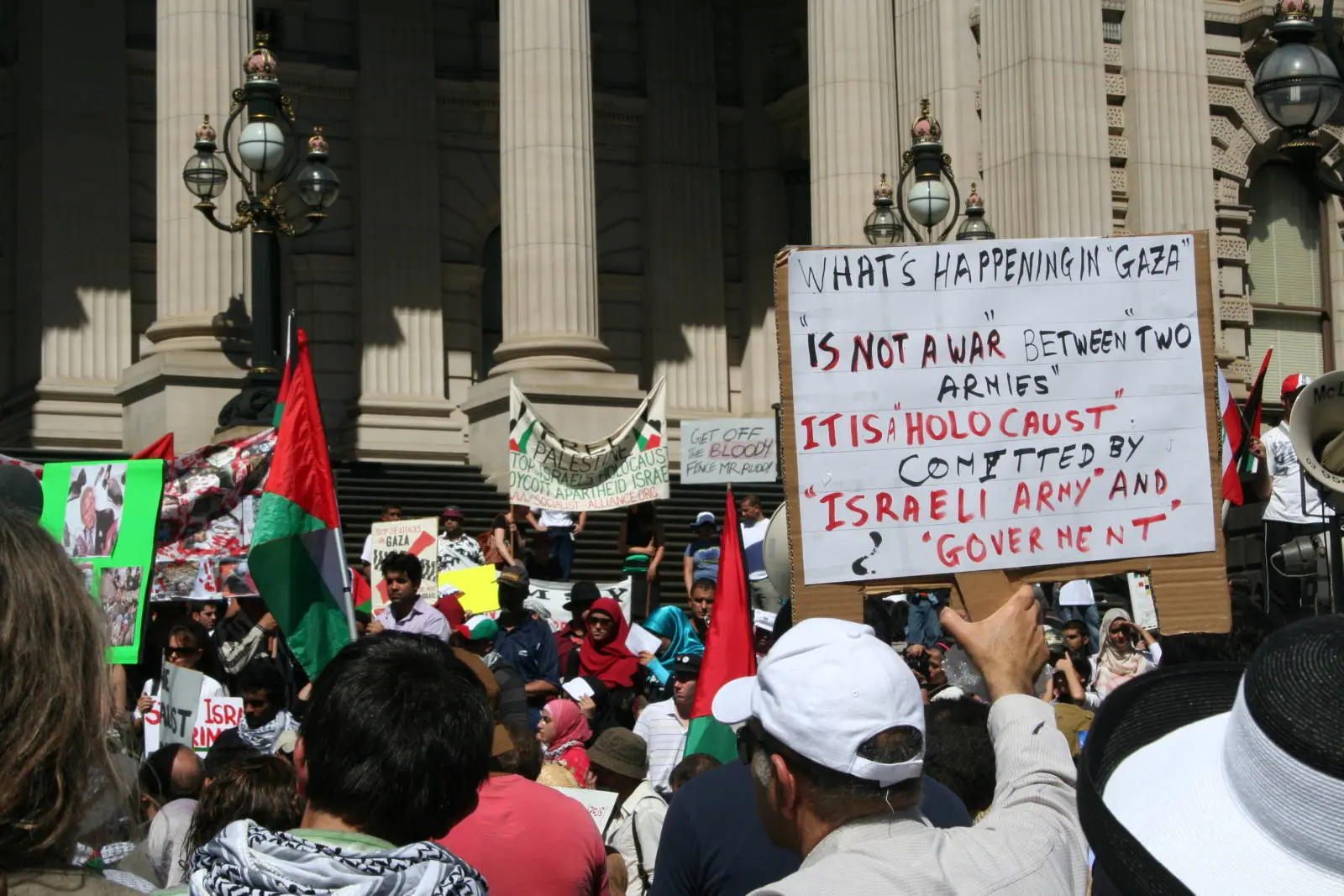
The remembrance of the Holocaust today is one of the cornerstones of modern Jewish identity. This subject has always been present in the self-consciousness of Soviet Jewry — despite the attempts of the Soviet authorities to purge the predominantly Jewish character of this tragedy from the public consciousness. Concurrently, there are attempts by external, often hostile, entities to Israel and the Jewish people to appropriate this widely acknowledged theme, deeply integrated into the collective consciousness, in order to exploit the Holocaust and other Jewish narratives for their own ends. It is even more problematic when such ideas are adopted by organizations that ostensibly speak on behalf of the Jewish people. A flagrant example of this strategy is the conduct of the so-called Lemkin Institute for Genocide Prevention (LIPG), established in 2021 in Pennsylvania. The Institute, bearing the name of Raphael Lemkin — a Jewish lawyer, Zionist, and the author of the term “genocide” — utilizes his name in its anti-Israel and antisemitic activities. It is evident that the distortion and appropriation of Jewish experience and memory demand a decisive response from the international Jewish community to protect historical heritage from antisemitic manipulation.
The remembrance of the Holocaust today is one of the cornerstones of modern Jewish identity. This subject has always been present in the self-consciousness of Soviet Jewry — despite the attempts of the Soviet authorities to purge the predominantly Jewish character of this tragedy from the public consciousness[1]. Babyn Yar in Kyiv became the recognized symbol of the Holocaust of Soviet Jewry, and simultaneously, due to the activities of the informal Jewish movement, a symbol of its national revival. During the Perestroika years and the post-Soviet decades, this element of Jewish identity received a significant boost from a large-scale memorial movement, resulting in the emergence of an extensive network of museums, monuments, research centers dedicated to this topic, periodicals, etc.[2]
The introduction into international discourse of the Holocaust of European Jewry as a unique example of barbaric and unjustifiable genocide, for the perpetrators of which there is no statute of limitations, was a major achievement of international Jewish organizations, scholars, and human rights activists. In most civilized nations, the Holocaust is officially established as an absolute crime that requires no additional proof or "contexts," and Holocaust denial is recognized as a form of antisemitism, which in some cases is criminally punishable.
Examples of the Appropriation of Jewish Narratives
There is, however, a reverse side to this phenomenon. This includes attempts by external, often hostile, entities to Israel and the Jewish people to appropriate this popular theme, deeply integrated into the collective consciousness, with the aim of severing its connection to Jewish identity and history, and/or exploiting the Holocaust and other Jewish narratives for their own ends. In principle, the exploitation of the theme and symbols of the Holocaust for propaganda purposes by various states is not new. However, in recent years, antisemitic and anti-Israel activities exploiting Jewish history and tragedy have acquired unprecedented scale.
One need not look far for examples of trivialization, appropriation, or distorted use of Holocaust narratives. For instance, several years ago, the newly elected Democratic Congresswoman Alexandria Ocasio-Cortez compared migrants attempting to enter the United States to the victims of the Holocaust of European Jewry — to which Republican Senator Lindsey Graham recommended that she "visit the Holocaust Museum in Washington" to try to "understand the difference." In January 2022, Ontario Member of Parliament Warren Davidson compared mandatory COVID-19 vaccination to the suffering of Jews under the Nazis.
Recently, Russian leaders have also distinguished themselves in this area, returning, as Alexander Friedman notes, to the Soviet tradition of stigmatizing the Jewish state and the theme of the "genocide of the peoples of the USSR" ("Russians are the new Jews"), effectively denying the singularity of the Holocaust of European Jewry.
In the autumn of 2023, approximately 150 European rabbis signed an open letter to the President and Prime Minister of Armenia, in which they condemned inappropriate parallels between the Holocaust and the situation in Karabakh (the Armenian enclave — the former Nagorno-Karabakh Autonomous Oblast of the Azerbaijan SSR, which seceded from it after the collapse of the USSR), stating that such comparisons "minimize the terrible suffering of the victims of the Holocaust and the entire Jewish people, who still experience deep pain from the greatest tragedy ever to occur to a single group of people."
"Nakba" ("catastrophe" or "disaster" in Arabic), a term used by Palestinian Arabs, radical left-wing circles in Israel, and pro-Palestinian activists worldwide to refer to the creation of the Jewish state in 1948, which was immediately attacked by the armies of five Arab nations, occupies one of the most prominent places in the list of outrageous propaganda manipulations and historical distortions. Furthermore, according to the prominent Israeli political scientist and intellectual Shlomo Avineri, the comparison itself between the Nakba and the Holocaust of European Jewry "demonstrates a severe moral blindness."
Following the aggression of the terrorist group Hamas on October 7, 2023, against Israel and the launch of the IDF operation "Swords of Iron" in the Gaza Strip, anti-Israel and antisemitic manipulations of the Holocaust theme have increased manifold. In particular, a statement by Brazilian President Luiz Inácio Lula da Silva caused a significant stir worldwide, in which he accused Israel in February 2024 of "genocide" against Palestinians in the Gaza Strip and compared its military actions in Gaza to Adolf Hitler's extermination of the Jewish people.
It is even more problematic when such ideas are adopted by organizations that ostensibly speak on behalf of the Jewish people. As an illustrative example: in early 2023, the Illinois Holocaust Museum issued a statement supporting the self-proclaimed "Artsakh Republic" in Karabakh and demanding sanctions against Baku. Setting aside the debate over the rights of either side in this prolonged and unresolved conflict, it is difficult to deny that the very act of a specialized museum of Jewish memory addressing the conflict of two post-Soviet nations in the South Caucasus, with questionable analogies drawn from the Jewish experience, represented the exploitation of the significance of the Holocaust in the interest of an entirely unrelated context.
It is no coincidence that following public outrage and appeals from prominent Jewish leaders, the statement was removed.
The Activities of the Lemkin Institute
However, the most flagrant example of such a strategy is the conduct of the so-called Lemkin Institute for Genocide Prevention (LIPG), established in 2021 in Pennsylvania. The Institute, bearing the name of Raphael Lemkin — a Jewish lawyer, Zionist, and the author of the term “genocide” — utilizes his name in its anti-Israel and antisemitic activities.
In practice, LIPG has actively promoted an anti-Israel and pro-Hamas agenda since its inception. The Institute publishes materials that are used as "evidence" to attack Israeli politicians and military personnel. These texts, propaganda in nature, have very little in common with academic or professional analysis. Thus, in January 2023, LIPG published its "conceptual" article "Red Flag Alert for Genocide - Israel," containing claims of alleged Israeli planning of "genocidal acts." In July of the same year, the Institute updated its previous warnings for the third time, emphasizing the rise of violence in the West Bank and the expansion of Israeli settlements, which it views as indicators of a potential genocide against Palestinians.
All these activities acquired a new scope after the bloody aggression of Hamas against Israeli towns and villages in the Western Negev on October 7, 2023 — without any clear condemnation of the massacre of Israeli citizens carried out by the militants of the radical Islamist terrorist group. Instead, there followed one after another texts and statements accusing Israel of genocide in Gaza (December 2023); asserting that Israeli actions in the West Bank are part of a broader genocidal campaign (April 2024), and other similar publications.
A little later, another target was identified, this time in the form of Western media. While many Israelis and objective journalists and analysts express disappointment with the unbalanced, pro-Palestinian portrayal of events in Gaza, LIPG began criticizing the very same media for "pro-Israel" coverage of the Israeli Air Force's "bombardment" of Gaza. According to the institute's version, any attempts to present Israel's actions as self-defense constitute a cover-up of the "genocidal nature" of these military operations.
In the Name of a Jew — Against Israel
Furthermore, LIPG actively supports figures such as Francesca Albanese, the UN Special Rapporteur on the situation of human rights in the Palestinian territories, known for her anti-Israel statements. In response to criticism from the US Ambassador to the UN, Linda Thomas-Greenfield, who called Albanese "unfit for her role" due to antisemitism, LIPG accused the Ambassador of "complicity in genocide." It is important to note that the Investigation Division of the UN Office of Internal Oversight Services recently announced that it has opened a case regarding financial irregularities concerning Albanese. She is suspected of accepting funds for her activities from groups affiliated with Hamas. The investigation was initiated following a complaint filed with the UN by the organization UN WATCH.
Nevertheless, the long-standing and systematic anti-Israel activity of LIPG, as stated, did not begin on October 7, 2023, and was not limited to Middle Eastern issues. Thus, LIPG maintains close ties with the Armenian National Committee of America (ANCA), known for its aggressive anti-Israel and anti-Azerbaijani rhetoric. In 2023, 11 of LIPG's 34 statements were dedicated to the situation in Nagorno-Karabakh. The Institute interpreted the departure of the Armenian population residing in territories previously occupied by Armenian forces within the internationally recognized territory of Azerbaijan as "genocide" and "ethnic cleansing."
At the same time, LIPG made no statement regarding the murder of 1,200 Israelis or the forced displacement of nearly half a million residents of southern and northern Israel due to rocket fire. According to Raphael Lemkin's definition, genocide is "a coordinated plan of different actions aiming at the destruction of essential foundations of the life of national groups, with the aim of annihilating the groups themselves." This is precisely the goal openly pursued by Hamas, Hezbollah, and Iran, which regularly attack Israel with various types of missiles and drones. However, LIPG prefers to ignore these facts, promoting its selective and biased interpretation of genocide.
The exploitation of Raphael Lemkin's name, anti-Israel propaganda, and the disregard for historical truth indicate a deliberate strategy to undermine Jewish identity. All of this occurs without the consent of the Lemkin family, which is outraged by the use of their name for purposes diametrically opposed to the vision and content of Raphael Lemkin's intellectual legacy, and is considering legal action or an official statement of protest. However, this is clearly insufficient. It is evident that in this and similar cases of distortion and appropriation of Jewish experience and memory, a decisive response is required from the international Jewish community to protect historical heritage from antisemitic manipulation.
[1] Lokshin A. To Remember or to Forget? The Soviet Regime and Society's Attitude Towards the Holocaust// Remember the Past for the Future: Jewish Identity and Collective Memory/ Ed. T. Karasova and E. Nosenko-Stein. M.: IVRAN, 2014. – pp. 75-100
[2] Khanin V. (Z) and Bardach-Yalova E. Historical Memory in the Postmodern Era: Experts on the Role of the Holocaust in the Self-Consciousness of Post-Soviet Jewry// Issues in the Holocaust Studies. Issue 7, 2018, pp. 18-32
The views expressed by the experts do not necessarily reflect the official position of the Institute for Euro-Asian Jewish Studies or the Euro-Asian Jewish Congress.
