This is an automated translation and may contain inaccuracies. For citation purposes, please refer to the original Russian version.
The massacre perpetrated by Hamas and the subsequent Operation Iron Swords triggered a sharp surge in antisemitic and anti-Israel rhetoric across the post-Soviet space. Initially, these sentiments remained marginal and were mostly disseminated by minor propagandists with limited influence. However, following Operation "The People as a Lion," and particularly since the start of Operation "Lion's Roar," the phenomenon has escalated to a new level. Given the systemic and consistent hate speech rooted in the post-Soviet space since October 7, 2023, this new antisemitic wave was not unexpected. A clear pattern of public discourse has emerged, characterized by a pronounced antisemitic and anti-Israel narrative based on a mixture of classical antisemitism, Soviet and contemporary anti-Zionism, as well as radical Christian and Islamic religious motifs.
The massacre perpetrated by Hamas and the subsequent Operation Iron Swords triggered a sharp surge in antisemitic and anti-Israel rhetoric across the post-Soviet space. A portion of this hate speech escalated into real-world action, culminating in a series of anti-Israel riots in the Russian North Caucasus, enabled by the absolute complicity of the authorities. The launch of Operation "The People as a Lion" on June 13, 2025, also sparked another wave of anti-Israel sentiment, blending classical antisemitic tropes, conspiracy theories, and domestic political propaganda.
Furthermore, for the first time in a targeted anti-Israel hate campaign in the post-Soviet space, traces of foreign influence became distinctly visible. While Iranian and Hamas influence had begun to penetrate mainstream antisemitic discourse (primarily in Russia, the Caucasus, and Central Asia) as early as 2022, parallel to the Russian invasion of Ukraine, and Turkish influence on hate speech also began to spread immediately after October 7, these motifs remained marginal and were mostly disseminated by minor propagandists with limited influence until June 13, 2025. The outbreak of the First Iran-Israel War led to this "foreign" element becoming an integral part of central propaganda, which, in countries like Belarus, was actively taken up by the regime's main mouthpieces.
During the seven months between the start of Operation "The People as a Lion" and Operation "Lion's Roar," a clear pattern of public discourse emerged, featuring a pronounced antisemitic and anti-Israel narrative based on a blend of classical antisemitism, Soviet and contemporary anti-Zionism, and radical Christian and Islamic religious motifs. Additionally, part of this discourse was deliberately and systematically influenced by foreign state entities, such as the Turkish Radio and Television Corporation (TRT), which spread toxic antisemitic propaganda directly and through local agents of influence in both Russian and the languages of Central Asia and the Caucasus. Its objective is to exacerbate antisemitic sentiment, primarily among the Muslim population, through the radicalization of religious discourse and the utilization of classical antisemitic and anti-Zionist tropes.
Despite the intensification of foreign influence on antisemitic discourse in the region, the bulk of it still originated from local, predominantly Russian sources. Several key motifs can be identified that primarily target domestic audiences and are designed to reinforce the propaganda narratives promoted since the start of the Russian invasion of Ukraine in February 2022:
Russia bears the burden of fighting modern-day Nazism, and anyone who harms its allies is deemed a Nazi themselves;
The portrayal of Israel as an enemy is primarily intended to bolster Russia's image as a partner of the Islamic world;
Discussions regarding the "collapse of the Holocaust myth" and "depriving Jews of genocide victim status due to the crimes of Zionism" are used to reinforce the narrative of "competitive victimhood" — Russia's self-representation as the exclusive victim of Nazism, while simultaneously downplaying the status of Holocaust victims, reducing it to a secondary significance, and subsequently marginalizing it;
Anti-Zionist rhetoric concerning Israeli control over the US and growing "Israeli aggression," fueled by religious-messianic ideas, aligns perfectly with old Soviet anti-Zionist discourse, as well as Russian religious and nationalist narratives;
Discussions about the ineffectiveness of Israeli air defense systems simultaneously bolster the image of the Russian Federation as a leading global arms manufacturer and reinforce Iranian claims regarding the success of their strikes.
"Lion's Roar" – From Domestic Needs to External Propaganda
Given the systemic and consistent hate speech rooted in the post-Soviet space since October 7, 2023, and particularly after Operation "The People as a Lion," the new antisemitic wave surrounding the launch of Operation "Lion's Roar" was not unexpected. However, in stark contrast to the reaction to Operation "The People as a Lion," there was no gradual escalation of negative sentiment this time; massive volumes of hate speech were recorded from day one of the operation. According to data from the Nativ organization, by March 14, 2026 (two weeks after the start of the war), approximately 76% of the 59,000 analyzed relevant posts contained antisemitic or anti-Israel rhetoric to some degree. This stands in sharp contrast to the 5–10% observed (with a significantly smaller volume of source data) in the period preceding the operation.
The total volume of hate speech in the post-Soviet space reveals several key recurring themes:
Themes of Jewish World Domination and Escalating Anti-Israel Rhetoric
Jewish/Israeli control over the US led to the war, while the United States itself plays only a secondary role;
Exploiting the "Jeffrey Epstein affair" to deepen conspiratorial discourse by disseminating antisemitic tropes through euphemisms such as "Epstein's coalition," "Epstein's war," "Epstein's gang," "Epstein's team," or "the faith of Baal" (referencing Epstein's personal nickname);
Masonic control over the United States and the wider world;
Suppression of mentions of Iran as the initiator of attacks on Gulf states, creating the illusion of Israeli involvement in these strikes.
Themes of "Jewish Chosenness" and Abundant Radical Religious Discourse
Radical religious-Jewish positions attributed to Israel, which allegedly seeks to cleanse the Middle East of Muslims (and eventually Christians) to construct the Third Temple;
Frequent use of terms such as the "extermination of goyim" and "ritual murders," for instance, in the context of the attack on the girls' school in Minab;
Portraying the strike on Iran as a "human sacrifice in honor of Purim";
Disseminating blood libels about the infringement of Muslim and Christian freedom of worship, and referencing the role of Jews in the crucifixion of Christ;
Reviving Christian "replacement theory" (supersessionism): Christianity (with an emphasis on Russian Orthodoxy) is framed as the "True Israel," and the Church has replaced the people of Israel in the covenant with God;
According to this concept, all divine promises made to the children of Israel have transitioned to believers in Christ (interpreted in Russian nationalist terms exclusively as the Russian people), while the Jewish people have lost their status as God's chosen people;
Consequently, an intense and public polemic is conducted regarding the legitimacy of alleged Jewish claims to the "superiority of a chosen people."
Anti-Zionist Discourse
Comparing Israel to Nazi Germany;
Frequent substitution of the term "Israelis" with "Zionists" or "Jews";
Insinuations of dual loyalty among Jewish communities in Russia, Belarus, Central Asian countries, and the Caucasus;
Attempts to question the Semitic origin of Jews;
Calls for the destruction of Israel.
Deepening the Narrative of "Competitive Victimhood" through "Holocaust Cancellation"
Calls to cease commemorating Holocaust victims due to "Israel's grave crimes";
Complete disregard for the key role of Iranian regime leaders in promoting Holocaust denial globally in recent decades;
Demands that Israel stop harming Russia's friends as a sign of respect to the Russian people for saving Jews during the Holocaust.
Local Propaganda Motifs for Domestic Consumption
Frequent highlighting of the Jewish origin of political opponents of the regimes in Russia and Belarus who allegedly support Israel;
Mocking dissidents who fled to Israel and urging them to fight. Notably, this motif spread from Russia and Belarus to Ukraine, where opposition figures were replaced in the narrative by businessmen who recently fled to Israel;
Limited discourse (unlike during Operations Iron Swords and "The People as a Lion") regarding the ineffectiveness of Israeli air defense systems;
Attempts to link Israel with Ukraine to frame both countries as adversaries of Russia and Belarus;
Accusations of "double standards" in international sports: using the absence of sports sanctions against Israel as a propaganda tool to depict the West as hypocritical, while tendentiously equating Russia and Belarus with Israel.
Significance and Conclusions
This discourse can be characterized as extreme hate speech, often bordering on wild incitement, accompanied by calls for action against Jews and the State of Israel. In Asian and Caucasian countries with significant Muslim populations — which are targeted for antisemitic incitement by external actors (Iranian and Turkish, and to a lesser extent, Chinese, Pakistani, and Russian) — the bulk of the discourse takes place on social networks and is often swiftly and strictly suppressed by authorities. In Armenia, antisemitic rhetoric is also largely concentrated online and is promoted both by domestic opponents of the regime and by the Armenian diaspora in the West, which in recent years has become an absolute supporter of Hamas and the Ayatollah regime.
In contrast, the situation in Russia and Belarus is entirely different: there is active participation by high-ranking pro-government propagandists in promoting unbridled antisemitic incitement, often in the "Black Hundreds" style of the Tsarist era or Cold War-era Soviet propaganda. This occurs against the backdrop of echoing antisemitic messages disseminated in the West, such as by Tucker Carlson and his peers. Furthermore, the official Belarusian propaganda apparatus even targeted the "harmful interference" of Miriam Adelson in American politics, likely having had no prior knowledge of her. This raises questions about a direct link between collective "Carlsons" and the mechanisms of influence in Russia and Belarus. At present, it is impossible to definitively determine who is the influencing party and who is the influenced. However, regarding Belarus, it can be stated with a high degree of certainty that it draws most of its extremist material from Russian, Iranian, and Hamas propaganda.
The primary distinction in mainstream hate speech is that in Belarus, those engaging in it belong to the highest echelon of regime propagandists: Grigory Azarenok, Andrey Mukovozchik, Ksenia Lebedeva, and others. Some of them, such as Vadim Gigin, even hold high official positions. They all leverage this status to promote their views through official electronic and print media, even when this runs counter to the formal stance of the state authorities.
In turn, Russian propagandists such as Alexander Dugin, Konstantin Malofeev, Alexander Prokhanov, Maxim Shevchenko, and others, while involved in spreading official propaganda and enjoying the respect of the authorities, belong at best to the second or third echelon of the propaganda apparatus and often do not replicate the Kremlin's official talking points word for word. As for key propagandists, they have so far avoided descending into wild incitement, focusing instead on conveying positions voiced by the Kremlin and the Ministry of Foreign Affairs. Two exceptional cases that have not yet exerted a broad influence on official directions of discourse are the March 2 statement by Russian Foreign Ministry spokesperson Maria Zakharova regarding the "ritual sacrifice" in Minab, and the aggressive rants by leading regime propagandist Vladimir Solovyov (who identifies as Jewish) about Jewish chosenness on his program on the Rossiya 1 TV channel on March 17. Despite the foregoing, potential future directions of official discourse may be indicated by attempts by mainstream Russian media to contact anti-Zionist Israeli speakers, as well as experts willing to promote the thesis of a "Jewish takeover of the US."
On March 14, 2026, nationalist elements of Russian propaganda constructed a hostile and conspiratorial narrative against Israel, flagrantly distorting the words of the Russian-speaking IDF spokesperson, Major Anna Ukolova. Following her comment to the Russian news outlet RBC regarding Israel's capabilities to counter hostile elements, a false claim circulated on Russian social media alleging that Israel was threatening to eliminate high-ranking Russian officials and controlled tracking systems within the country. This campaign, launched by a local Russian-Jewish activist close to the authorities, was accompanied by extremist rhetoric fueled by key antisemitic ideologues like Alexander Dugin and Konstantin Malofeev, who portrayed Israel as an omnipotent enemy threatening Russian sovereignty.
Leading regime propagandist Vladimir Solovyov, on his program, went so far as to demand that Israel be forced to issue an official apology, claiming that Jews had once again betrayed Russia, which had saved them from the Holocaust. This incident demonstrates a dangerous trend in the radical Russian media space to generate overtly anti-Israel libels and transform news reporting on Israel into conspiracy theories that foster hostility toward it. Nevertheless, at this stage, this narrative remains within the realm of non-state propaganda, as official figures have refrained from reacting, at least publicly, indicating a current disconnect between media incitement and declared state policy.
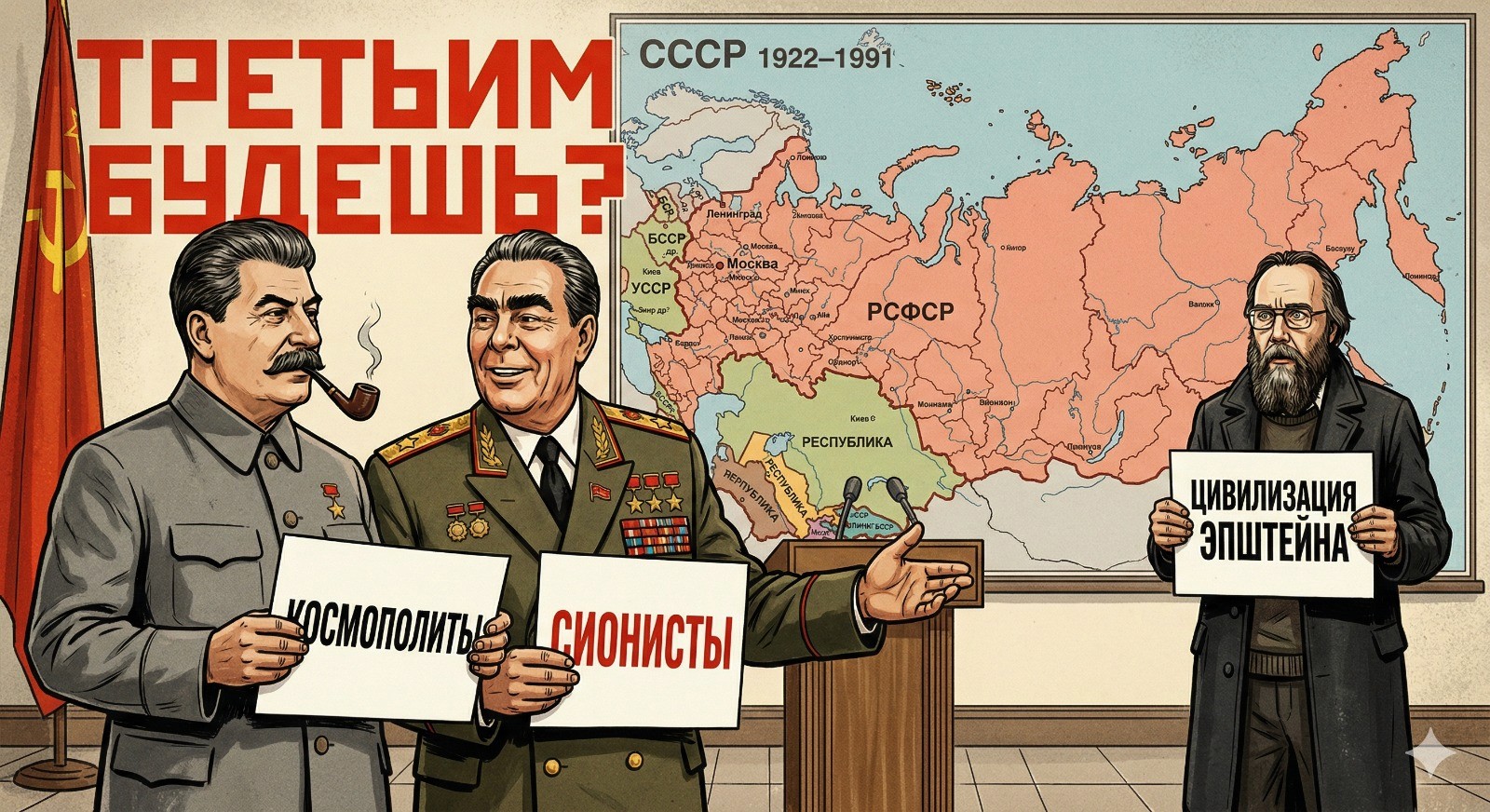
During the period under review, one can clearly point to the formation of a new euphemism for the word "Jew" in antisemitic propaganda discourse in the post-Soviet space. Just as the word "cosmopolitan" served this role at the end of the Stalinist era, and the word "Zionist" since the Six-Day War, a new linguistic substitute has been created today, utilizing the "Epstein affair" to promote and deepen antisemitic and anti-Israel rhetoric. Verbal forms derived from Epstein's name, such as "Epstein's coalition," "Epstein's gang," "Epstein's clique," and the like, have become commonplace in the mouths of Russian and Belarusian propagandists of all stripes, as well as certain government officials, including some of the highest-ranking. Furthermore, these derivatives are also utilized by Iranian, Turkish, and other "agents of chaos" engaged in spreading hatred of Jews among the Muslim population in Russia, the Caucasus, and Central Asia. All of this suggests a deliberate coordination of antisemitic and anti-Israel narratives and motifs.
Forecasts and Recommendations
One month after the outbreak of hostilities, it can be concluded that extreme hate speech has not translated into practical actions on the ground. This is despite multiplying calls, predominantly in Muslim environments, to launch attacks against Jews for their alleged unconditional support for Israel. In the same vein, communications have been sent to several communities in the post-Soviet region advising them to refrain from public demonstrations of support for Israel, even as public mass events for the Iranian "Al-Quds Day" take place in the very same countries with the participation of Muslim community leaders and local authorities.
Furthermore, at least one attack on a synagogue in Sukhumi, Abkhazia, has been reported. It is unknown whether those involved in this attack have been arrested. Additionally, the arrest of an Iranian cell planning attacks on the Israeli embassy and the Jewish community in Azerbaijan has been confirmed.
In the face of this reality, the situation demands a rapid transition from defensive explanations to active initiative. This must primarily include a large-scale information offensive aimed at exposing the networks of influence and agents of chaos who frequently generate antisemitic discourse artificially and for self-serving purposes.
This study was conducted as part of the monitoring of antisemitic manifestations in the former Soviet Union by "Nativ – The Prime Minister's Office."
The views expressed by the experts do not necessarily reflect the official position of the Institute for Euro-Asian Jewish Studies or the Euro-Asian Jewish Congress.