
This is an automated translation and may contain inaccuracies. For citation purposes, please refer to the original Russian version.
Introduction
The establishment of the Democratic Republic of Georgia in 1918 marked the beginning of modern Georgian statehood. The development of the young republic took place in a challenging political and military environment. The Red Army was advancing eastward, while local Bolsheviks attempted to seize power from within. Famine and poverty weighed heavily on the young state, which remained without any external assistance. Nonetheless, even under these conditions, the leadership of democratic Georgia implemented large-scale social, political, and civic reforms.
Accordingly, one of the first steps taken by the new government was the abolition of the discriminatory practices against Georgian Jews established under the Russian Empire (according to the "Regulation on the Disposition of Jews" of 1804, Jewish farmers were permitted to reside in the Caucasus Governorate). Restrictions on Jewish residence in cities were lifted, and the quota system for Jewish children in schools was abolished. A Jewish gymnasium opened in Tbilisi, and Jewish schools were established in Kutaisi, Gori, Oni, Kulashi, and other towns, offering parallel instruction in secular and religious subjects. Occasionally, Georgian children also attended these schools, as was the case in Kulashi.
Although Georgia's socialist leaders did not recognize Jewish national-cultural autonomy, two seats in the Constituent Assembly were allocated for Georgian Jews and one for Ashkenazi Jews. All three Jewish representatives, elected at the Jewish Congress of Georgia held in Tiflis in 1918, were Zionists. Their mandates, however, were not recognized by the Georgian Electoral Commission, which awarded these seats to delegates of Georgian Jews elected at a parallel congress in Kutaisi by anti-Zionist factions. Nonetheless, throughout the three years of the Democratic Republic of Georgia's existence (1918–1921), Jewish representatives held seats in the country's highest legislative bodies. Among them were Iosef Elgulaishvili, Abraham Buzyashvili, and Hakham (Rabbi) Moshe Davarashvili, who had received a classical European education alongside his religious training.
In February 1921, Soviet rule was established in Georgia. In the early years, despite the official policy of state atheism, the authorities permitted the opening of Jewish schools teaching religious subjects in Tbilisi and in the village of Bandza. In the second half of the 1920s, a branch of the All-Union Society for the Settlement of Jewish Toilers on the Land (OZET) was opened in the republic. Under its auspices, Jewish collective farms (kolkhozes) were established in Surami, Kareli, Oni, Bandza, Senaki, Sudzhuna, Akhaltsikhe, and in many districts of Kakheti. Rafael Elgulaishvili, who later served as the Minister of Foreign Trade of the Georgian SSR in the 1960s and 1970s, became the chairman of the council of GruzOZET. In many instances, Georgian Jews joined the kolkhozes to maintain their religious lifestyle without interference. Notably, Hakham Yitzhak Taronishvili was one of the initiators of the Jewish kolkhoz in the village of Sudzhuna.
It is evident from the minutes of the GruzOZET meetings that the authorities actively obstructed the preservation of Jewish tradition, primarily the religious upbringing of children. Rabbis and melameds were persecuted, as evidenced by a document preserved in the State Archives of Georgia regarding the dismissal of Jews practicing a religious lifestyle. Among those mentioned was the writer and translator Hertsel Baazov, who was subsequently repressed.[1]
The campaign against Judaism in Georgia intensified after the termination of Soviet cultural and social projects directly concerning Jews, notably the dissolution of OZET in 1939.
Nevertheless, even during this period, religion remained a vital element of communal life. The settlement of Kulashi, often referred to as "Little Jerusalem," was particularly renowned for its traditional Jewish lifestyle. When the authorities began closing Jewish schools, melameds across Georgia, risking their lives, established underground Talmud Torahs or visited Jewish homes to teach children Torah, Tanakh, Gemara, and other subjects. This commitment helped maintain a high level of religiosity among Georgian Jews throughout the Soviet era. Consequently, when a yeshiva opened in Moscow in 1957 under the leadership of Rabbi Shloyme (Solomon) Schlifer, a significant portion of its students were of Georgian origin.
An examination of available documents also reveals a substantial number of Ashkenazi Jews serving in the synagogues of Georgia, including in remote settlements such as Sudzhuna, Bandza, Tskhinvali, and others. This further demonstrates the influence of European Jews on preserving tradition and the religious lifestyle in Georgia. Particular credit for this belongs to the Chabad Hasidim. Emissaries of this movement could be found in Sukhumi, Batumi, Kulashi, Kutaisi, Tskhinvali, Tbilisi, and elsewhere. (During visits to the United States, the author met Hasidim who still retained characteristic monikers such as Reb Mordechai Batumer, Reb Avraham Kulasher, etc.).
A large population of Ashkenazi Jews resided in Sukhumi, where an Ashkenazi synagogue operated primarily on holidays[2]. The Jews of Georgia preserved the memory of righteous men such as Reb Shmuel ha-Kohen and Reb Chatzkl. A solitary man whose family had been annihilated by the Germans, Reb Chatzkl was a guest at the author's parents' home every Sabbath and showed great affection to its members until his death. Every year, Chief Rabbi of Moscow Solomon Schlifer and his family stayed at our house or the house of my uncle Benzion, as did religious figures from Novorossiysk and other cities.
Archival records indicate that Jewish religious life in Georgia was preserved to an extent unparalleled in the European part of the USSR. This is demonstrated by the annotated list below of synagogues active in Georgia in 1944, compiled from previously unpublished archival data reflecting the state and geography of Georgian Jewish religious communities in the 1940s[3].
Active Synagogues of Georgia
(1944 Data)
Tbilisi — Vinny Tupik, 10
Tbilisi — Leselidze St., 43
Tbilisi — Kozhevny Tupik, 13
Kutaisi — Shaumyan St., 8
Kutaisi — Shaumyan St., 8
Kutaisi — Shaumyan St., 9
Kareli — Kareli Village
Oni — Tbilisskaya St., 173
Vani — Central District No. 1
Surami — Internatsionalnaya St., 116
Sudzhuna — Sudzhuna Village
Akhaltsikhe — First Jewish District No. 102
Kulashi — Synagogue No. 1
Kulashi — Synagogue No. 2
Kulashi — Synagogue No. 3
Kulashi — Synagogue No. 5
Sachkhere — Beria St., 137
Sachkhere — Tsereteli St., 20
Gori — Chelyuskintsev St., 16
Tskhakaya — Rustaveli St., 129
Bandza — "Adzhiashvili" Synagogue
Bandza — "Sepiashvili" Synagogue
Staliniri — Shaumyan St., 21
Lailashi — Lailashi Village
Poti — Tskhakaya St., 35
Batumi — Devyatogo Marta St., 6
Sukhumi — Gogol St., 59
Registration Data of Synagogues in Georgia
Tbilisi
Kirov District, Vinny Tupik No. 10.
Registered in 1944. A brick building of 226 sq. m., constructed in 1904.
Not registered as an architectural monument. The building is nationalized and belongs to the Housing Administration of the Kirov District. The nearest registered synagogue is located 40 meters away (43 Leselidze St.).
Hakham — Rav Davitashvili Emanuel Davidovich, born in 1908.
Attendance on regular days is approximately 200 people, and on holidays up to 1,500 people.
The synagogue does not employ a cantor; the ritual slaughterers (shochets) are Malkin, Babalikashvili, and Dzhanashvili. Circumcisions are performed by Davitashvili and Babalikashvili. None of them hold permanent employment.
Synagogue of Tskhinvali Jews
Kirov District, Leselidze St., 43.
A brick building of 120 sq. m., constructed in 1886.
Not an architectural monument. The synagogue building is municipalized, under a 5-year lease (1945–1950) with the Housing Administration. The nearest synagogue is 40 meters away.
Hakham — Dzhanashvili Moshe (Moisei) Iosipovich, born in 1910. Attendance on regular days is up to 100 people, and on holidays up to 300 people. The synagogue has no cantor; ritual slaughter and circumcision services are obtained from the neighboring synagogue.
Synagogue of European Jews
Kirov District, Kozhevny Tupik, 13.
A brick building of 100 sq. m., constructed in 1914.
Not an architectural monument. The building is municipalized; there is no current lease agreement with the Housing Administration. The distance to the nearest synagogue is 200 meters.
Rabbi — Kupchan Chaim Mikhaelovich, born in 1882, possessing higher theological and secondary secular education.
Attendance on regular days is 20–30 people, and on holidays 220 people.
The synagogue employs a cantor/shochet, David Leibovich, born in 1872, who is permanently employed at the Jewish cemetery.
Lakhlukh[4] Synagogue
Located at Chekhov St., 9.
A dilapidated wooden building constructed in 1922, with an area of 60 sq. m. including the gallery. Not an architectural monument. The synagogue building is nationalized.
It has no rabbi, cantor, or shochet, and lacks congregants (due to the resettlement of Lakhlukh Jews[5]).
Kutaisi
Synagogue No. 1
Located at Shaumyan St., 8.
Registered in 1945. Constructed of dressed stone, with an area of 321 sq. m., built in 1860, and nationalized.
Not an architectural monument; the distance to the nearest synagogue is 12 meters.
Rabbis — Hakham Khubelashvili Yakov Abramovich, born in 1886, and Elgulaishvili Chaim Danielovich, born in 1875.
Attendance on regular days is 300 people, and on holidays 800 people.
Shochets — Altshuler Zalman Gershovich, born in 1873, Panikashvili Elokhaim Mikhaelovich, born in 1900, and Veit Tevel Barukhovich, born in 1870. Circumcisions are performed by Altshuler Zalman Gershovich, Davarashvili Yakov Rakhmielovich, and Panikashvili Elokhaim Mikhaelovich.
Synagogue No. 2
Located at Shaumyan St., 8.
Registered in 1946. Constructed of dressed stone, with an area of 146 sq. m., built in 1812. Not an architectural monument, nationalized. The distance to the nearest synagogue is 12 meters.
Hakham — Davarashvili Moshe Rakhmielevich, born in 1893.
Attendance on regular days is 200 people, and on holidays 400 people. Circumcision and ritual slaughter services are obtained from the neighboring synagogue.
Synagogue No. 3
Located at Shaumyan St., 39.
Registered in 1946. Constructed of dressed stone, with an area of 151 sq. m., built in 1852.
Not an architectural monument, nationalized. The distance to the nearest synagogue is 450 meters.
Rabbi — Hakham Davarashvili Yakov Rakhmielovich, born in 1902.
Attendance on regular days is 200 people, and on holidays 600 people.
Circumcisions and ritual slaughter are performed by Rabbi Hakham Davarashvili.
Kulashi
Synagogue No. 1
Registered in 1946. A wooden building of 195 sq. m., constructed in 1862, nationalized. The distance to the nearest synagogue is 20 meters.
Hakham — Levyashvili Iosef Abramovich, born in 1879.
Attendance on regular days is 100 people, and on holidays 270 people.
Circumcisions are performed by Tetruashvili Mikhail Shamuelovich.
Synagogue No. 2
Registered in 1946. A wooden building of 120 sq. m., constructed in 1902, nationalized.
Hakham — Tetruashvili Mikhail Shamuelovich, born in 1906.
Attendance on regular days is 80 people, and on holidays 180 people.
Circumcision and ritual slaughter are performed by Tetruashvili M. S.
Synagogue No. 3
Registered in 1946. A two-story brick building of 196 sq. m., constructed in 1910, nationalized.
Hakham — Elishakashvili Aaron Eloovich, born in 1862.
Attendance on regular days is 80 people, and on holidays 150 people.
Circumcision and ritual slaughter services are obtained from the neighboring synagogue.
Synagogue No. 5
Registered in 1946. A wooden building of 80 sq. m., constructed in 1905, nationalized.
Hakham — Mikhelashvili Shabata Abramovich, born in 1899.
Attendance on regular days is 70 people, and on holidays 140 people.
Circumcision and ritual slaughter are performed by Mikhelashvili Sh. A.
Sachkhere
Synagogue No. 1
Located at Beria St., 137.
Registered in 1946. A stone building of 110 sq. m., constructed in 1903, nationalized. The distance to the nearest synagogue is 300 meters.
Attendance on regular days is 70 people, and on holidays 160 people.
Hakham — Kikozashvili Elo Isakovich, born in 1878.
Circumcision and ritual slaughter are performed by Zeldin Bolko Abramovich.
Synagogue No. 2
Located at Tsereteli St., 20.
Registered in 1946. A building of 100 sq. m., constructed in 1903, nationalized. The Hakham passed away recently; attendance on regular days is 60 people, and on holidays 150 people. Circumcision and ritual slaughter are performed by Zeldin B. A.
Akhaltsikhe
Synagogue No. 1
First Jewish District No. 144.
Registered in 1945. A building of 100 sq. m., constructed in 1880, nationalized.
The distance to the nearest synagogue is 40 meters; attendance on regular days is 50 people, and on holidays 140 people.
Hakham — Leviashvili Meir Filkhazovich, born in 1887. Ritual slaughter and circumcision are performed by Vilkin Boris Mkisovich, born in 1879.
Synagogue No. 2
First Jewish District No. 102.
Registered in 1949. A stone building of 190 sq. m., constructed in 1860, nationalized.
Hakham — Ikhoshvili Abraham Filkhazovich, born in 1888, possessing primary secular education and no formal religious education. Shochet — Vilkin B. M.
Kareli Synagogue
Registered in 1946. A stone and brick building of 100 sq. m., constructed in 1902.
Hakham — Moshiashvili Ruben Shelomovich, born in 1879. Attendance on regular days is 30 people, and on holidays 150 people. Circumcision and ritual slaughter are performed by Moshiashvili, who has no other permanent employment.
Oni Synagogue
Located at Tbilisskaya St., 173.
Registered in 1945. A stone building of 210 sq. m., constructed in 1895, nationalized.
Hakham — Khakhiashvili Moshe Chaimovich, born in 1904.
Attendance on regular days is 50 people, and on holidays 200 people.
Shochet — Khakhiashvili; circumcisions are performed by Shimshilashvili Mikhail Iosifovich, born in 1870.
Vani Synagogue
Registered in 1945. A brick and stone building of 180 sq. m., constructed in 1911, nationalized.
Hakham — Tetruashvili Shimkon Eloovich, born in 1902.
Attendance on regular days is 60 people, and on holidays 160 people.
Shochet — Dzhanashvili Abesha Moshevich.
Surami Synagogue
Located at Internatsionalnaya St., 116. Registered in 1945. A stone building of 60 sq. m., constructed in 1915, nationalized.
Hakham — Davarashvili Gavriel Rakhimovich, born in 1888. He also serves as the shochet and performs circumcisions.
Attendance on regular days is 50 people, and on holidays 300 people.
Sudzhuna Synagogue
Registered in 1945. A stone building of 60 sq. m., constructed in 1819, nationalized.
Hakham — Gusin Grigory Gammeevich, born in 1886.
Attendance on regular days is 30 people, and on holidays 100 people. Gusin G. G. also serves as the shochet.
Gori Synagogue
Located at Chelyuskintsev St., 16.
Registered in 1946. A brick and stone building of 140 sq. m.,
constructed in 1937, nationalized.
Hakham — Davarashvili Mordekh Davidovich, born in 1875.
Attendance on regular days is 80 people, and on holidays 130 people.
There is no resident mohel or shochet; these services are provided by visitors.
Senaki Synagogue
Located at Rustaveli St., 129.
Registered in 1946. A stone building of 152 sq. m., constructed in 1880, nationalized.
Hakham — Efremashvili Benzion Rafaelovich, born in 1895.
Attendance on regular days is 40 people, and on holidays 120 people.
Circumcision and ritual slaughter are performed by Efremashvili Benzion.
Bandza
"Adzhiashvili" Synagogue
Registered in 1945. A brick building of 218 sq. m., constructed in 1915, nationalized. The distance to the nearest synagogue is a 10-minute walk.
Hakham — Adzhiashvili Daniel Shabatovich, born in 1897.
Attendance on regular days is 80 people, and on holidays 140 people.
Circumcision and ritual slaughter are performed by Nekhamkin I. A.
"Sepiashvili" Synagogue
Registered in 1945. A brick building of 81 sq. m., constructed in 1910, nationalized. The distance to the nearest synagogue is a 10-minute walk.
Hakham — Shalelashvili Iosif Filkhazovich, born in 1881, self-taught.
Attendance on regular days is 40 people, and on holidays 100 people.
Circumcision and ritual slaughter are performed by Nekhamkin Israil Abulovich, born in 1897, who has no other permanent employment.
Staliniri Synagogue
Located at Shaumyan St., 21.
Registered in 1947. A stone and brick building of 128 sq. m., constructed in 1830, nationalized.
Hakham — Patarkatsishvili Aaron Isakovich, born in 1900.
Attendance on regular days is 150 people, and on holidays 300 people.
Circumcision and ritual slaughter are performed by Eliashvili Moshe Mikhailovich, born in 1870.
Lailashi Synagogue
Registered in 1945. A building of 120 sq. m., constructed in 1800, nationalized.
Hakham — Khakhiashvili Elo Aronovich, born in 1875. He also performs ritual slaughter and circumcisions.
Attendance on regular days is 60 people, and on holidays 120 people.
Sukhumi Synagogue
The building was located at Gogol St., 59, and was destroyed by the authorities.
Registered in 1946. A concrete building of 98 sq. m., municipalized, operating under a lease agreement.
Hakham — Boterashvili Shalom Abramovich, born in 1912.
Attendance on regular days is 70 people, and on holidays 180 people.
Circumcision and ritual slaughter are performed by Boterashvili S. A.
Batumi Synagogue
Located at Devyatogo Marta St., 6.
Constructed in 1930, this stone building of 112 sq. m. belongs to the Dzhanikashvili and Khukhashvili families and has been transferred to the community for temporary use.
Hakham, circumciser, and shochet — Eliashvili Shabtai Yakovlevich, born in 1886.
Attendance on regular days is 35 people, and on holidays 60 people.
Poti Synagogue
Located at Tskhakaya St., 35.
Registered in 1945. A brick building of 135 sq. m., constructed in 1902, nationalized.
Hakham — Mikhelashvili Chaim Aronovich, born in 1896. He also performs ritual slaughter and circumcisions.
Attendance on regular days is 60 people, and on holidays 180 people.
Circumcision and ritual slaughter are performed by Mikhelashvili Kh. A.
Afterword by the EAJC Director General, Chaim Ben Yakov
According to the consensus, due to historical circumstances, Georgia was perhaps the most "Jewish" republic of the Soviet Union. Georgian Jews, unlike many of their coreligionists in the European part of the USSR who escaped the Holocaust, were characterized by a high level of cohesion, commitment to traditional Jewish culture, and self-organization under relatively favorable attitudes of the local population toward Jewish institutions. Therefore, as follows from the data presented in the archival review by Prof. Y. Efremashvili-Ofir, even during the most difficult times, Georgia was a prominent center of Jewish life.
Observance of Jewish rituals and customs remained a part of family tradition throughout the Soviet era, which is why most Georgian Jews continued to attend synagogues regularly on Saturdays and holidays, even towards the end of the USSR. They also observed kashrut, widely practiced circumcision, conducted marriages and burials according to the laws of Judaism, and sent their children to underground cheders—activities that republic authorities frequently chose to overlook even during the most stagnant years. Consequently, stimulated by the onset of Perestroika and the liberalization of public life, the Jewish communal revival in Georgia, in its religious aspect, did not begin "from scratch," unlike in most Soviet republics. Unfortunately, the same cannot be said of Jewish museums, archives, cultural centers, theaters, and other aspects of secular Georgian Jewish culture, which were largely destroyed during the repressions of the 1930s–1950s.[6]
The position of Georgian Jewry was also negatively impacted by the consistent antisemitic course of the post-war USSR, which, after the establishment of the State of Israel in 1948, was also conducted under the banner of "fighting world Zionism." Periods of relatively tolerant attitudes by local Soviet and party leaders toward official or semi-underground Jewish institutions alternated with campaigns against Judaism. It is no coincidence that Georgia became the epicenter of some of the most massive participation of Jews in the struggle for repatriation to Israel. (The wave of Aliyah in the 1970s is widely believed to have begun with a letter from 18 heads of Georgian Jewish families to the UN on August 6, 1969, requesting that the USSR authorities permit their departure to Israel).
Due to these circumstances, by the time Georgia's state sovereignty was restored in 1992, only fragments of the once extensive institutional communal infrastructure remained at the disposal of Jewish activists. This included several synagogue buildings requiring major repairs or complete reconstruction. It was clear that, despite the highly positive attitude of the authorities toward preserving and developing the Jewish religion and culture, the state could not properly fund such projects. This function was assumed by Jewish organizations, primarily umbrella associations. The peak of these efforts occurred in the late first and second decades of the 21st century, when the EAJC actively engaged in the process.
Through donations and the initiative of the former EAJC President A. Mashkevich, the current President of the Congress M. Mirilashvili, Vice-President David Yakobashvili, and the mobilization of local resources, nine synagogues in Georgia were restored, repaired, or practically rebuilt from the ground up. Concurrently, the ongoing religious and educational activities of the Jewish communities were supported. The EAJC is making efforts to preserve historic synagogue buildings and religious structures. Although designated as cultural monuments of national significance, most of them do not currently function as religious institutions, but there are plans to establish museums, archives, and cultural centers in some of them.
Below is a complete list of Jewish places of worship in Georgia, indicating their current status.
Tbilisi
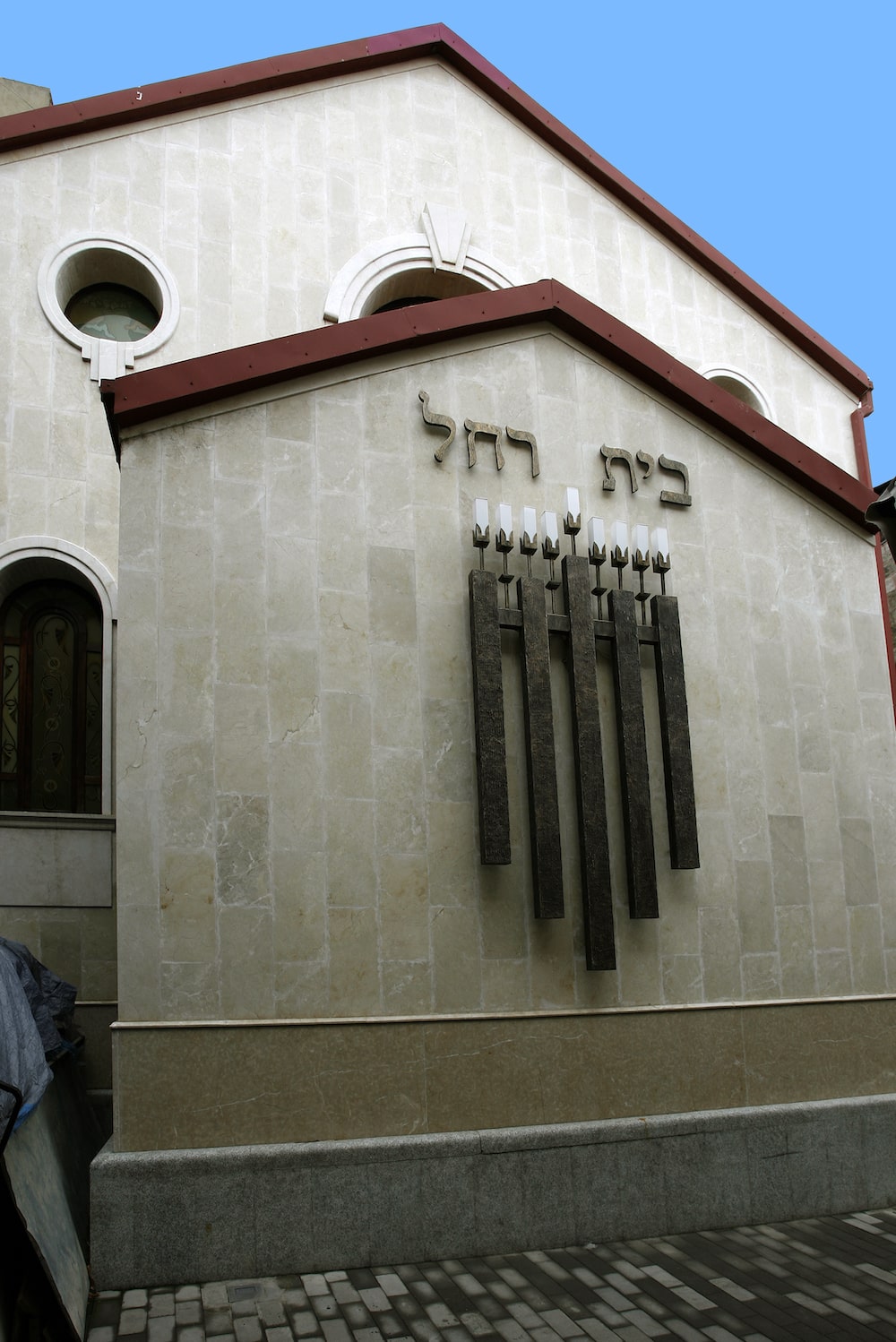
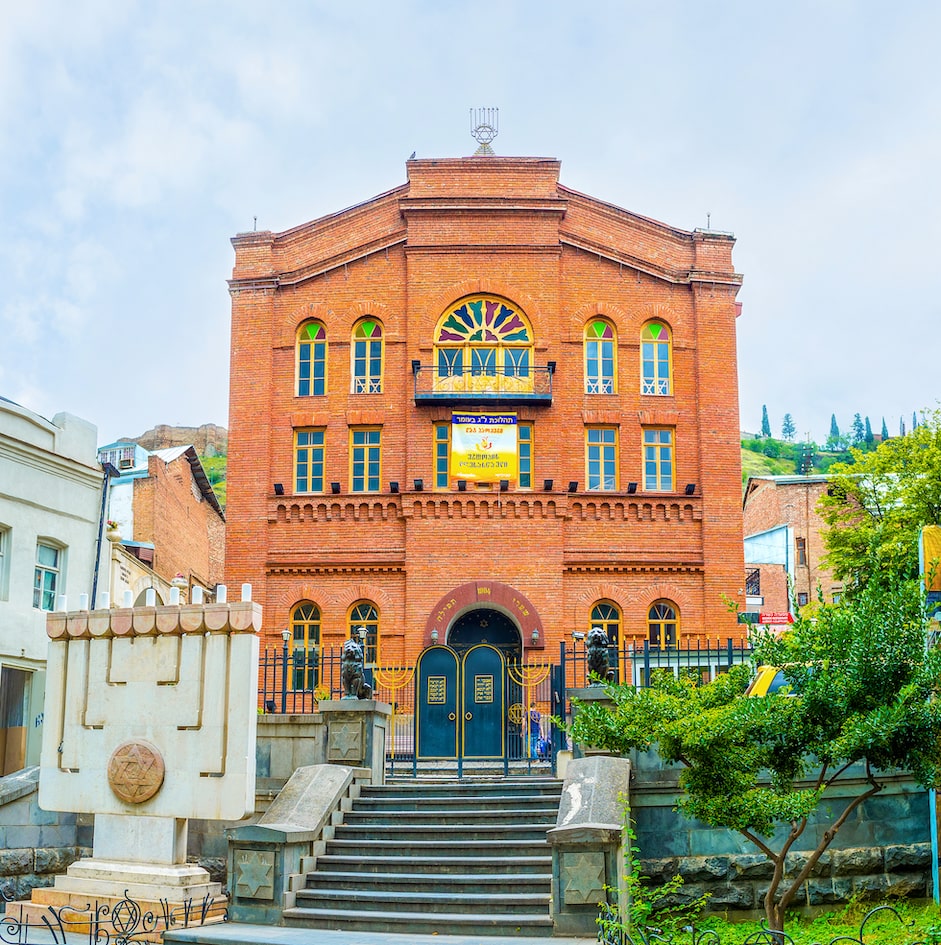
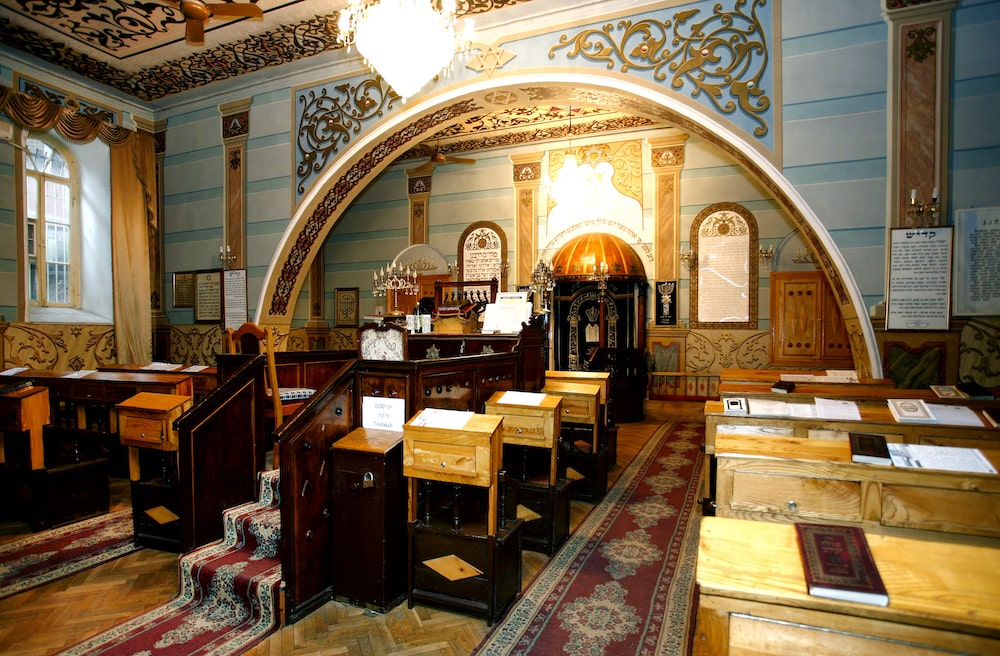
Two synagogues operate in the city. The Grand or Akhaltsikhe Synagogue, built between 1895 and 1913, is located on K. Abkhazi St. (formerly K. Leselidze St.). This synagogue, sometimes referred to as the "Old Synagogue," was built with funds from the Jews of Akhaltsikhe. It is considered a synagogue of "Eastern" Jews (which includes Georgian Jews). Located on the same street is the Ashkenazi Synagogue (Beit Rachel), built at the turn of the 19th and 20th centuries by immigrants from Russia (hence it is sometimes called "Russian"), who arrived in Georgia after its annexation to the Russian Empire in 1801 and the issuance of the Regulation on Jews (1804).
\

Batumi (Adjara)
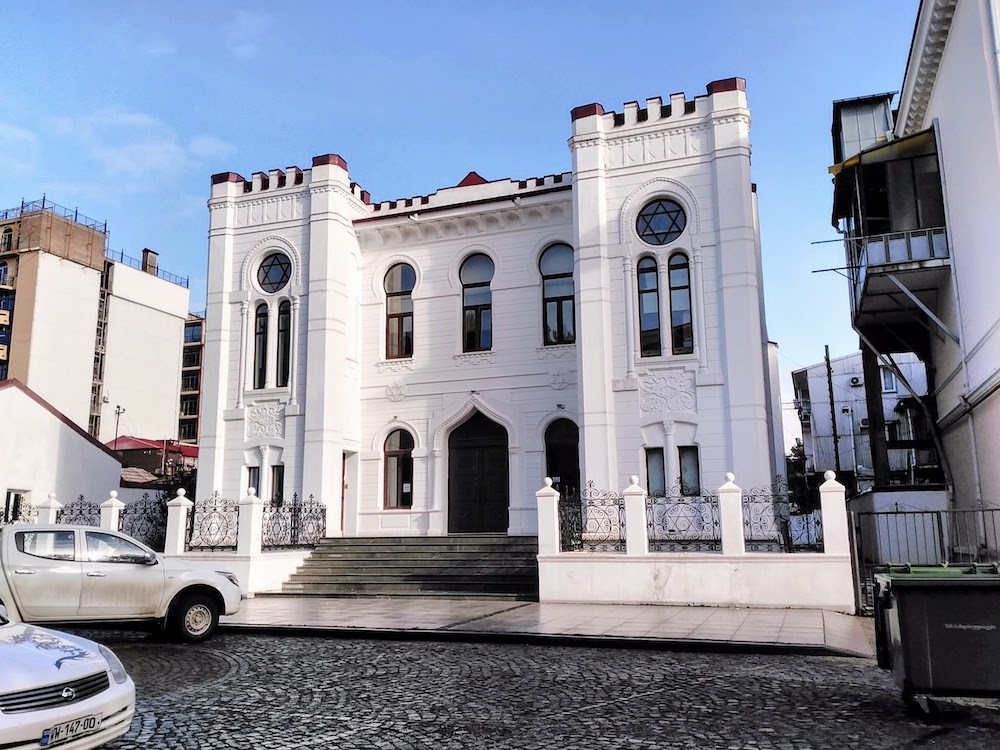
In 1899, the Jews of Batumi petitioned Nicholas II for permission to build a stone building at their own expense so that they "could pray to the one God in their choral synagogue for the granting of an heir to the throne—a son—to the Emperor." The petition was delivered through the merchant Psaros, who was acquainted with metropolitan bankers with access to the court. The Emperor's resolution was favorable.
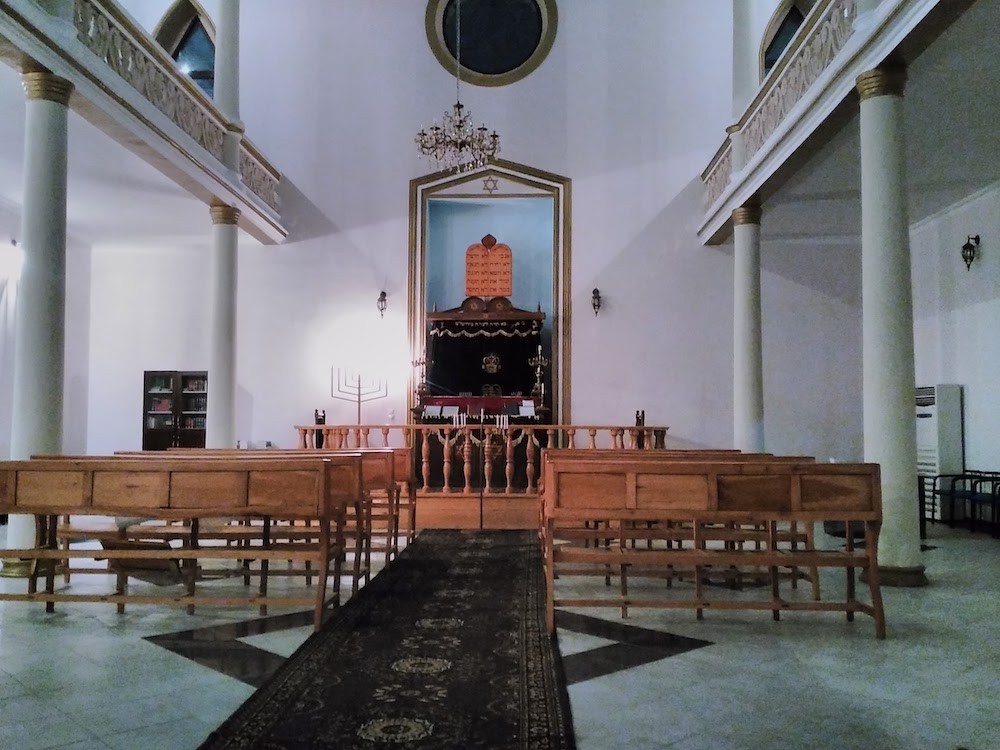
The building of the currently active stone synagogue was designed by the architect Semyon Lvovich Volkovich (1879–1937), modeled after the synagogues of The Hague and Amsterdam, and erected between 1900 and 1904.
Kutaisi (Imereti, Western Georgia)
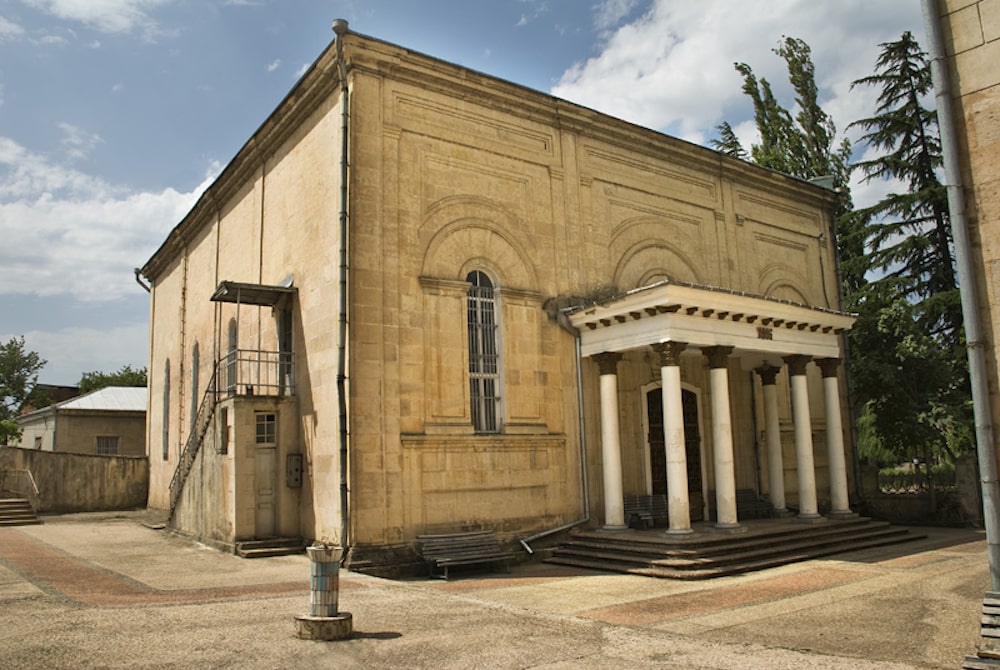
The city has preserved a unique old Jewish quarter with three synagogues, unparalleled in Georgia (except for the remnants of a similar quarter in Akhaltsikhe). Currently, two synagogues, built in the 19th century and restored in 2019, are functional.
Akhaltsikhe (Samtskhe-Javakheti)
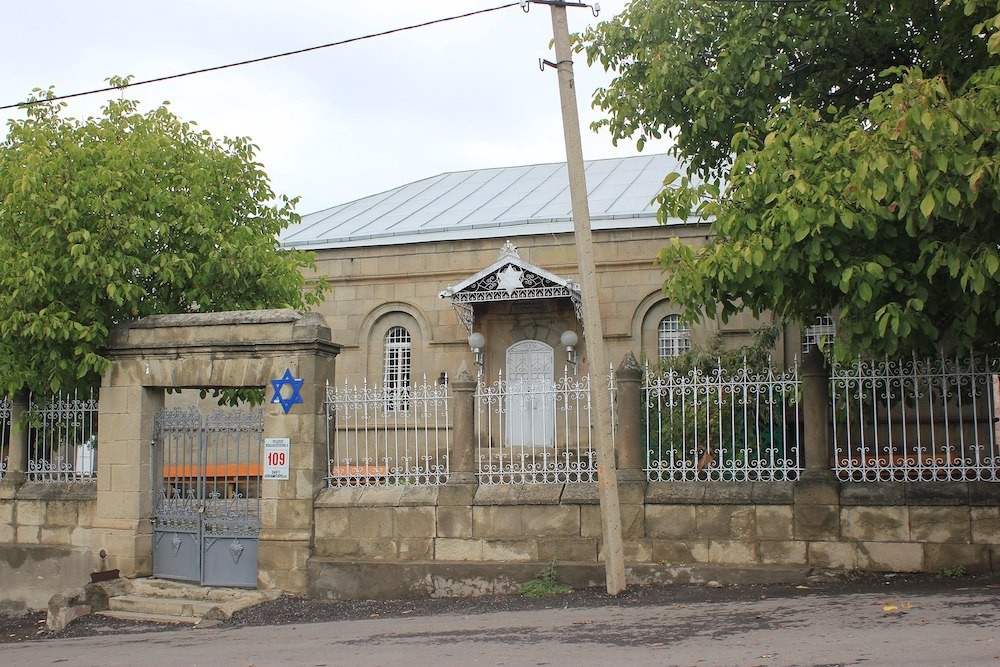
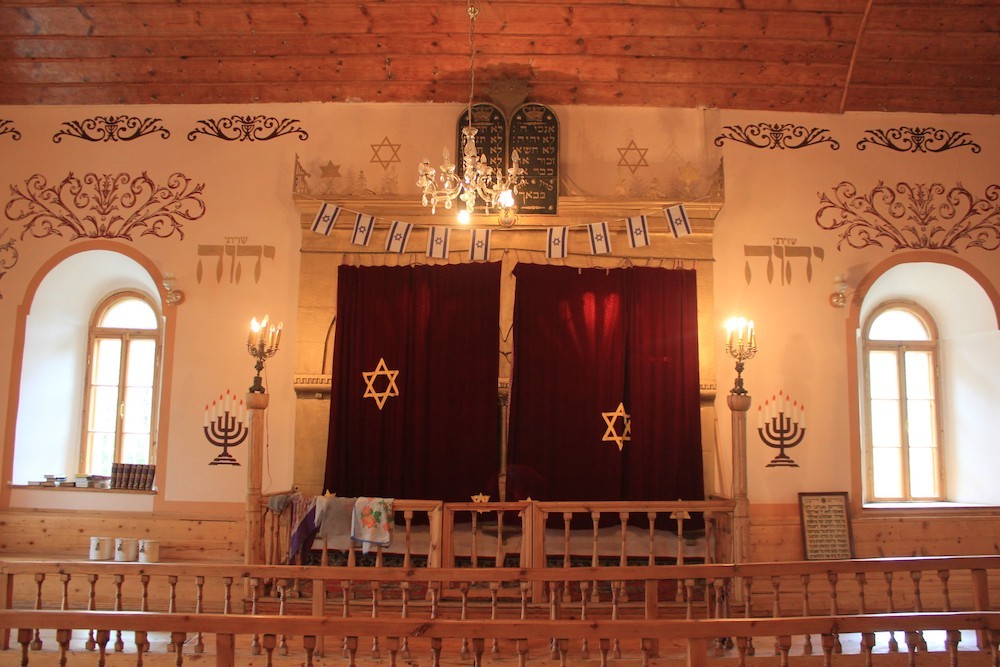
The Jewish quarter in Akhaltsikhe is a small area in the left-bank part of the city, beyond the Eastern Ravine, formerly inhabited by Jews. The name "Jewish Quarter" has remained attached to this area despite the fact that virtually no Jews remain there. The Old Synagogue was erected during the Ottoman era (in the 1740s) and is the oldest architectural monument. It is currently non-functional, and the building is proposed to house a museum. Around 1865, a second synagogue, the so-called "New Synagogue," was built. It was restored in 2000 and remains active to this day.
Kulashi (Imereti, Western Georgia)
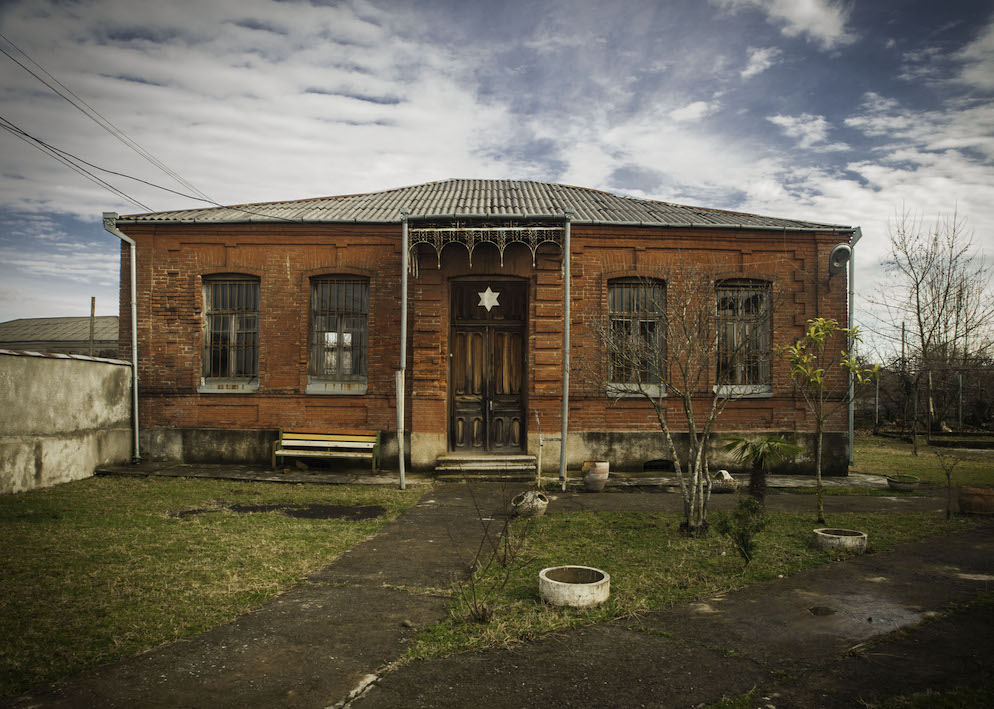
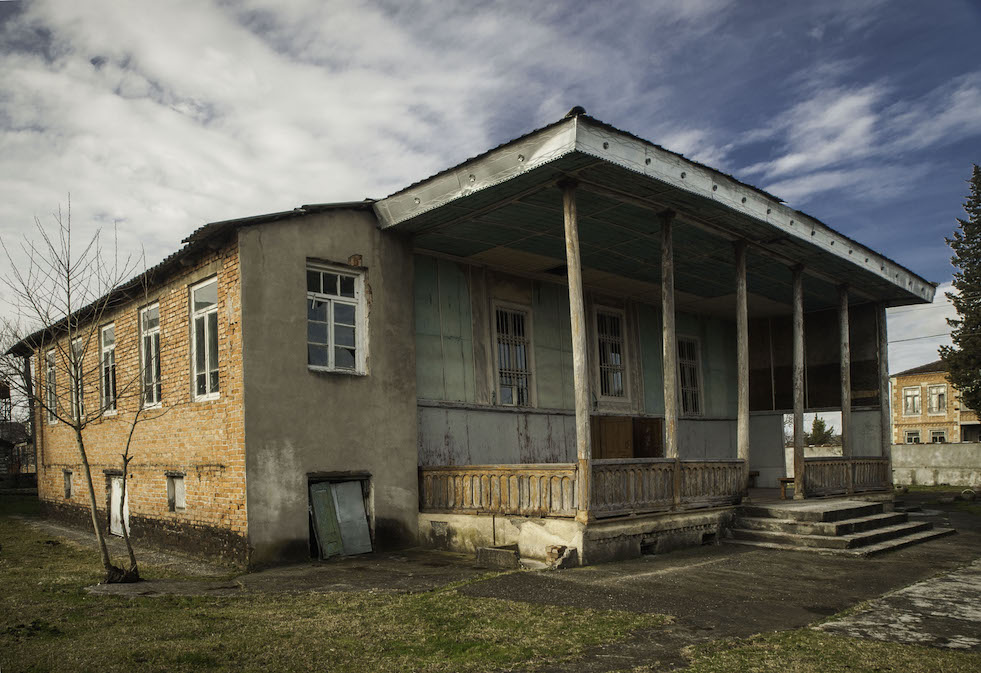
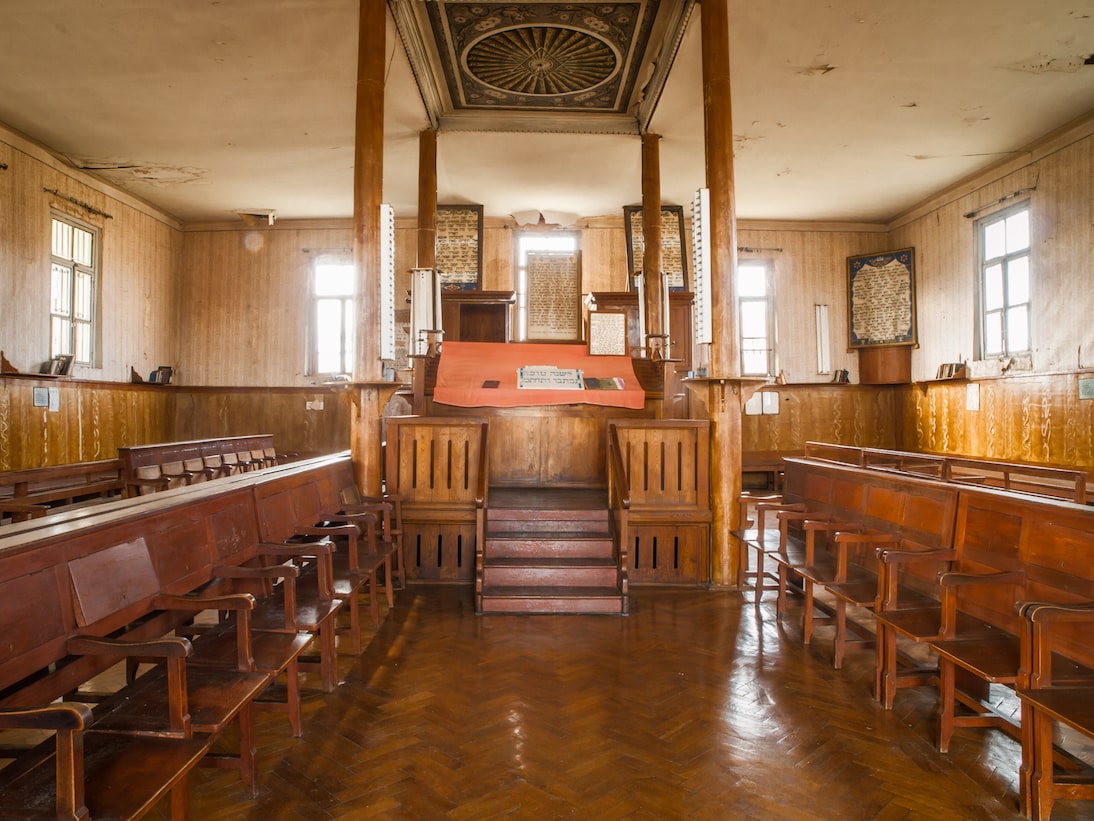
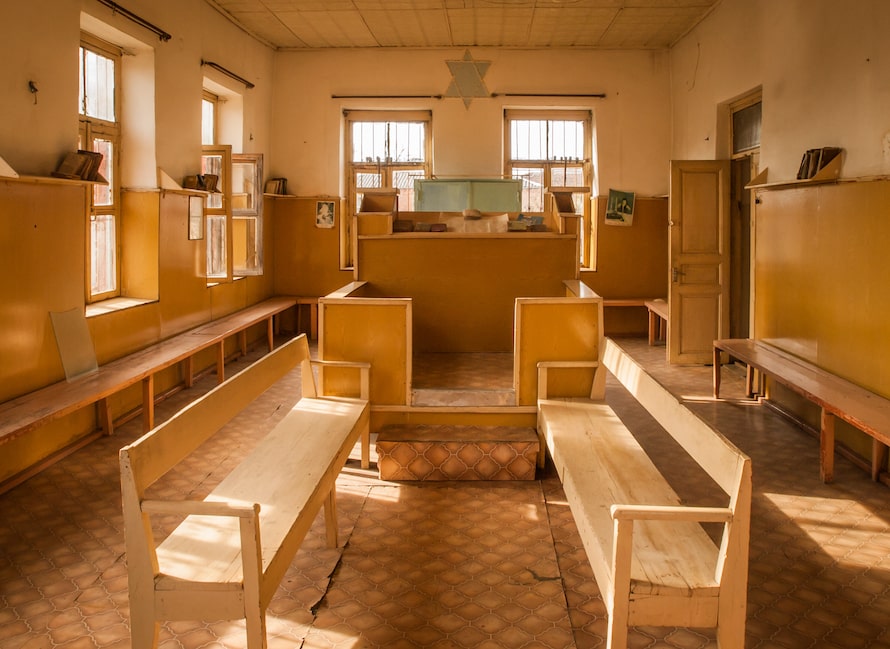
The settlement of Kulashi represents a highly interesting chapter in the Jewish history of Georgia. Kulashi was known as "Little Jerusalem"; there was no separate Jewish quarter there, as Jews constituted the majority of the population. Of the three synagogues in Kulashi, one (a wooden structure built in 1902) remains active today. An ancient wooden synagogue, designated as a historical monument, is currently non-functional, as is the brick synagogue constructed in 1910.
Gori (Shida Kartli, Central Georgia)
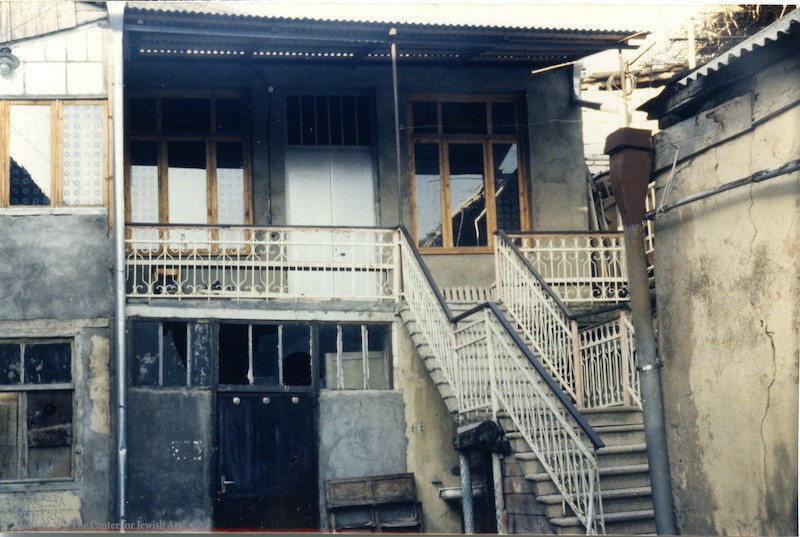
The synagogue in Gori was opened in 1936 and remains active to this day.
Surami (Imereti, Western Georgia)
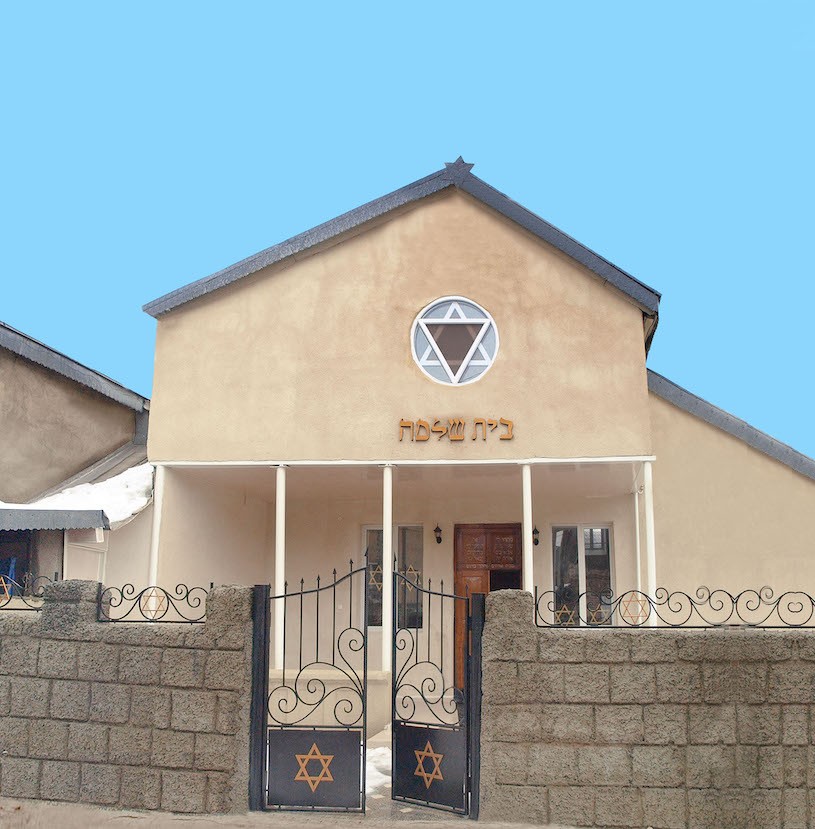
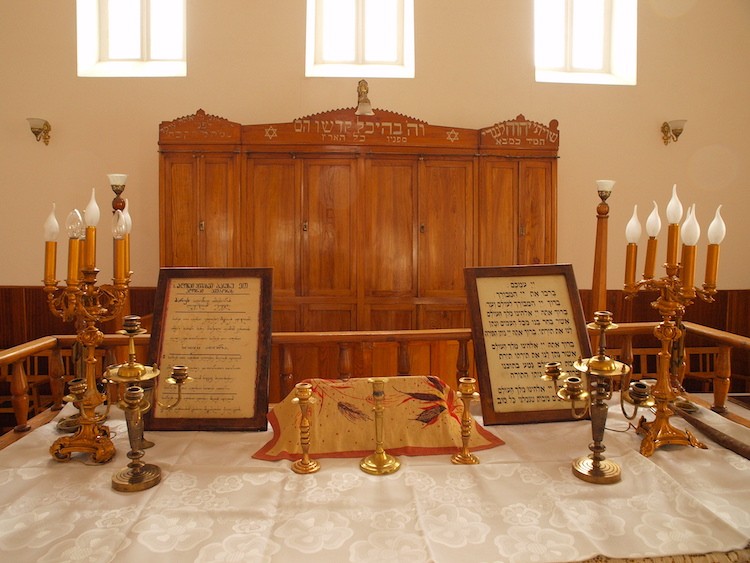
The synagogue was built in 1915. It was restored in the early 2000s and is currently active.
Oni (Racha-Lechkhumi Municipality)
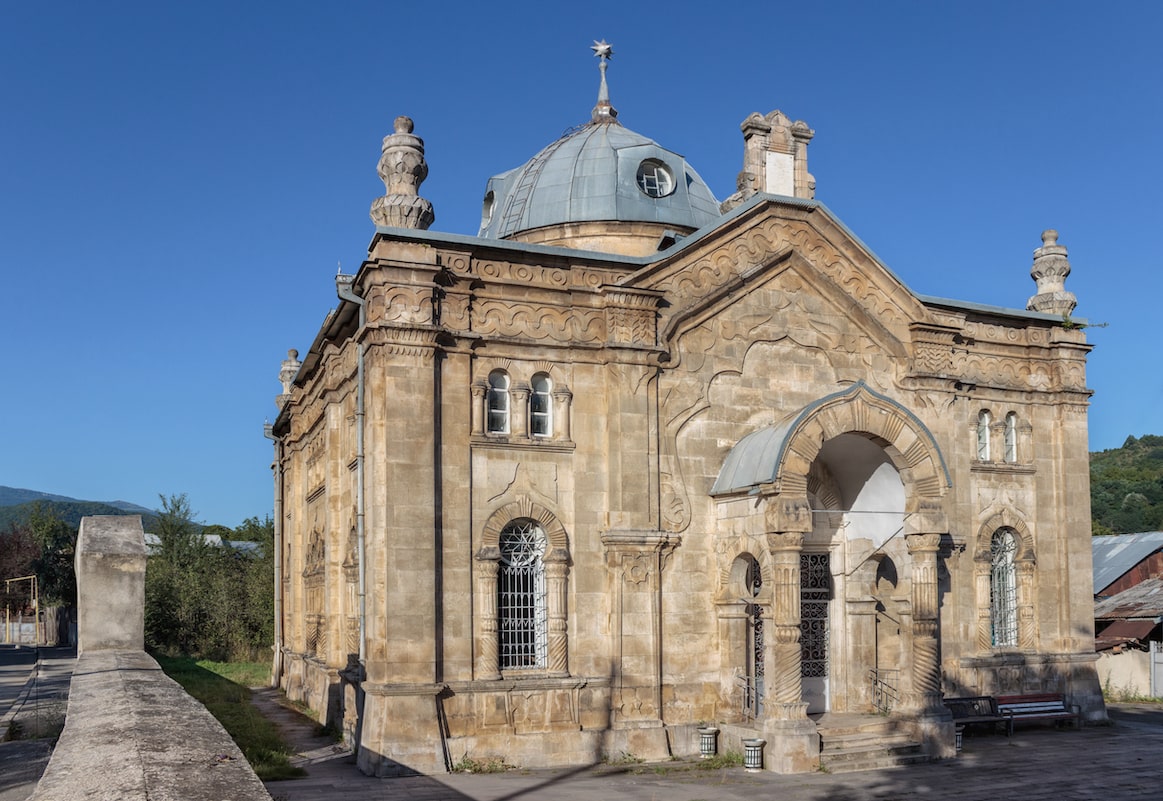
One of the most beautiful synagogues in Georgia, built in 1895 according to a design that closely mirrors the contours of the synagogue in Warsaw. Historically, the Jewish community of Oni was considered one of the largest in the country, ranking third after those of Tbilisi and Kutaisi. In 2014, the synagogue building was restored and designated as a cultural heritage monument. It is currently non-functional.

Sachkhere (Imereti, Western Georgia)
A stone synagogue built in the 19th century operated until 1990. It is currently non-functional.
Vani (Imereti, Western Georgia)
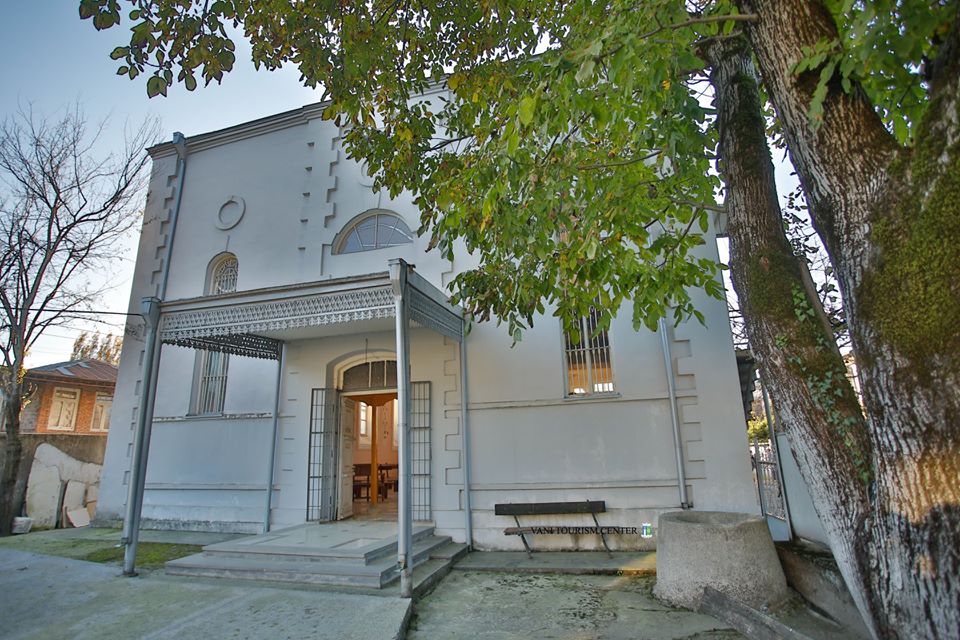
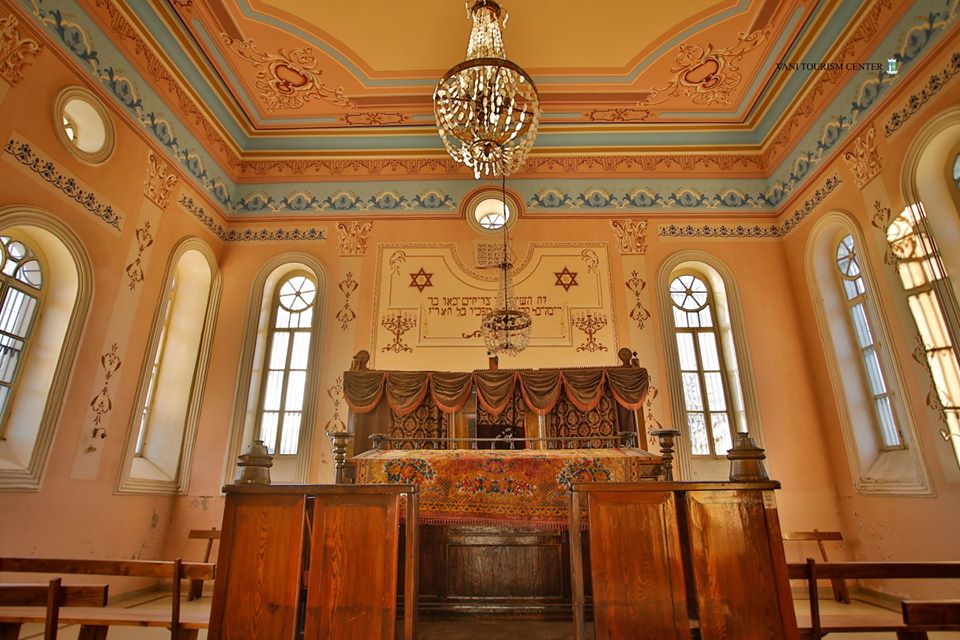
The synagogue in Vani, built in the 19th century, is distinguished by its architectural style and interior design. It has the status of a cultural heritage monument.
Kareli (Shida Kartli, Central Georgia)
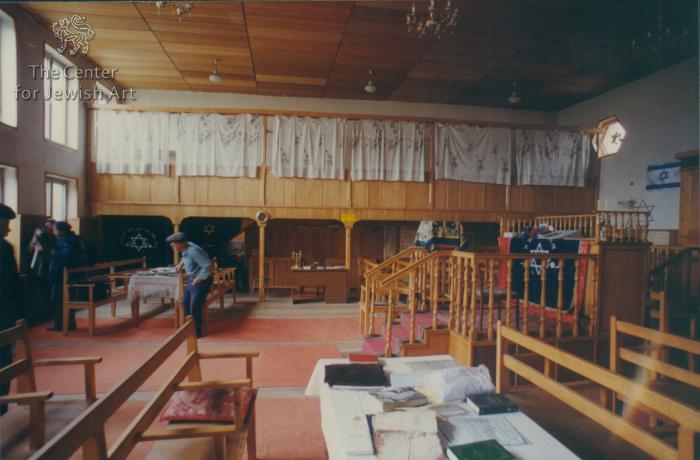
A brick synagogue built in the 19th century and restored in 1990. It is currently non-functional.
Lailashi (Racha-Lechkhumi Municipality)
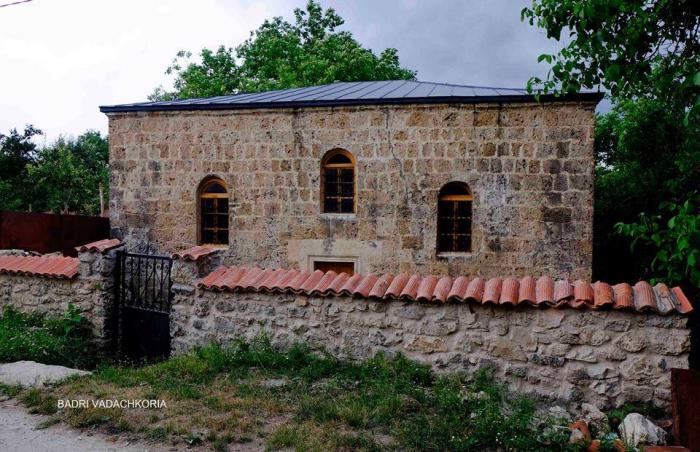
A stone synagogue built in the center of Lailashi village in 1860. It functioned until 1970 and is currently non-functional.
Senaki (Western Georgia, Samegrelo)
The synagogue in Senaki, built at the end of the 19th century, functioned until 1990. It remained abandoned for a long time before being restored in 2014. It is currently non-functional.
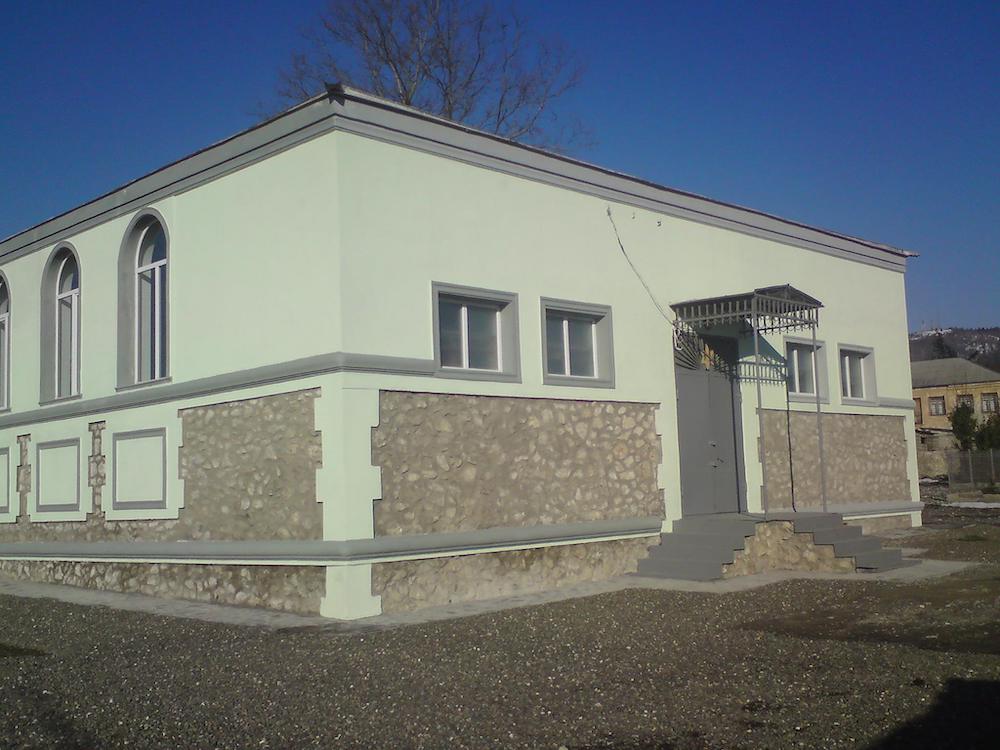
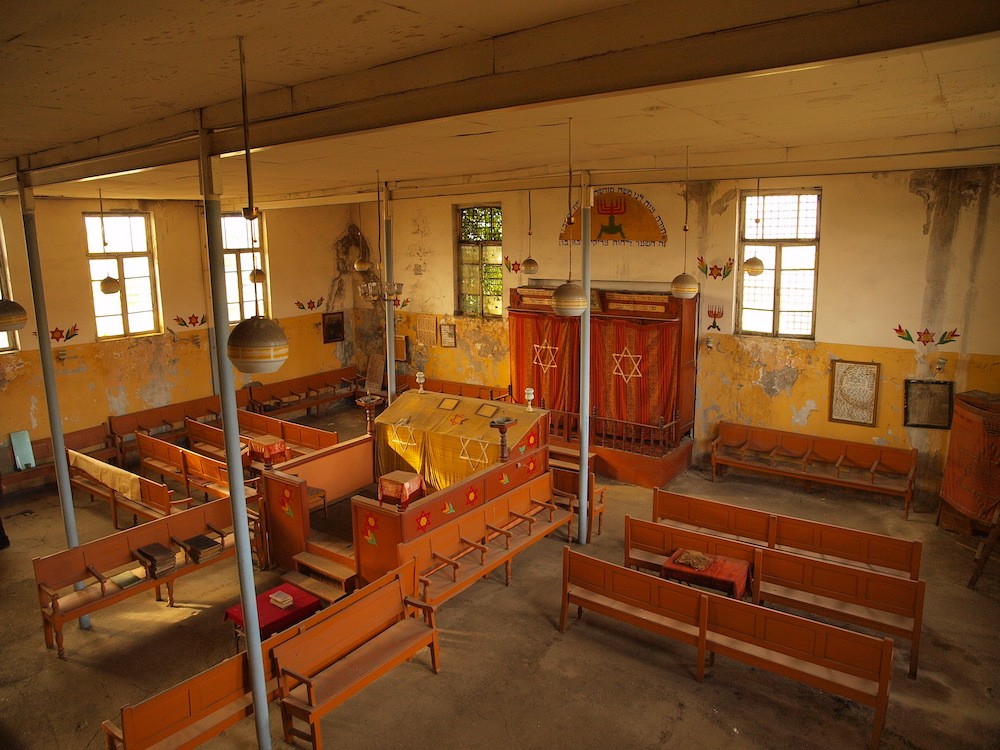
Abasha (Western Georgia, Samegrelo)
The Abasha synagogue is located in the village of Sudzhuna; due to its proximity to the Rioni River, this location was attractive to Jewish, Laz, and Turkish merchants. The synagogue was built in the mid-19th century during the reign of Prince David Dadiani and is currently non-functional.
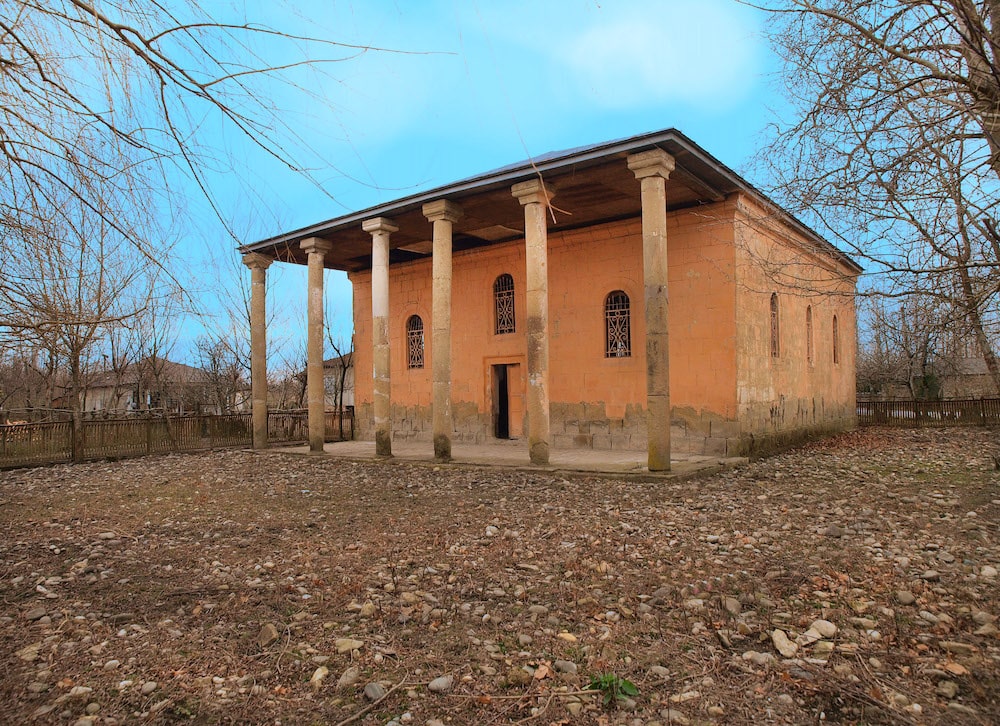
Bandza (Western Georgia, Samegrelo Region)
The synagogue in the village of Bandza is located in the so-called Jewish quarter. Built at the beginning of the 20th century. It is currently non-functional.

Poti (Western Georgia)
The synagogue, built in 1903, functioned until 1990. It was restored in 2015. It is currently non-functional.
[1] Central State Archive of the Georgian SSR (CSA GSSR), F. 14, Op. 3, d. 5352, l. 118
[2] Editor's note: Historically, the first Jews in Sukhumi were Krymchaks, who began settling there at the end of the 19th century. In the 20th century, the majority was composed of Georgian Jews. Following the 2008 Georgian-Abkhazian conflict, the majority of Georgian Jews living in Abkhazia fled to Georgia, while Mountain Jews largely repatriated to Israel, resulting in a current predominance of Ashkenazi Jews in Abkhazia. The Krymchaks remaining in Sukhumi ceased to be regular attendees of the synagogue, which is located in the old premises on Karl Marx St. (now Sh. Inal-Ipa St.).
[3] Since the late 1950s, these documents were held in the Central State Archive of the Georgian SSR; in 1993, amid the armed conflict that engulfed the country, their originals were handed over by the director of the archive to the author of the article, who then worked as a representative of the Jewish Agency in Georgia, to ensure their preservation, and have since remained in his personal archive.
[4] "Lakhlukh" was the term used in Georgia for Kurdish Jews who spoke Neo-Aramaic.
[5] Deported to Central Asia as Iranian citizens.
[6] According to information from Prof. Mikhail Chlenov, co-founder of the semi-legal Jewish Historical and Ethnographic Commission established in 1981, who visited Tbilisi in the early 1980s to ascertain the fate of the materials of the Jewish museum closed there in the early 1950s, its collections were held in the repositories of several Tbilisi museums.
The views expressed by the experts do not necessarily reflect the official position of the Institute for Euro-Asian Jewish Studies or the Euro-Asian Jewish Congress.
